 Save Pin
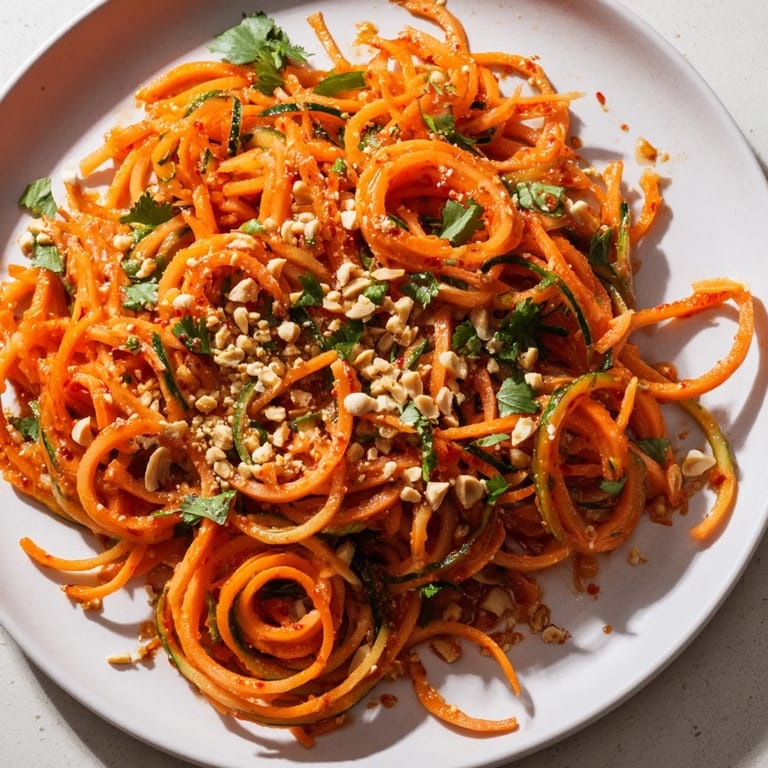
 I was scrolling through my phone one sweltering afternoon when I stumbled on a video of someone spiralizing cucumbers with an almost meditative focus. The bright green ribbons curled into the bowl, glistening under kitchen light, and something about the simplicity of it grabbed me. No cooking required, just fresh vegetables and a punchy sauce that promised to wake up my sleepy summer palate. I made my first batch that same evening, standing at the counter in the fading light, and realized I'd found my new go-to dish when the weather makes cooking feel like a chore.
Last summer I brought a bowl of these noodles to a potluck on my friend's rooftop, worried it might be too simple among all the elaborate salads. Halfway through the meal, three different people asked me for the recipe, and I watched someone go back for seconds while still holding a plate of other food. That's when I knew this recipe had found its place in my regular rotation—it's the kind of dish that sneaks up on you with flavor and somehow feels both light and deeply satisfying.
Ingredients
- 2 large cucumbers, spiralized or julienned: English or Persian varieties have fewer seeds and a milder flavor, but any crisp cucumber works; pat them dry after cutting to prevent a watery bowl.
- 1 medium carrot, julienned (optional): Adds a subtle sweetness and bright color contrast that makes the bowl more visually interesting.
- 2 scallions, thinly sliced: The green and white parts contribute different flavors—use both for depth.
- 1 tablespoon fresh cilantro, chopped: This is your freshness anchor; don't skip it or substitute dried.
- 2 tablespoons low-sodium soy sauce or tamari: Tamari keeps it gluten-free without sacrificing that savory umami depth.
- 1 tablespoon rice vinegar: Its mild acidity balances the heat without overwhelming the vegetables.
- 1 tablespoon sesame oil: Toasted sesame oil adds a subtle nuttiness that ties everything together beautifully.
- 1 tablespoon chili crisp or chili oil: This is where the heat and character come from; adjust based on your spice tolerance and mood.
- 1 teaspoon maple syrup or honey: A touch of sweetness rounds out the spice and vinegar, creating balance.
- 1 clove garlic, finely minced: Raw garlic brings sharpness and bite; don't be shy with the knife work here.
- 1 teaspoon grated fresh ginger: Microplane it for the finest texture and most potent flavor.
- 1 teaspoon toasted sesame seeds: These add a subtle crunch and nuttiness that elevates the entire bowl.
- 2 tablespoons roasted peanuts or cashews, chopped (optional): Protein and textural contrast that makes the bowl feel more substantial.
- Lime wedges: A squeeze of brightness right before eating brings the whole dish into focus.
Tired of Takeout? 🥡
Get 10 meals you can make faster than delivery arrives. Seriously.
One email. No spam. Unsubscribe anytime.
Instructions
- Prepare the cucumbers:
- Spiralize or julienne your cucumbers into noodle-like strands, then pat them completely dry with paper towels—this step matters more than you'd think because excess moisture will dilute your sauce. Set them aside in a large mixing bowl where you have plenty of room to work.
- Gather the vegetables:
- Add the julienned carrot, sliced scallions, and fresh cilantro to the bowl with the cucumbers, mixing gently so everything is distributed evenly. Don't overthink this part; you're just getting organized before the sauce arrives.
- Build the sauce:
- In a small bowl, whisk together the soy sauce, rice vinegar, sesame oil, chili crisp, maple syrup, minced garlic, and grated ginger until the flavors feel married and the garlic is suspended throughout. Stir in the sesame seeds last so they stay toasted and visible.
- Toss and dress:
- Pour the sauce over your vegetable mixture and toss gently but thoroughly, using a gentle hand so the delicate cucumber noodles stay intact. Every strand should glisten and carry a bit of that spicy, gingery goodness.
- Plate and finish:
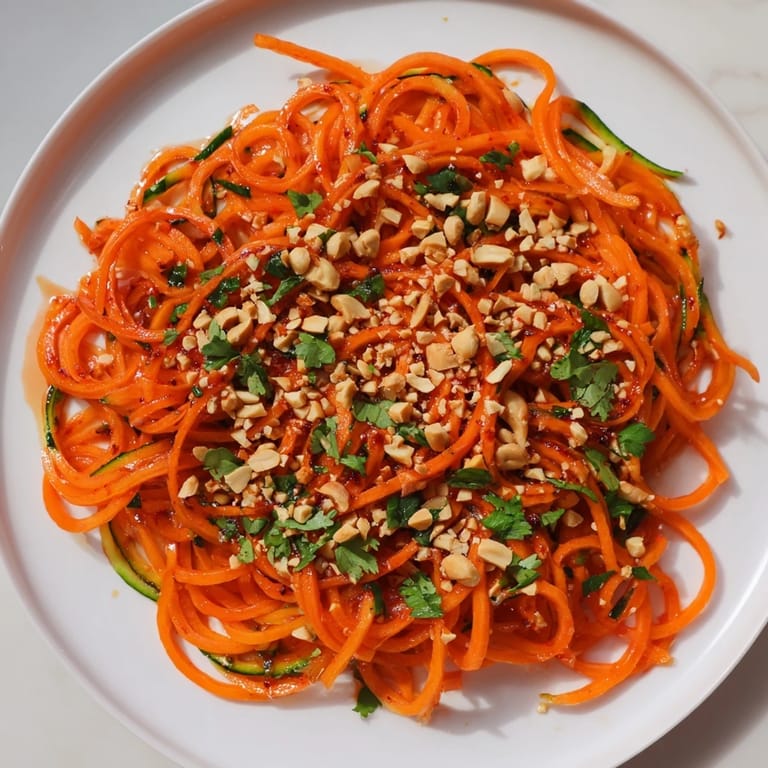
- Divide the noodle bowl between serving vessels and top with chopped nuts, extra chili crisp if you're feeling bold, and a generous squeeze of fresh lime juice. Serve immediately while the cucumbers are still snappy and the sauce is at its most vibrant.
 Save Pin
 I've learned that some of the best meals don't require heat or hours of planning. This bowl reminded me that cooking is sometimes about honoring ingredients in their purest form and letting a bold sauce do the talking. There's something almost rebellious about serving something this fresh and vibrant on a hot day when everyone else is turning on their ovens.
Customizing Your Bowl
The beauty of this recipe is how willing it is to adapt to what you have on hand or what you're craving that day. I've made it with daikon radish when cucumbers weren't perfect, swapped the peanuts for tofu crumbles when I wanted more protein, and even added a fried egg on top once on a whim and never looked back. The sauce is the real star here—keep that consistent and everything else becomes a canvas for your preferences.
Making It More Substantial
On days when this needs to be a full meal rather than a side, I've layered it over soba noodles, added shredded rotisserie chicken, or crumbled some crispy tofu right into the bowl. A soft-boiled egg or poached egg sits beautifully on top, adding richness without overwhelming the vegetables. The lightness of the base actually makes it perfect for adding protein without feeling heavy.
Sauce Variations and Storage
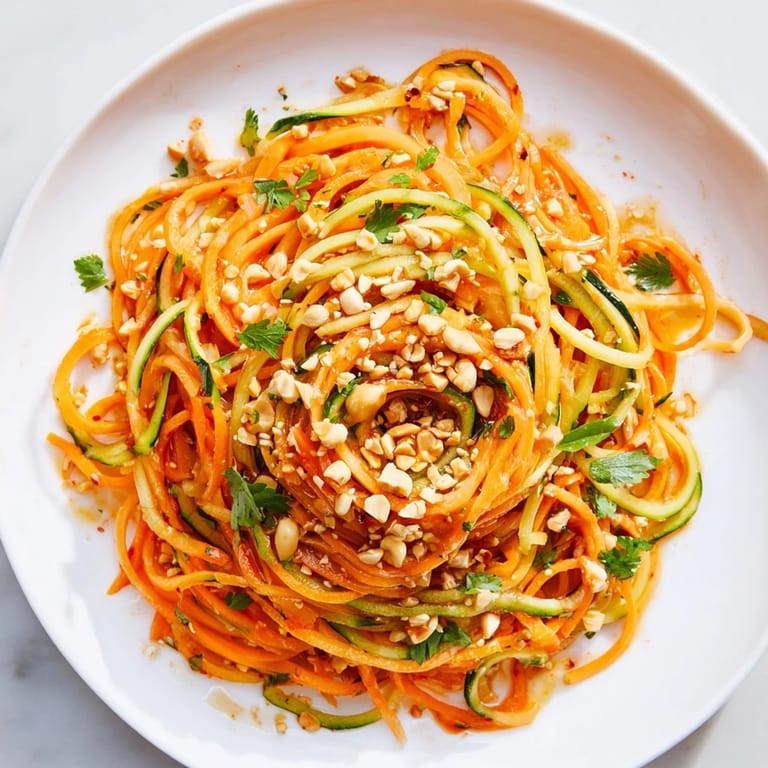
Once you understand the ratio of acid, heat, oil, and sweetness in this sauce, you can play with it endlessly. I've added a tablespoon of peanut butter for creaminess, swapped the sesame oil for chili oil entirely when I wanted more heat, and even mixed in a bit of miso for deeper umami complexity. Make a double batch of sauce and keep it in the fridge for up to a week—it becomes your secret weapon for quick lunches.
- Store the sauce separately from the vegetables if you're meal prepping, combining them only when you're ready to eat.
- A squeeze of lime juice right before serving brightens everything and keeps the flavors from feeling flat.
- If you make it ahead, taste and adjust the seasoning right before serving, as flavors can mellow or intensify over time.
 Save Pin
 This bowl has become my answer to the question "What should we eat?" on days when the answer needs to be quick, bright, and completely satisfying. It proves that the best meals sometimes ask the least from your kitchen.
Recipe FAQs
- → What type of cucumbers work best for this bowl?
English or Persian cucumbers are ideal due to their mild flavor and fewer seeds, enhancing the bowl's texture without excess moisture.
- → Can I adjust the spice intensity?
Yes, increase or decrease the chili crisp or oil amount to suit your preferred heat level.
- → What are good alternatives to peanuts for toppings?
Sunflower seeds or cashews make excellent nut-free or alternative crunchy toppings.
- → Is cooking required for this dish?
No cooking is needed; the cucumber noodles are served fresh with the sauce poured directly over.
- → How can I add protein to this bowl?
Incorporate tofu, shredded chicken, or edamame for a protein boost without altering the fresh flavor.
- → What equipment is needed to prepare the noodles?
A spiralizer or julienne peeler is recommended to create crisp, noodle-like cucumber strips.