 Save Pin
 I discovered this combination by accident one morning when I had cottage cheese I needed to use and a jar of basil pesto that had been sitting in my fridge. Instead of my usual scrambled eggs, I whisked in the pesto and stirred in the cottage cheese at the last moment, and something magical happened—creamy, bright, and filling all at once. Now it's become my go-to when I want breakfast to feel special without fussing.
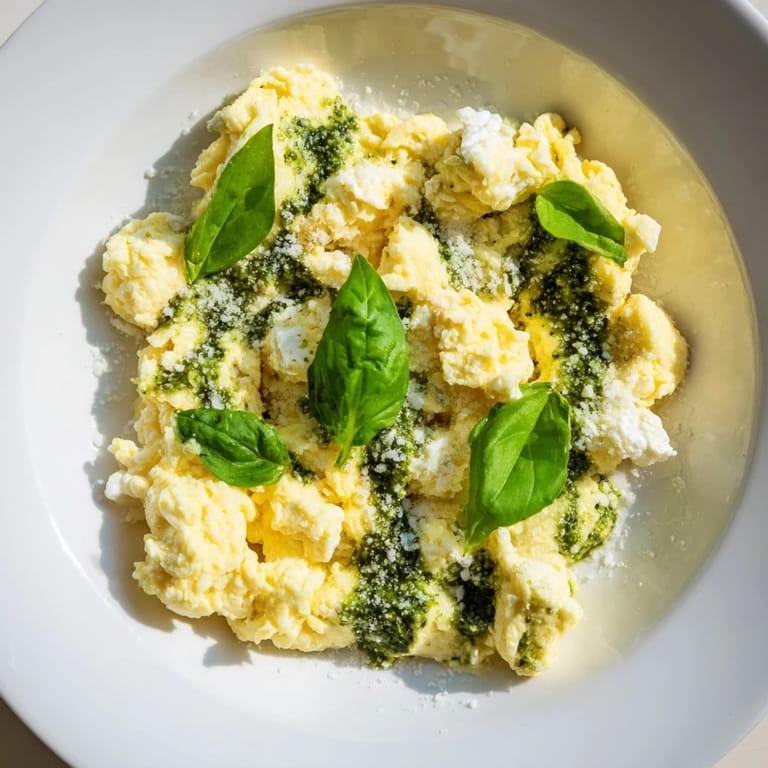
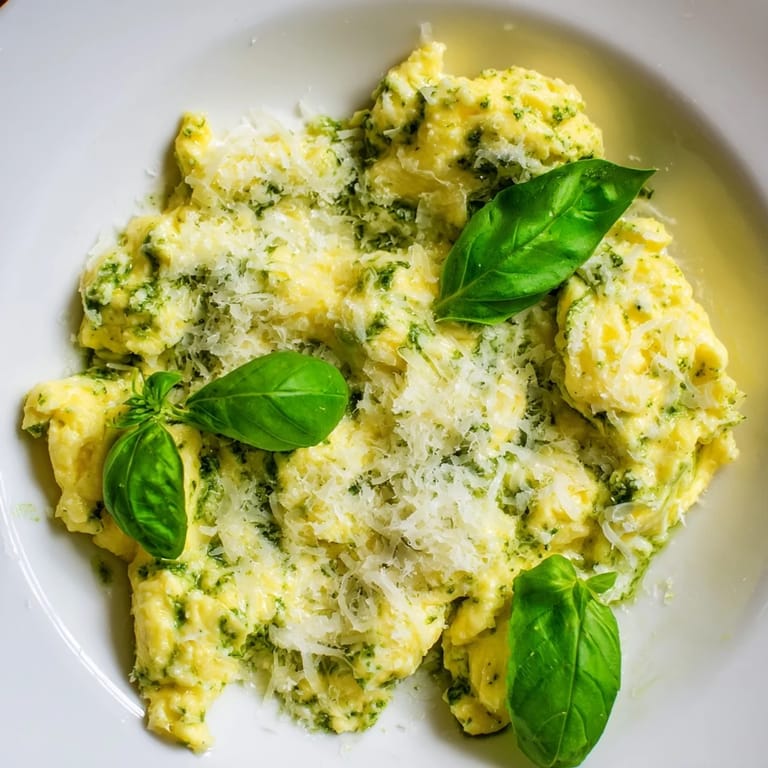
My sister came over one Sunday and I made this while she sat at the counter with coffee. She took one bite and asked if I'd started running a restaurant from my kitchen—the color alone caught her off guard, all those bright flecks of basil mixed into the creamy eggs. I've made it for brunch guests ever since because it looks impressive but feels relaxed to eat.
Ingredients
- Eggs: Four large ones give you enough volume to feel satisfying, and the yolks are what make this naturally creamy before anything else touches the pan.
- Milk or cream: Just a splash if you want an extra-silky texture, though honestly the cottage cheese already does most of that work for you.
- Cottage cheese: Use whatever version you have on hand—the full-fat version breaks down into these little clouds of creaminess, but low-fat works too.
- Basil pesto: Store-bought is fine and saves time, or make your own if you have fresh basil and a food processor gathering dust.
- Salt and black pepper: Just enough to season without overpowering the pesto's brightness.
- Fresh basil, extra pesto, and Parmesan: These are your finishing touches, the details that make people notice you actually cared about breakfast.
Tired of Takeout? 🥡
Get 10 meals you can make faster than delivery arrives. Seriously.
One email. No spam. Unsubscribe anytime.
Instructions
- Whisk your base:
- Crack your eggs into a bowl with the milk if you're using it, salt, and pepper, then whisk until you've got one unified, pale mixture. This is where you're creating the foundation—nothing fancy, just thorough.
- Warm the pesto:
- Get your nonstick skillet to medium-low heat and add the pesto, letting it sit for about 30 seconds. You'll smell it wake up, and that's how you know it's releasing all its flavor into your pan.
- Cook gently:
- Pour in your whisked eggs and let them sit untouched for 10 to 15 seconds—the bottom edges will start setting while the center stays loose. Then push the cooked parts toward the middle with a spatula in slow, deliberate movements, like you're folding something delicate.
- Add the cottage cheese:
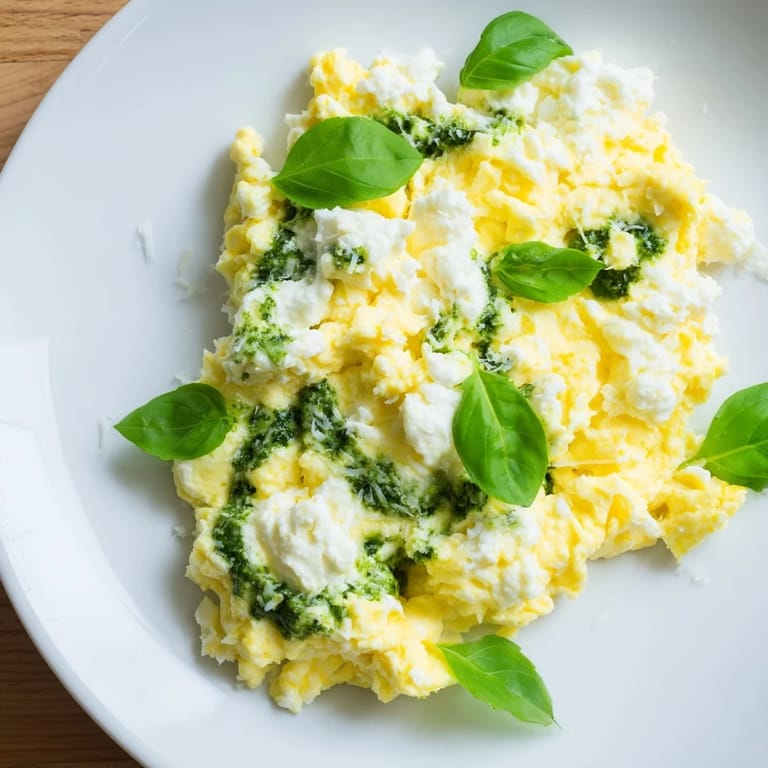
- When the eggs are still slightly underdone and creamy, fold in the cottage cheese and keep stirring gently until everything looks soft and just set. The cottage cheese will warm through in seconds, and this is the moment to stop.
- Plate and finish:
- Slide everything onto a plate while it's hot, top with extra pesto, fresh basil leaves if you have them, and maybe a handful of grated Parmesan. Serve with crusty bread or toast on the side.
 Save Pin
 There's something about serving this to someone and watching them notice the brightness of it, the way fresh basil has made its way into what they expected to be ordinary breakfast. That moment when someone slows down and actually tastes what they're eating—that's when I know the morning is already better.
Why This Works as a Protein Breakfast
Between the eggs and the cottage cheese, you're looking at 20 grams of protein per serving, which is genuine staying power. I used to grab a pastry on my way out, then wonder why I was starving by mid-morning—this dish changed that pattern. The cottage cheese adds creaminess and volume without requiring heavy cream or butter, which means you get to eat more of it without feeling weighed down.
Playing with Variations
Once you understand the basic shape of this dish, you can start riffing. I've stirred in sautéed spinach when I had it, swapped the basil pesto for sun-dried tomato pesto on days when I wanted something earthier, and even used ricotta instead of cottage cheese when I wanted a smoother, denser texture. The method stays the same—what changes is what you fold in at the end, and that's where your personal taste gets to show.
The Details That Matter
Heat matters more than you'd think with scrambled eggs. Too high, and the curds get tight and weepy. Too low, and you're standing there forever waiting for something to happen. Medium-low is that sweet spot where everything happens gradually and gently, the way you want it. The pesto warming in the pan first instead of being stirred in raw is another small choice that changes everything—it blooms and infuses the whole dish instead of staying bright and sharp.
- If your cottage cheese is very wet, drain it briefly in a fine sieve before adding it so the eggs don't become soupy.
- Fresh basil as a garnish is worth the effort—it's the final flourish that makes this feel intentional.
- Have your plate ready before you start cooking because these eggs don't wait around once they're done.
 Save Pin
 This is the kind of breakfast that reminds you that good food doesn't need to be complicated or take forever. It just needs a few good ingredients treated with a little attention, and the willingness to sit down and actually eat it.
Recipe FAQs
- → Can I use homemade pesto for this dish?
Absolutely, homemade basil pesto works wonderfully and adds fresh, vibrant flavor to the eggs.
- → Is it necessary to add milk or cream?
Milk or cream is optional but can enhance creaminess and create a softer texture in the scrambled eggs.
- → How do I prevent the eggs from overcooking?
Cook eggs on medium-low heat and remove from the skillet while still slightly creamy to avoid dryness.
- → Can I substitute cottage cheese with another dairy product?
Ricotta cheese is a great alternative, providing a different but equally creamy texture.
- → What garnishes complement these eggs best?
Fresh basil leaves, extra pesto, grated Parmesan, and crusty bread or toast enhance flavor and presentation.