 Save Pin
 There's a particular chill that settles into your bones in late autumn when beets are at their peak, and that's when my grandmother would insist on making borscht. I remember being about eight, standing on a step stool in her kitchen, watching those deep burgundy beets stain everything crimson—my fingers, the cutting board, even somehow the hem of my shirt. She'd laugh and say the color was proof that the soup would be good, that you can't make real borscht without getting your hands a little messy. That first spoonful, topped with a cloud of sour cream and scattered dill, tasted like being wrapped in something warm and necessary.
I made this for my partner on a night when the heating wasn't working and we were both tired. We sat at the kitchen table with steaming bowls, and somehow that simple moment—just two people and soup—felt like everything we needed. The beef fell apart with a spoon, the potatoes were buttery soft, and when he asked for seconds, I knew this recipe was staying in my regular rotation forever.
Ingredients
- Beef chuck or brisket (400 g): These cuts have enough fat and connective tissue to become incredibly tender during the long simmer, giving the broth real depth.
- Water (1.5 liters): The foundation—use filtered or cold water so the broth stays clear and clean-tasting.
- Bay leaves (2) and black peppercorns (1 teaspoon): These flavor the broth as it simmers, creating an aromatic backbone for everything else.
- Beets (3 medium, grated): The star ingredient that gives borscht its signature color and sweet, earthy flavor that balances the vinegar.
- Carrots (2 medium, grated): They add natural sweetness and soften into the broth, creating a smooth texture.
- Onion (1 medium, finely chopped): Builds the flavor base when sautéed; it becomes almost invisible but essential.
- Potatoes (2 medium, diced): Add substance and help thicken the soup naturally as they release their starch.
- Green cabbage (1/4 small head, shredded): Adds texture and a slight sweetness that plays beautifully with the beets.
- Tomato paste (2 tablespoons): Deepens the color and adds umami richness to the vegetables.
- Garlic (2 cloves, minced): Added at the end to keep its bright bite from mellowing out.
- Sunflower oil (2 tablespoons): Sauté the vegetables in this so they caramelize slightly before joining the broth.
- Sugar (1 tablespoon) and white vinegar (2 tablespoons): These are crucial—the sugar balances acidity while the vinegar brightens everything and keeps the beets from making the soup taste flat.
- Sour cream (150 g) and fresh dill or parsley: The finishing touches that add creaminess and fresh herbal notes to each spoonful.
Tired of Takeout? 🥡
Get 10 meals you can make faster than delivery arrives. Seriously.
One email. No spam. Unsubscribe anytime.
Instructions
- Start the broth:
- Put the beef in a large pot with water, bay leaves, peppercorns, and salt. Bring it to a rolling boil—you'll see foam rise to the surface, which you should skim off with a spoon. This keeps the broth clear. Once you've skimmed it a few times, turn the heat down to medium-low and let it simmer gently for 45 minutes. The meat should be getting tender and the kitchen should smell incredible.
- Build the flavor base:
- While the beef is cooking, heat oil in a skillet and add your chopped onion. Let it soften and turn translucent, about 3 minutes. Then add the grated carrots and beets, cooking them together for about 5 minutes until they're starting to caramelize. Stir in the tomato paste, sugar, and vinegar, cooking for another 7 to 8 minutes, stirring occasionally. This mixture becomes the heart of your borscht—it should smell like deep autumn.
- Combine and simmer:
- Remove the beef from its broth and set it aside (you'll need it in a moment). Strain the broth if you want it completely clear, then pour it back into the pot and bring it to a simmer. Add the diced potatoes and let them cook for about 10 minutes until they start to soften.
- Layer in the vegetables:
- Pour your entire sautéed beet mixture into the pot along with the shredded cabbage. Simmer everything together for 10 more minutes until all the vegetables are truly soft—there shouldn't be any resistance when you bite a potato or piece of cabbage.
- Finish and rest:
- Shred or cube the beef that's been sitting aside and stir it back into the pot. Add the minced garlic now (it stays fresher if added near the end), then taste and adjust your salt and pepper. Let the whole pot simmer for just 5 more minutes so the garlic can perfume everything without becoming overpowering. Remove from heat and let it sit for 15 to 20 minutes—this resting time lets all the flavors find their balance, making the next day's soup even better.
- Serve with joy:
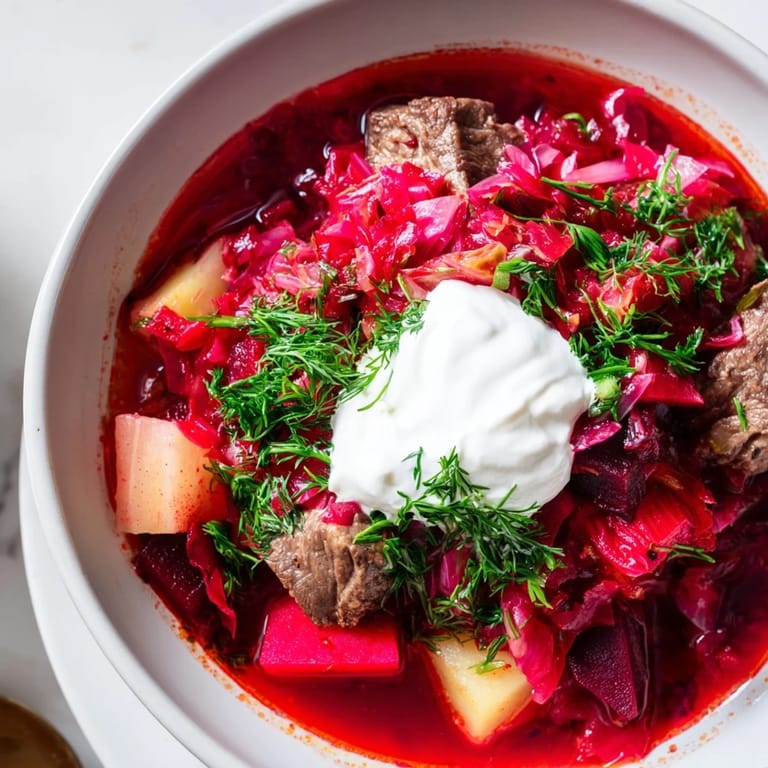
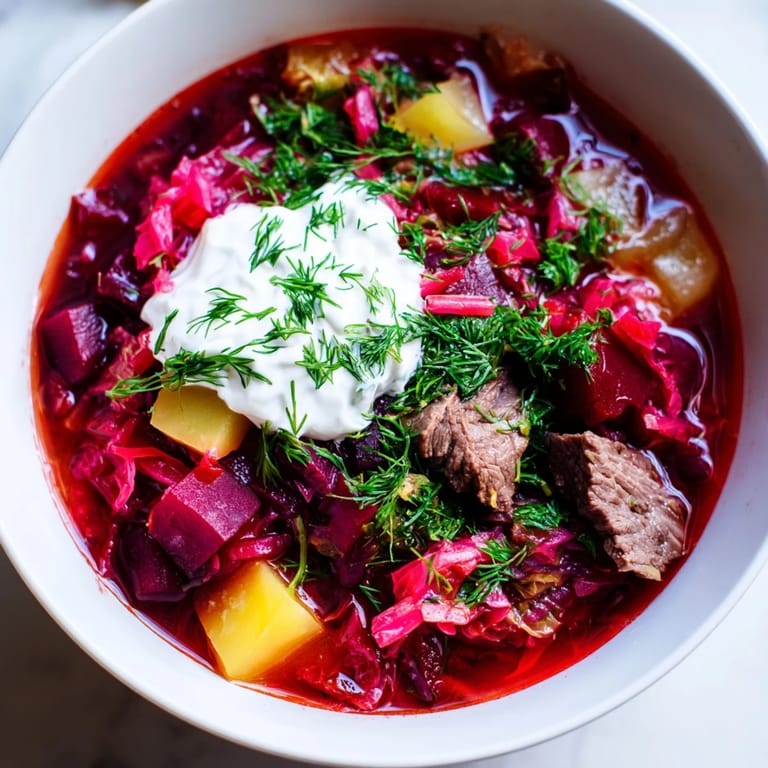
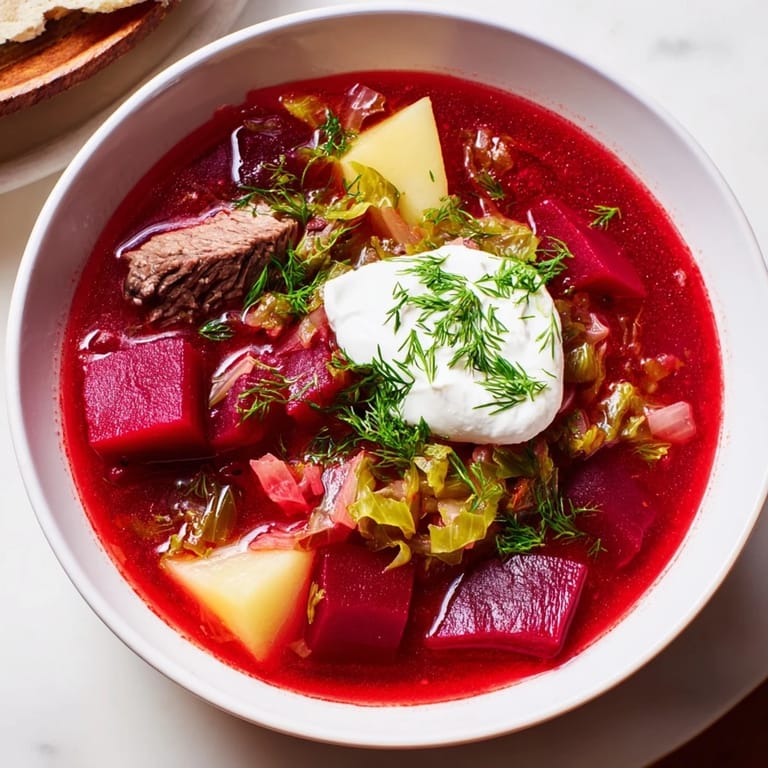
- Ladle the hot borscht into bowls and top each one with a generous spoonful of sour cream and a scatter of fresh dill or parsley. The cool cream cuts through the richness beautifully, and the herbs add a fresh note that reminds you this is still a living, growing dish.
 Save Pin
 My neighbor once told me that borscht was the soup her mother made when someone in the family was going through something hard. Not because it was medicinal, but because it required patience, care, and attention—the kind of things that say I'm here with you without needing words. Every time I make it now, I think about that conversation and what it means to cook for someone.
The Story of Borscht
Borscht isn't one recipe—it's a kitchen tradition that varies from region to region, family to family, and season to season. In Ukraine, you'll find versions that are brothier, versions with more cabbage, versions that swap beef for pork or fish, and vegetarian versions that let the beets and vinegar do all the talking. What they all share is this commitment to letting simple ingredients become something profound through time and technique. This version lands somewhere in the middle—hearty enough to be a full meal, but still respecting the beets as the main voice.
Variations and Leftovers
Borscht actually improves as it sits in your refrigerator. The flavors marry and deepen, so if you can resist eating it all immediately, wait until tomorrow and taste the difference. For a vegetarian version, simply omit the beef and use good vegetable broth instead—you lose nothing in flavor, just the beef's richness, which the beets and potatoes easily replace. Some people add a squeeze of fresh lemon juice at the end for brightness, or a splash of pomegranate juice for extra depth. Cold borscht is also a thing—serve it chilled in summer with a dollop of sour cream and it becomes a completely different experience, more refreshing salad than soup.
- Leftovers keep for up to five days in the refrigerator and reheat beautifully on the stove.
- Borscht freezes well if you haven't added the sour cream topping yet.
- Serve it with dark rye bread or soft Ukrainian garlic rolls (pampushky) for the full experience.
Pairing and Serving Ideas
Borscht is winter comfort in its purest form, but it also works as a sophisticated starter course if you serve it in small portions. The sour cream and dill don't just decorate the bowl—they're essential to the flavor balance, so don't be shy with them. Some people add a soft boiled egg or a piece of crusty bread right into the bowl, turning it into something you eat with a spoon rather than drink. I've found that borscht brings people together in a way most soups don't, maybe because it demands to be savored slowly and shared generously.
 Save Pin
 There's something about making borscht that slows you down and asks you to pay attention. It's not a quick dinner, but it's not complicated either—it's just time and ingredients becoming something nourishing. Make this when you need to feel grounded, when you want to feed people something real, or simply because an autumn day demands something warm and deeply flavorful.
Recipe FAQs
- → What cut of beef works best for this dish?
Beef chuck or brisket are ideal due to their tenderness and flavor when slow-cooked.
- → Can I prepare the dish vegetarian style?
Yes, omit the beef and use vegetable broth for a fresh and rich vegetable-based version.
- → Why is vinegar added to the vegetable mixture?
Vinegar brightens the flavors and helps balance the sweetness of the beets and carrots.
- → How should I serve the final dish?
Serve hot, topped with a dollop of sour cream and a sprinkle of fresh dill or parsley for added freshness.
- → Is this dish gluten-free?
Yes, it is naturally gluten-free unless served with bread containing gluten.