 Save Pin
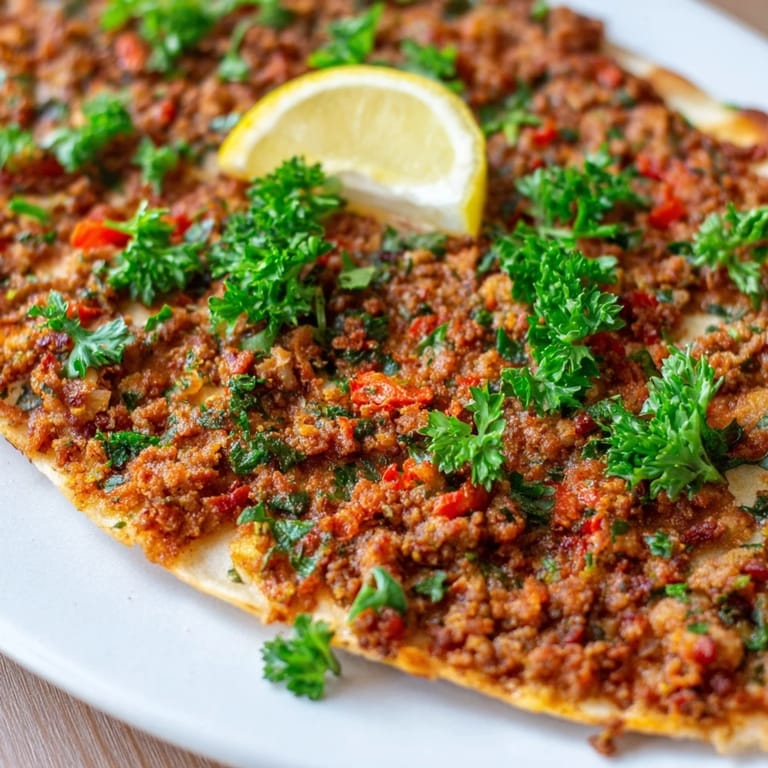
 The first time I tasted lahmacun, I was standing in a cramped kitchen in Istanbul, watching my neighbor's grandmother work with such speed that her hands seemed to blur across the dough. She didn't measure anything, just moved with the muscle memory of decades, pressing and stretching the dough until it was nearly translucent. The meat topping sizzled on the tray for what felt like seconds before she pulled it out golden and crisp, folded it around fresh herbs, and handed it to me still warm enough that I had to juggle it between my palms. That moment—the smell of cumin and paprika hitting my face, the contrast between the paper-thin crust and the spiced meat—changed how I thought about flatbreads forever.
I make these whenever I want to feel like I've cooked something both impressive and honest. There's something about the way the edges get crispy and charred that makes the whole kitchen smell incredible, and the moment someone rolls one up with fresh parsley and lemon juice and takes that first bite, you see them understand why this dish has survived centuries. It's become my go-to thing to make when friends drop by unexpectedly because the dough can rest while you chat, and then you're eating something remarkable within the hour.
Ingredients
- All-purpose flour: The foundation that needs to be soft enough to stretch thin but still have enough gluten structure to hold the topping without tearing—don't skimp on kneading time.
- Instant yeast: Just enough to give the dough gentle puff and tenderness without overpowering the flavor with yeasty notes.
- Ground lamb or beef: Lamb brings a deeper, more authentic flavor, but beef is equally delicious and more accessible—use whatever you trust from your butcher.
- Tomato paste: This concentrate adds serious umami and helps bind the topping so it doesn't slide around during baking.
- Cumin and paprika: These two spices are what make lahmacun taste like itself—don't reduce them or the dish loses its soul.
- Fresh herbs and lemon: Parsley, mint, and fresh lemon juice are what transform a hot flatbread into something alive and bright on your tongue.
Tired of Takeout? 🥡
Get 10 meals you can make faster than delivery arrives. Seriously.
One email. No spam. Unsubscribe anytime.
Instructions
- Mix your dough gently:
- Combine flour, sugar, and salt, then dissolve the yeast in warm water first so it wakes up before meeting the dry ingredients. Add the oil and mix until shaggy, then knead for a full 5 to 7 minutes until the dough feels smooth and slightly elastic in your hands.
- Let it rest and rise:
- Cover the bowl with a towel and set it somewhere warm for 30 minutes—you'll see it slowly puff up and feel lighter when you press it gently with a floured finger.
- Build your meat mixture:
- Combine the ground meat with everything else in a bowl and mix with your hands or a spoon until the ingredients are evenly distributed and the color is consistent throughout. This is where you taste and adjust the salt and spice levels to your preference.
- Heat your oven aggressively:
- Set it to 250°C (480°F) or whatever the highest setting is, and place your baking tray or pizza stone inside so it gets screaming hot. This is crucial—the initial shock of heat is what makes the edges crispy instead of soft.
- Stretch each dough ball:
- Divide the dough into 8 pieces, cover the ones you're not working with, and roll or gently stretch each one into a thin oval about 20 cm across. You want it thin enough that you can almost see through it, but thick enough that it holds together.
- Top and bake immediately:
- Spread a thin, even layer of meat topping over each dough round and transfer it directly onto the hot tray. Work quickly so the dough doesn't dry out, and bake for 6 to 8 minutes until the edges are deeply golden and crisp and the meat is cooked through.
- Finish with brightness:
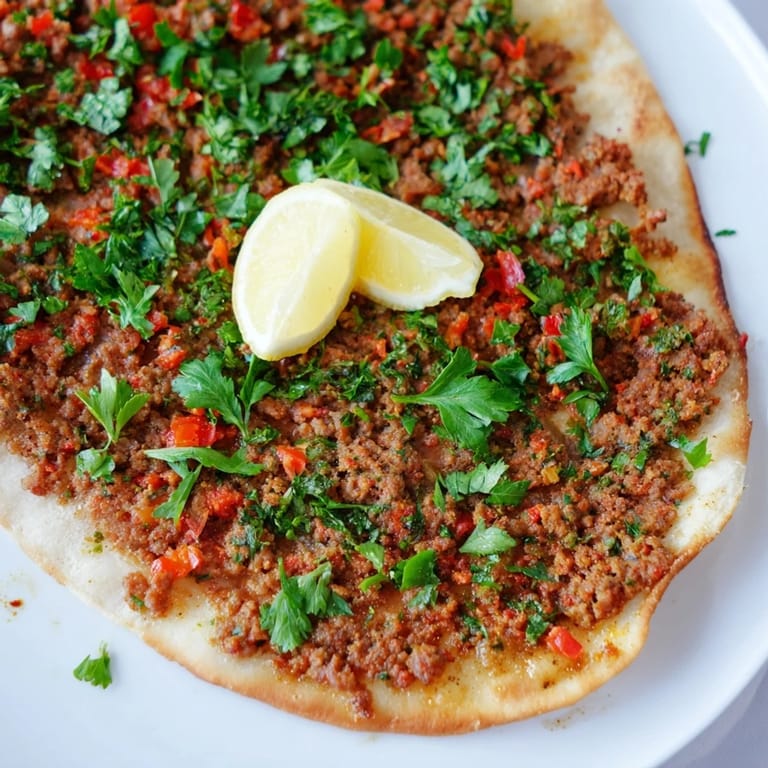
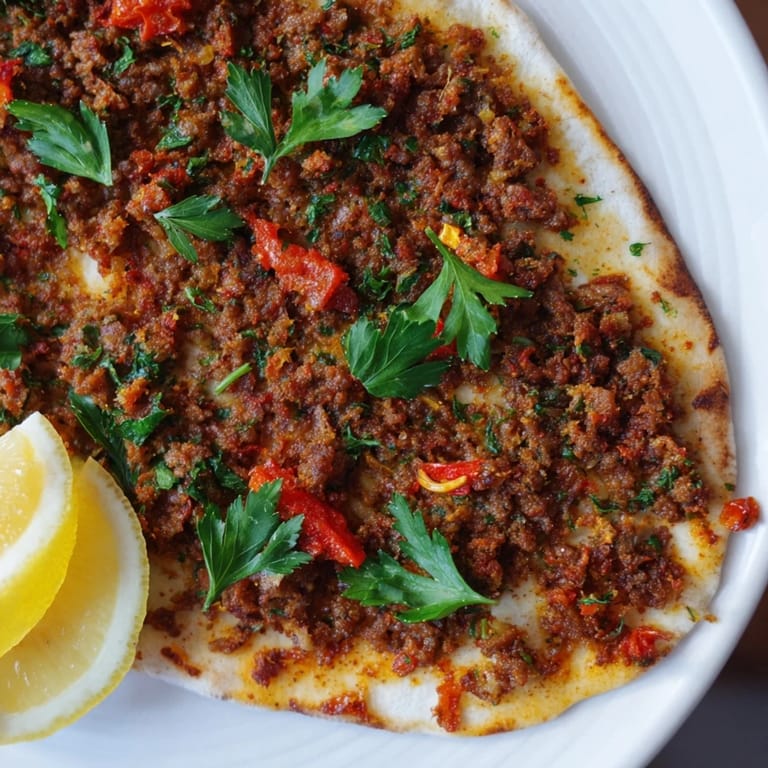
- Pull them from the oven, scatter fresh parsley or mint on top, add a squeeze of lemon, and serve immediately while they're still warm and the crust is at its crispiest.
 Save Pin
 I remember the first batch I made at home didn't crisp up properly, and I felt genuinely disappointed until I realized my oven temperature had drifted down over the years. The second time, with a properly heated oven, the transformation was immediate—that first lahmacun came out of the oven crackling and perfect, and suddenly the whole kitchen felt alive with possibility.
Variations Worth Exploring
Once you understand the basic structure, lahmacun becomes a canvas for what you have on hand and what you love to eat. I've made versions with more finely diced vegetables, some with a touch of pomegranate molasses for tartness, and even one with a blend of ground lamb and walnuts when I was cooking vegetarian for friends. The beauty is that the technique stays the same even when the toppings shift, so you're not learning multiple recipes—you're learning one thing deeply and adapting it endlessly.
How to Serve and Store
Lahmacun is meant to be eaten warm, rolled up with whatever fresh herbs and vegetables you have around, squeezed with lemon, and eaten with your hands. Some people add sliced onions and sumac on top, which adds a bright tartness that feels almost shocking against the warm, spiced meat. If you somehow have leftovers, they reheat beautifully for about 5 minutes in a warm oven, though honestly the best use of leftovers is cold the next morning with coffee, rolled up and eaten standing at the kitchen counter like a secret.
- Serve alongside ayran (Turkish yogurt drink) or a light red wine to cut through the richness.
- Have lemon wedges and fresh herbs within arm's reach before anyone takes their first bite.
- If the dough puffs up too much during cooking, gently press it down with the back of a spoon as soon as you pull it from the oven.
 Save Pin
 These flatbreads have a way of becoming a favorite without needing much fussing. Make them once and you'll understand why they've been feeding people across Turkey for generations.
Recipe FAQs
- → What type of meat is best for the topping?
Ground lamb or beef work well for the topping, providing a rich and savory flavor that complements the spices.
- → How thin should the dough be rolled?
The dough should be rolled very thin, about 20 cm (8 inches) in diameter, to achieve a crisp texture when baked.
- → Can the meat mixture be prepared in advance?
Yes, preparing the meat mixture ahead of time allows the flavors to meld and speeds up the assembly process.
- → What oven temperature is recommended for baking?
Bake at a very high temperature, around 250°C (480°F), to quickly crisp the dough and cook the topping evenly.
- → Are there vegetarian options for the topping?
Substituting the meat with minced mushrooms and walnuts creates a flavorful vegetarian topping alternative.
- → What garnishes enhance the final dish?
Fresh parsley, lemon wedges, sliced onions, and a sprinkle of sumac add brightness and depth to the flatbread.