 Save Pin
 The first time I really understood how to cook seafood properly was at a bustling trattoria in Rome, watching a chef move with such quiet confidence around a sizzling pan. She didn't rush, didn't overthink it, and somewhere between the aroma of garlic hitting hot oil and the soft pink of shrimp hitting the sauce, I realized the secret wasn't technique—it was respect for the ingredients. That lesson came home with me, and now whenever I make this seafood marinara, I'm transported back to that kitchen, feeling like I'm cooking alongside someone who knows that good food starts with listening to what the pan is telling you.
I made this for my partner on an evening when nothing else seemed right, and I watched their face light up the moment they tasted it. There's something about feeding someone a bowl of seafood pasta that feels like a small act of care, like you're saying I know you, I made this for you, here. The kitchen was warm and steamy, and we stood there with our bowls, not talking much, just eating and occasionally catching each other's eye. That's when I knew this recipe had become more than dinner.
Ingredients
- Large shrimp: Look for wild-caught if you can; they have better texture and you'll feel the difference the moment they hit your mouth.
- Mussels: Buy them the day you cook, keep them in a bowl of cold water with a pinch of salt, and discard any that are already open or cracked.
- Squid rings: Buy pre-cut if you're not confident; they cook in seconds and turn tough if you even blink too long.
- Sea scallops: Pat them completely dry before cooking—moisture is the enemy of a good sear.
- Spaghetti or linguine: Fresh pasta is lovely but dried is perfectly fine; just make sure you reserve that pasta water before draining.
- Olive oil: Use something you wouldn't be ashamed to drink; it makes a real difference in a sauce this simple.
- Onion and garlic: Mince them small so they dissolve into the sauce and become more of a flavor foundation than a texture.
- Red pepper flakes: Start with less than you think you need; you can always add more, but you can't take it back.
- Crushed tomatoes: San Marzano if your budget allows, but honestly any quality tin will work beautifully.
- Tomato paste: This small amount adds depth and richness that tastes like you spent hours on this.
- Dry white wine: Something you'd actually drink—the cheap stuff tastes cheap, even after cooking.
- Dried oregano and basil: These are non-negotiable; they're the backbone of marinara.
- Fresh parsley: Chop it just before serving so it stays bright and alive.
Tired of Takeout? 🥡
Get 10 meals you can make faster than delivery arrives. Seriously.
One email. No spam. Unsubscribe anytime.
Instructions
- Start the pasta:
- Bring a large pot of salted water to a rolling boil—it should taste like the sea. Add your pasta and set a timer, but start tasting it a minute before the package says it's done; you want it tender but with a tiny bit of resistance when you bite.
- Build the sauce foundation:
- While water heats, warm olive oil in a large, deep skillet over medium heat until it shimmers. Add your chopped onion and let it soften and turn translucent, about 2-3 minutes—this is the moment the kitchen starts smelling like a proper Italian dinner.
- Wake up the aromatics:
- Stir in minced garlic and red pepper flakes, letting them cook for just 60 seconds until fragrant. If you cook them longer, they'll turn bitter and ruin everything, so watch carefully.
- Deglaze with wine:
- Pour in the white wine and let it sizzle and reduce slightly for about 2 minutes, scraping up any browned bits from the pan. This is called deglazing, and it pulls all that golden flavor into your sauce.
- Add the tomato base:
- Stir in crushed tomatoes, tomato paste, oregano, basil, sugar, salt, and pepper. The sugar is a secret—it balances the acidity of the tomatoes without making anything taste sweet, so don't skip it.
- Let it simmer:
- Leave the sauce uncovered for about 10 minutes, stirring occasionally. This is a moment to pour a glass of wine, take a breath, and let the flavors start talking to each other.
- Add the seafood in stages:
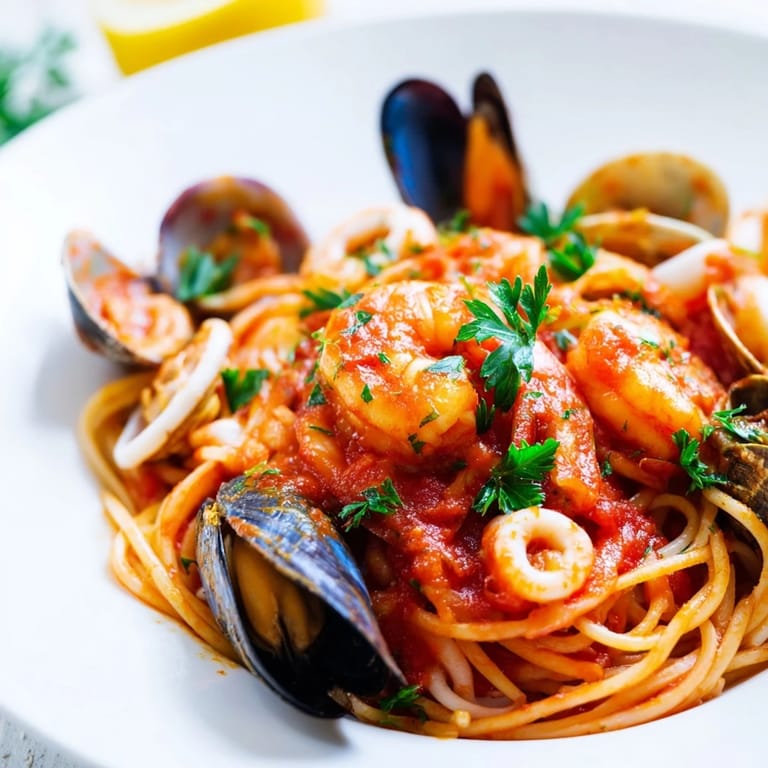
- Start with squid rings and scallops, letting them simmer for 2 minutes in the hot sauce. Then add shrimp and mussels, cover the skillet, and cook for 3-4 minutes until shrimp turn pink and mussels open. Open any that remain stubbornly closed and discard them.
- Combine everything:
- Drain your pasta, saving about half a cup of that starchy water. Add the pasta to the skillet with the seafood and sauce, tossing everything gently together. If it looks dry, splash in some pasta water until it looks like it was meant to be together.
- Final taste:
- Pinch of salt, crack of pepper, a squint of your eye—adjust until it tastes exactly right to you.
 Save Pin
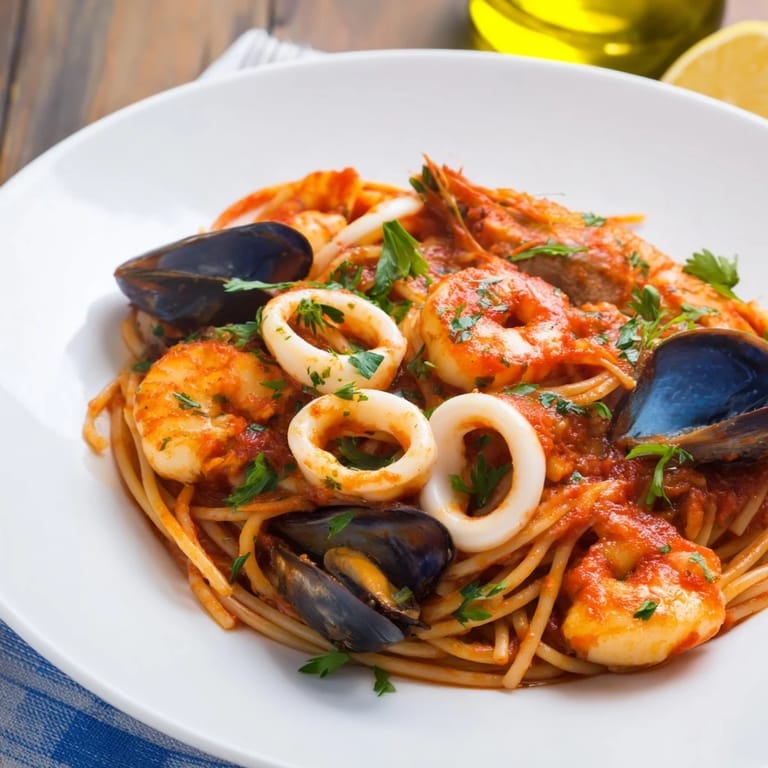
 There's a moment, right when you toss the pasta into the sauce and everything starts to come together, when you realize why people spend years learning to cook seafood. The sauce coats every strand, the seafood is tender and blushed with red, and there's a smell that fills your whole kitchen like proof that something good just happened. That's the moment you know you got it right.
Why Seafood Marinara Became My Favorite Weeknight Fancy
I used to think that making something restaurant-quality meant you had to have special knowledge or spend all day in the kitchen. Then I realized that seafood marinara is the antidote to that belief. It looks impressive on the plate, tastes like you've been cooking for hours, but you've really spent less time on it than you would have spent on takeout. The magic is in simplicity and in not being afraid of heat. There's honesty in a dish like this—no fancy techniques to hide behind, just good ingredients and a hot pan.
Choosing Your Seafood and Making Smart Swaps
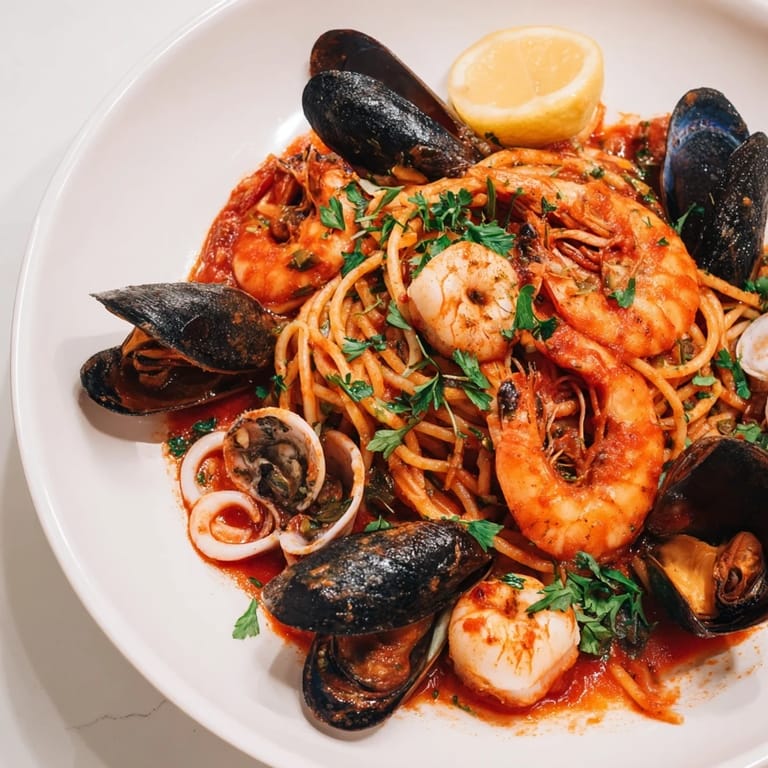
The beautiful thing about this recipe is how flexible it is without losing its soul. If mussels aren't calling to you, clams work just as well and they're slightly sweeter. If you'd rather skip the squid, add more shrimp or throw in some firm white fish that you've cut into bite-sized pieces. The only real rule is to use something fresh that smells like the ocean, not like the seafood counter's exhaust fan. I've made this with whatever looked best at the market that day, and it's never disappointed.
The Wine Question and Other Small Decisions
When I first made this, I used cooking wine from a bottle I'd had open for three weeks, and something was off—not bad, just flat. Now I use something I'd actually drink, usually a crisp Pinot Grigio or Vermentino, and the difference is unmistakable. The wine cooks down and mellows, but it leaves behind brightness and a subtle complexity that rounds out the richness of the tomatoes and seafood. You could pair this with the same wine you use in the pan, or go with a light Chianti—your only job is to make sure it's something you genuinely enjoy, because good intentions show in a bowl of food.
- If you want to go deeper, splash in a quarter cup of seafood stock instead of half the wine; it adds a savory undertone that feels almost secret.
- Fresh basil torn at the last second instead of dried elevates this from weeknight dinner to something you'd order at a restaurant.
- A squeeze of lemon juice at the very end brightens everything and makes people ask what your secret is.
 Save Pin
 This is the kind of recipe that reminds you why you learned to cook in the first place—it's simple, it's honest, and it tastes like care. Serve it with crusty bread and good wine, and you've made something that people will ask you to make again.
Recipe FAQs
- → What pasta works best with seafood in this dish?
Spaghetti or linguine are ideal as their shape holds the rich tomato sauce well, complementing the seafood perfectly.
- → How can I tell when mussels are cooked?
Mussels are done when their shells open. Discard any that remain closed after cooking to ensure freshness.
- → Can I use other types of seafood besides shrimp and scallops?
Yes, firm white fish or clams can substitute or complement the mix for varied textures and flavors.
- → What role does white wine play in the sauce?
White wine adds acidity and depth, enhancing the tomato base and tenderizing the seafood during cooking.
- → How do I adjust the sauce consistency if it's too thick?
Reserve some pasta water while boiling and add it gradually to the sauce to loosen it without losing flavor.