 Save Pin
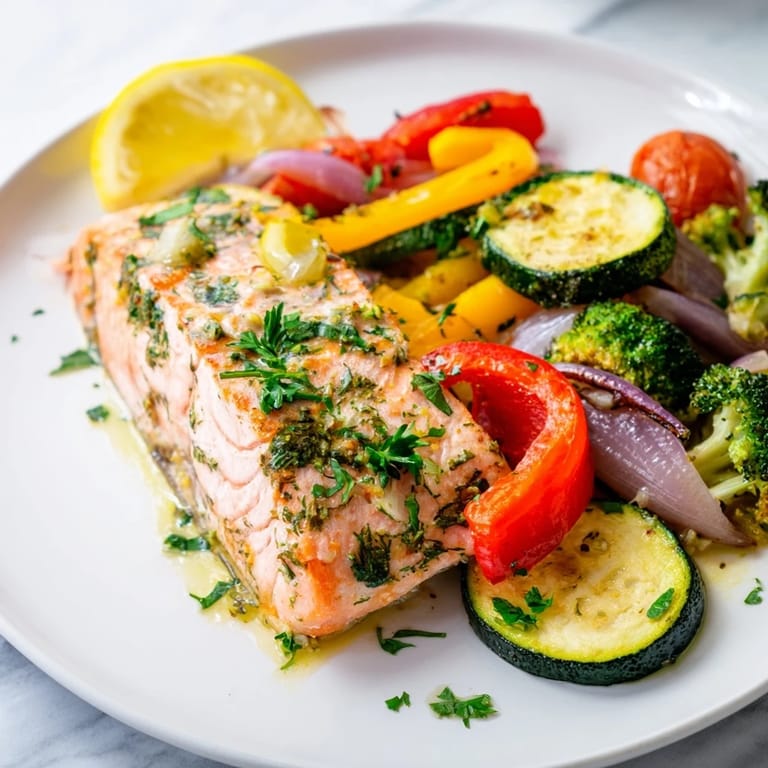
 One weeknight, I stood at the kitchen window watching the sun dip lower, realizing I had salmon thawing and a pantry full of vegetables but absolutely no energy for a complicated dinner. I tossed everything onto a sheet pan, drizzled it with lemon and oil, and thirty-five minutes later pulled out something so vibrant and effortlessly delicious that it became the recipe I reach for when I want to feel like I actually cooked something impressive without the stress.
I made this for my sister during a particularly chaotic week when she was staying with me, and I remember her surprise when something this colorful and restaurant-quality came straight from my home oven. She kept asking what was in the oil, convinced there was some secret ingredient, but it was just the brightness of fresh lemon hitting warm salmon—simple, honest, and somehow exactly what we both needed that night.
Ingredients
- Salmon fillets (6 oz each): The quality of your salmon matters here; look for firm, bright flesh without a strong fishy smell, and skinless fillets keep things neat on the pan.
- Olive oil: Use a good-quality extra virgin oil since it's the backbone of your seasoning mixture and won't be cooked away at high heat.
- Fresh lemon: Both zest and juice brighten everything; if you only have bottled juice, use it, but the zest is non-negotiable for that fresh citrus hit.
- Dill: Fresh dill has a delicate, slightly sweet anise note that feels made for salmon, though dried works if fresh isn't available.
- Garlic powder: One teaspoon dispersed throughout the oil distributes evenly, preventing hot spots of raw garlic flavor.
- Red and yellow bell peppers: These sweet peppers caramelize slightly at high heat and create natural char marks that look beautiful.
- Red onion: The wedges hold their shape during roasting and add a subtle sweetness that mellows as they cook.
- Zucchini: Slice into rounds rather than half-moons so they cook evenly and don't dry out on the edges.
- Cherry tomatoes: Halving them prevents them from rolling around and allows their juices to mingle with the other vegetables.
- Broccoli florets: Cut them roughly the same size so nothing burns while you're waiting for something else to finish cooking.
Tired of Takeout? 🥡
Get 10 meals you can make faster than delivery arrives. Seriously.
One email. No spam. Unsubscribe anytime.
Instructions
- Heat your oven and prepare the stage:
- Preheat to 425°F and line your sheet pan with parchment or foil—this isn't just about cleanup, it's about preventing anything from sticking and getting damaged. A lined pan is a happy pan.
- Build your seasoning base:
- Whisk together olive oil, lemon zest, lemon juice, dill, garlic powder, salt, and pepper in a small bowl. Smell it before you move on; if it smells bright and alive, you're on the right track.
- Toss the vegetables with intention:
- Spread your chopped vegetables across the sheet pan and drizzle with half the oil mixture, tossing with your hands or a wooden spoon until everything glistens. Make sure the pieces are in a single layer so they roast rather than steam.
- Nestle the salmon and anoint it:
- Arrange the salmon fillets among the vegetables like you're tucking them in, then brush each fillet with the remaining oil mixture. The salmon should look wet and golden, not dry.
- Roast until everything is tender:
- Slide the pan into the oven for 18 to 20 minutes—the salmon is done when it flakes easily with a fork and the vegetables have softened and started to caramelize at the edges. Don't walk away completely; listen for the sizzle to deepen and the kitchen to smell incredible.
- Finish with a flourish:
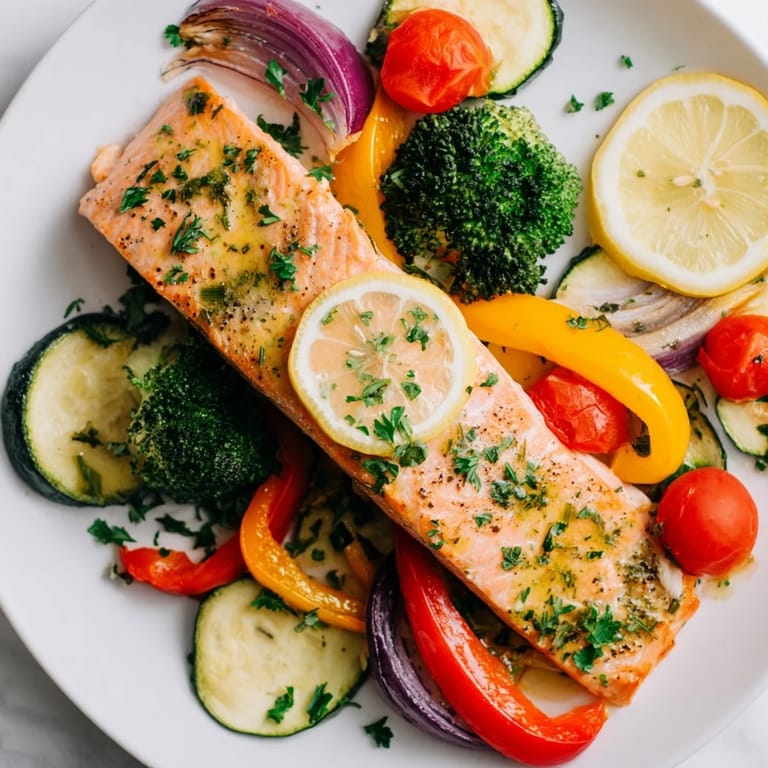
- Remove from the oven, scatter fresh parsley over everything, and squeeze a lemon wedge over the salmon if you have it. Serve immediately while everything is still warm and the flavors are singing.
 Save Pin
 There's a moment, about halfway through cooking, when the combination of roasting vegetables and salmon oil starts filling your kitchen with this warm, herbaceous smell that makes you stop whatever you're doing and just breathe it in. That's when I know the meal is going to be good, and that's why I keep making this recipe.
Choosing the Best Salmon
The difference between grocery store salmon and good salmon is noticeable but not dramatic—a good fillet should be bright pink or coral, not pale, and should smell like the ocean and air, not fishiness. I learned this the hard way after a few underwhelming dinners, and now I'll ask the fishmonger when the salmon came in and whether I can smell it before committing. Wild-caught is typically better if you have the budget, but farm-raised works perfectly fine for a sheet pan dinner like this.
Flexibility With Vegetables
The beauty of this recipe is that you can build it around whatever vegetables are actually in your kitchen or what the farmers market is offering that day. Spring might bring asparagus and snap peas; summer is your moment for zucchini and tomatoes; fall welcomes root vegetables like carrots and Brussels sprouts; winter makes a case for hearty broccoli and cauliflower. The roasting technique stays the same, and the seasoning adjusts itself to whatever you choose.
Making It Your Own
Once you've made this a couple of times and understand how the elements work together, start playing with it. A sprinkle of feta cheese or capers in the last minute adds a salty, briny note that some people find irresistible. Others brush the salmon with Dijon mustard before the oil for an earthy tang. The fresh parsley garnish can become dill or cilantro or chives depending on your mood. Listen to what your kitchen is telling you and trust that the foundation is strong enough to handle your creativity.
- Try adding a splash of white wine or chicken stock to the pan before roasting for extra moisture and depth.
- If you're cooking for people with different vegetable preferences, arrange their vegetables in separate clusters so pickiness doesn't ruin the meal.
- Leftover salmon and vegetables are excellent cold the next day with a squeeze of lemon and a drizzle of olive oil over a salad.
 Save Pin
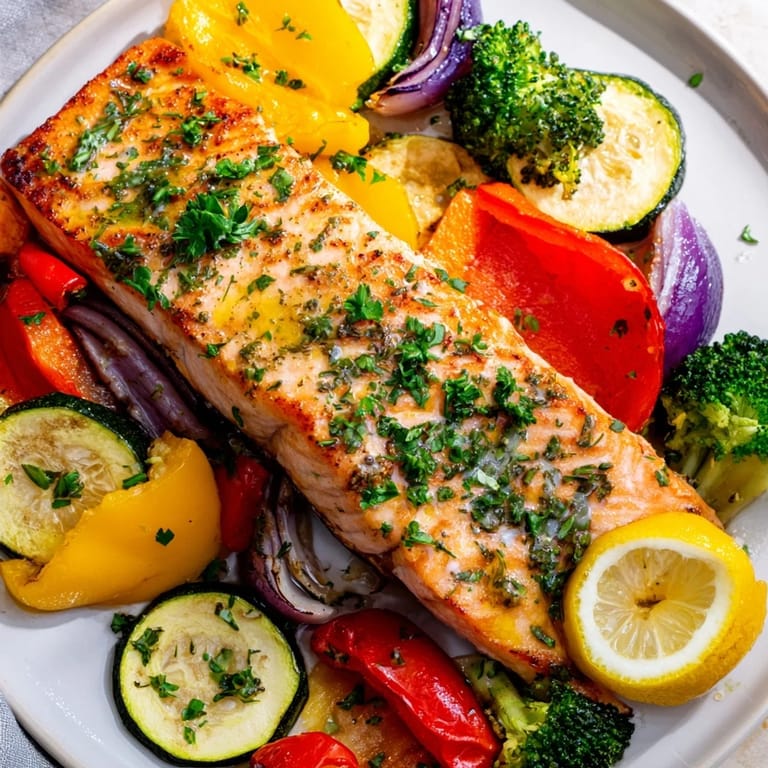
 This recipe has quietly become the meal I reach for when I want something nourishing that doesn't feel like a chore, and that's the highest compliment a weeknight dinner can receive. It's given me a way to cook salmon that's actually enjoyable instead of stressful, and that changes everything.
Recipe FAQs
- → What temperature is best for baking salmon and vegetables together?
Preheating the oven to 425°F (220°C) ensures the salmon cooks through quickly while the vegetables roast to tender perfection.
- → Can I use different vegetables in this dish?
Yes, seasonal alternatives like asparagus, green beans, or carrots work well and can add variety to the dish.
- → How do I ensure the salmon stays moist during baking?
Coating the salmon with an olive oil, lemon, and dill mixture before roasting helps lock in moisture and enhances flavor.
- → Is it necessary to line the sheet pan?
Lining the pan with parchment paper or foil facilitates easy cleanup and prevents sticking of fish and vegetables.
- → What are suitable drink pairings for this dish?
Light white wines such as Sauvignon Blanc or Chardonnay complement the citrus and herb flavors beautifully.