 Save Pin
 My first attempt at pelmeni happened on a cold Tuesday evening when I decided to surprise my partner with something from their childhood. I had no idea what I was doing—just a vague memory of them describing these delicate dumplings their grandmother used to make. Flour ended up everywhere, my dough was too sticky at first, and I nearly gave up. But then something clicked: the rhythm of folding, the satisfying pinch of each seal, the way the kitchen smelled like onion and garlic and possibility. By the time the first batch bobbed to the surface of boiling water, I understood why this dish matters.
I remember the first time I actually served these to people—my hands were shaking because I'd never made Russian food before and I wasn't sure I'd gotten it right. When everyone around the table went quiet for that first bite, I thought I'd failed. Then someone said, "These taste like home," and suddenly the imperfect shapes didn't matter anymore. That's when I realized pelmeni isn't about perfection; it's about feeding people something that feels like it came from somewhere real.
Ingredients
- All-purpose flour (2 cups/250 g): This is your foundation, and the amount matters more than you might think—too much makes the dough tough, too little makes it tear. I learned to weigh mine after my first batch came out like cardboard.
- Cold water (1/2 cup/120 ml): Temperature genuinely changes everything here; warm water will make the dough slack and impossible to work with, so keep it chilled and add it slowly.
- Egg (1 large): This binds everything together and gives the dough just enough richness to be tender without being fragile.
- Salt (1/2 tsp for dough, 1/2 tsp for filling): Don't skip either pinch—the dough needs it to strengthen the gluten, and the filling needs it to season the meat properly.
- Ground pork and beef (7 oz/200 g each): The combination of both meats gives you more depth than using one alone; pork brings sweetness and beef brings savory weight.
- Onion, finely grated (1 small): Grating instead of mincing keeps the filling moist and makes the onion almost invisible in the cooked dumpling, which I prefer to chunks.
- Garlic, minced (2 cloves): Fresh garlic matters here because it won't overpower the delicate meat flavor if you don't go overboard.
- Black pepper (1/2 tsp): Just a whisper of it—these dumplings are subtle, not assertive.
- Cold water for filling (2 tbsp): This keeps the meat mixture sticky and ensures moist pelmeni; skip it and your filling will be dry and dense.
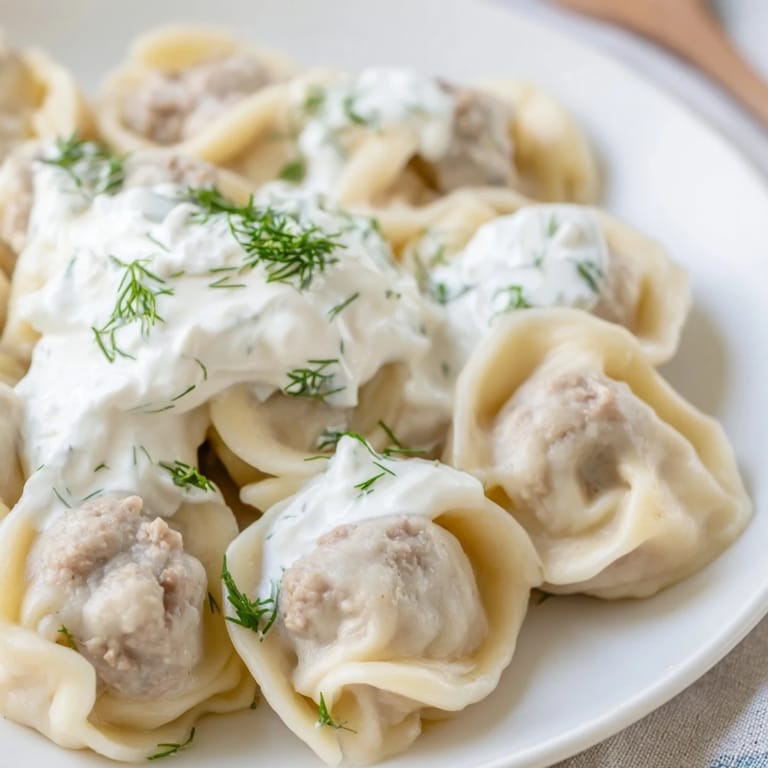
- Sour cream (1 cup/240 g): This is the whole point of serving them hot—the cream melts and creates a silky sauce that coats every bite.
- Fresh dill, chopped (1 tbsp, optional): Not actually optional in my opinion; the bright anise flavor is traditional and lifts everything else.
Tired of Takeout? 🥡
Get 10 meals you can make faster than delivery arrives. Seriously.
One email. No spam. Unsubscribe anytime.
Instructions
- Build your dough base:
- Combine your flour and salt in a large bowl, then make a small well in the center and crack your egg into it. Start mixing slowly with your fingers, pulling flour toward the egg, then gradually add cold water a little at a time. The dough will be shaggy at first—don't panic. Knead for a full 8 to 10 minutes until it becomes smooth, elastic, and satiny.
- Let the dough rest:
- This step separates good pelmeni from great ones because resting allows the gluten to relax and the flour to fully hydrate. Cover the bowl with plastic wrap and set it aside for 20 minutes while you prepare everything else.
- Mix your meat filling:
- Combine the ground pork, beef, grated onion, garlic, salt, pepper, and cold water in a medium bowl and mix with your hands until everything is sticky and well combined—the cold water is important because it keeps the filling moist as it cooks. Don't overmix or the meat will become tough.
- Roll and cut the dough:
- On a lightly floured surface, roll your rested dough out to about 1/16 inch thick (it should almost be transparent in places) and use your round cutter to cut out circles. Work in batches and keep unused dough under a towel so it doesn't dry out.
- Fill and fold with intention:
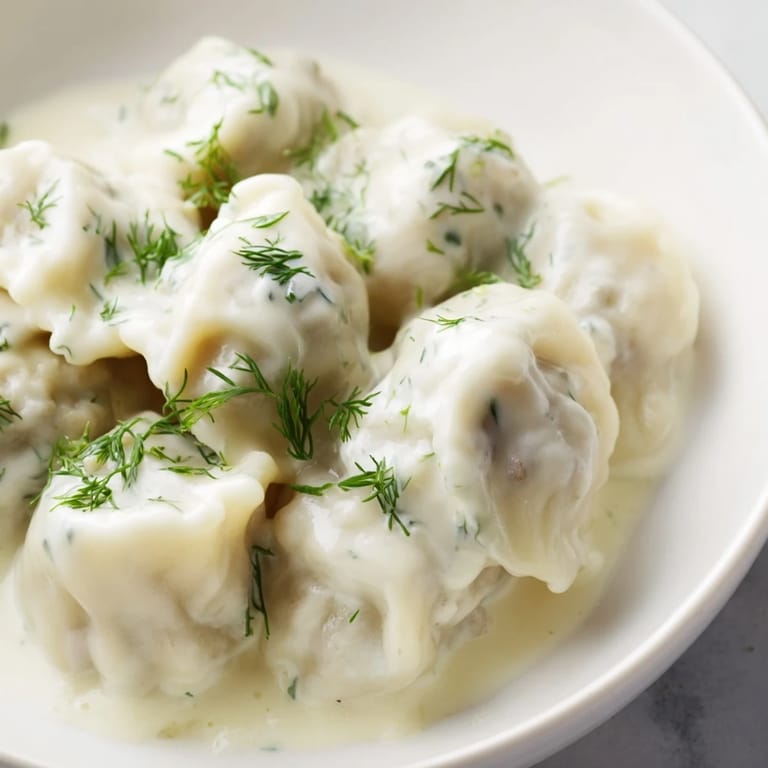
- Place about 1 teaspoon of filling in the center of each circle—more than that and it will burst when boiling, less and they'll taste empty. Fold each circle in half to create a half-moon, pinching the edges firmly to seal, then bring the two corners together and pinch them tight to form the classic pelmeni shape (it should look almost like a tiny hat).
- Boil until they float:
- Bring a large pot of generously salted water to a rolling boil, then add pelmeni in batches, stirring gently as they go in so they don't stick. They'll sink at first, then bob to the surface after about 3 to 4 minutes—let them cook for another 2 to 3 minutes after floating to make sure the filling is completely cooked through.
- Finish with finesse:
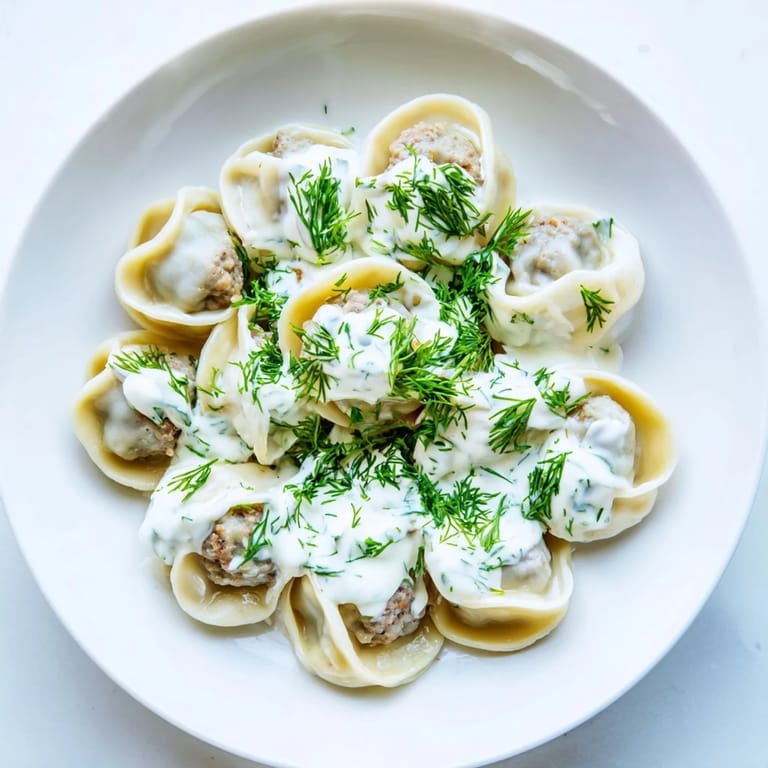
- Remove each batch with a slotted spoon and transfer to serving bowls while still steaming, then top generously with cold sour cream and fresh dill. The temperature contrast between hot dumplings and cool cream is essential to the whole experience.
 Save Pin
 There's something almost meditative about the repetitive motion of filling and folding—the same fold, over and over, until your hands know the movement without thinking. I've made these late at night when I couldn't sleep, and somehow the focused, small-scale work of it steadied me. By the time the pot was full of waiting dumplings, I felt calm in a way that nothing else quite gives me.
Why Pelmeni Matter Beyond the Bowl
These dumplings are pure generosity of spirit disguised as food. In Russia they were born out of necessity—meat filling in a wheat wrapper, boiled quickly, stretched across seasons and celebrations. Every culture has a version of this idea because it works: you can make them when you have time, freeze them for when you don't, and serve them to anyone knowing they'll feel cared for. That practicality is part of their beauty.
The Sour Cream Moment
The sour cream isn't just a topping; it's the whole point. I used to think I should make a proper sauce, but then I realized the simplicity was the point—cool, tangy cream melting into the heat of the dumplings, fresh dill cutting through the richness. It's restraint that somehow tastes like abundance. This is the kind of cooking where you learn to trust simplicity.
Making Them Your Own
Once you know how to fold a pelmeni, you can fill them with almost anything: different meat combinations, mushrooms, even potato and cheese if you want something vegetarian. I've made them with just beef and added a small pinch of nutmeg to the filling—something I read about and now can't imagine without. The shape and technique stay the same, but the filling becomes your signature.
- A tiny grating of nutmeg in the meat filling adds warmth without anyone being able to name what they're tasting.
- If you're doubling the recipe, freeze half the dumplings uncooked on a tray before transferring to bags—they'll keep for three months and save you on frantic nights.
- Vinegar or melted butter are traditional accompaniments alongside the sour cream if you want to offer options to guests.
 Save Pin
 Making pelmeni is one of those recipes that rewards you the more you make it, where your hands learn what the dough should feel like and your eye figures out the right thickness without measuring. The first batch might be imperfect, but by the second or third time, you'll find yourself lost in the rhythm of it.
Recipe FAQs
- → What is the best flour for pelmeni dough?
All-purpose flour provides a good balance of gluten strength and tenderness, ideal for pelmeni dough.
- → How do you prevent pelmeni from sticking during cooking?
Stir gently while cooking in plenty of boiling salted water, and avoid overcrowding the pot to prevent sticking.
- → Can I prepare pelmeni in advance?
Yes, pelmeni freeze well before cooking. Freeze them flat on a tray, then transfer to a bag for up to three months.
- → What ingredients enhance the meat filling flavor?
Adding grated onion, minced garlic, salt, pepper, and an optional pinch of nutmeg enriches the meat filling's taste.
- → How should pelmeni be served traditionally?
They are typically served hot with sour cream sauce and fresh dill, sometimes accompanied by vinegar or melted butter.