 Save Pin
 My kitchen smelled like charred pepper and something deeply savory the afternoon I first threw together a roasted vegetable salad, purely out of stubbornness. I'd bought too many vegetables at the farmers market, convinced I'd make something elaborate, but by the time I got home I was tired and hungry. Roasting felt like the easiest way to make everything taste intentional. Within thirty minutes, those simple vegetables had turned golden and sweet, and I suddenly understood why this salad keeps showing up on my table week after week.
I remember serving this at a small dinner on a late summer evening when one of my friends mentioned she was tired of sad salads. I'd made this the day before and it was waiting in my fridge, and watching her face light up when she tasted it was the moment I realized how much better warm roasted vegetables are than cold raw ones. She asked for the recipe three times that night.
Ingredients
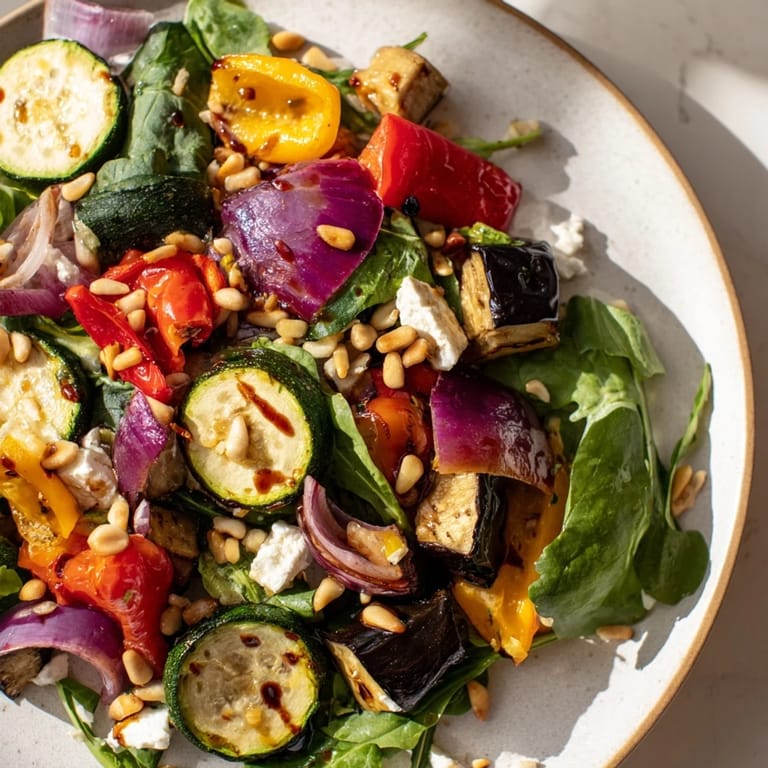
- Zucchini (1 medium, half-inch slices): Slice it thick enough so it doesn't disappear into the pan, but thin enough to cook through before the edges burn.
- Red bell pepper (1, cut into 1-inch pieces): The slight bitterness balances everything else, and the pieces should be generous so they stay intact while roasting.
- Yellow bell pepper (1, cut into 1-inch pieces): Use both colors because they taste slightly different and the salad looks alive with them.
- Red onion (1 small, cut into wedges): It softens into something almost sweet when roasted, and the wedges hold together better than chopped pieces.
- Eggplant (1 small, 1-inch cubes): Salt the eggplant lightly before roasting if you have time; it keeps the texture tender instead of spongy.
- Cherry tomatoes (8 oz, halved): Add them halfway through roasting so they don't collapse into the other vegetables.
- Olive oil (2 tbsp for roasting): Don't skimp here; the oil is what creates that caramelized edge.
- Dried Italian herbs (1 tsp): A pinch of dried oregano and thyme works better than a single herb if you're mixing them yourself.
- Salt and black pepper: Season generously before roasting, then taste again at the end because roasting concentrates flavors.
- Mixed salad greens (5 oz): Choose greens sturdy enough to hold up to warm vegetables without wilting completely.
- Extra virgin olive oil for dressing (3 tbsp): Save your good oil for the dressing where you'll actually taste it.
- Balsamic vinegar (2 tbsp): The real stuff is worth seeking out; cheap balsamic tastes thin and sharp.
- Dijon mustard (1 tsp): It acts as an emulsifier and adds a subtle depth that doesn't announce itself.
- Garlic (1 clove, finely minced): Mince it small so the flavor distributes evenly through the dressing instead of appearing in bitter chunks.
- Honey or maple syrup (½ tsp): A touch of sweetness rounds out the vinegar's bite and brings all the flavors into balance.
- Pine nuts or walnuts (2 tbsp toasted, optional): Toasting them yourself makes all the difference; buy them raw and spend three minutes in a dry pan.
- Parmesan or feta cheese (optional): Shave Parmesan thin with a vegetable peeler so it melts slightly from the warm vegetables.
Tired of Takeout? 🥡
Get 10 meals you can make faster than delivery arrives. Seriously.
One email. No spam. Unsubscribe anytime.
Instructions
- Heat your oven and prepare the pan:
- Preheat the oven to 425°F and line a large baking sheet with parchment paper. A hot oven is your friend here; you want those vegetables to start caramelizing the moment they hit the heat.
- Toss everything together:
- In a large bowl, combine all the chopped vegetables with 2 tablespoons of olive oil, your dried herbs, and a generous pinch of salt and pepper. Make sure every piece glistens with oil; this is what creates that golden crust.
- Spread and roast:
- Spread the vegetables in a single layer on the baking sheet, leaving some space between pieces. After about fifteen minutes, give everything a stir so the pieces that were on top flip over to catch more heat.
- Build the dressing while you wait:
- Whisk together the olive oil, balsamic vinegar, mustard, minced garlic, and honey in a small bowl. Taste it straight from the whisk; the vinegar should sing without overwhelming everything else.
- Layer your salad:
- Arrange the greens on a platter or individual plates first. The cool greens will catch the warmth from the roasted vegetables as you pile them on top.
- Dress and garnish:
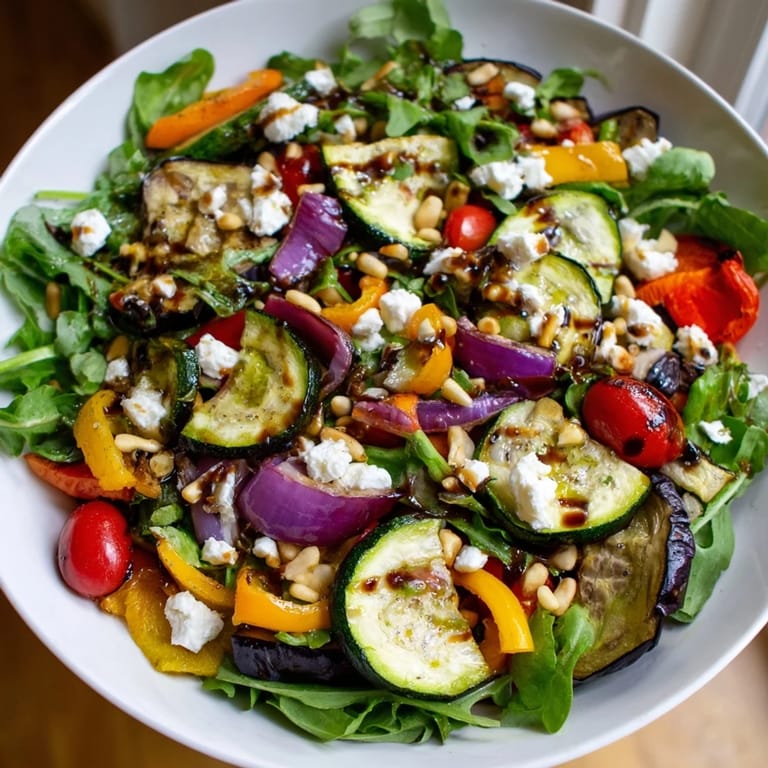
- Pour the dressing over everything and finish with toasted nuts and cheese if you're using them. The warmth of the vegetables will wake up the cheese and make the whole thing taste sophisticated.
 Save Pin
 There's a moment in every batch where I pull the baking sheet out of the oven and the kitchen fills with a smell so concentrated and sweet that I pause and just breathe it in. That's when I know this salad is about to remind me why I cook at all. It's the kind of dish that turns a random weeknight dinner into something worth remembering.
Why Roasting Changes Everything
Raw vegetables are honest and fresh, but they're also predictable. Roasting is what wakes them up. The high heat breaks down the cell walls and concentrates the sugars, so a zucchini that would've been bland becomes nutty and golden. The peppers go from crisp to tender and almost silky. Even the onion transforms, its sharpness melting into something round and gentle. This is not salad in the traditional sense; it's cooked vegetables treated with the respect they deserve, arranged on some greens because we both know salad sounds better than roasted vegetables alone.
The Dressing is the Secret
A good dressing makes or breaks any salad, but with roasted vegetables it's almost more important. The balsamic and vinegar echo the caramelization happening on the vegetables, and the Dijon mustard acts like a bridge connecting all the flavors. I've learned that the mustard isn't there for tang; it's there to help the oil and vinegar stay emulsified so the dressing clings to every leaf instead of pooling at the bottom of the bowl. That touch of honey isn't sweetness for sweetness's sake; it's a way of saying the dressing understands that roasted vegetables are already a little sweet, and we're honoring that, not fighting it.
Thinking About Leftovers and Variations
This salad lives in the fridge beautifully for three days, and it actually tastes better on day two because the flavors have had time to get to know each other. Cold, it becomes something entirely different; I've found myself eating it straight from a container at my desk, and somehow that matters less than how good it tastes. Roasted sweet potatoes or carrots can join the party if you have them, or if you're in the mood to stretch it into something heartier, grilled chicken or crumbled feta makes it feel like a complete meal.
- Make the dressing up to three days ahead and store it in a jar; shake it before using.
- If you're meal prepping, keep the greens separate until you're ready to eat so they stay crisp.
- Room temperature is the best temperature; it lets you actually taste everything instead of fighting through cold.
 Save Pin
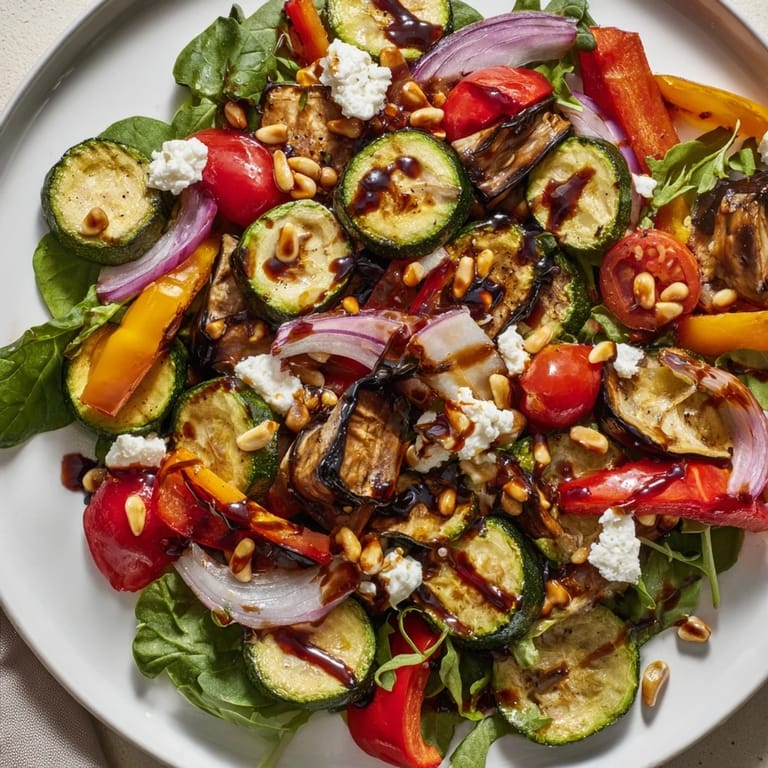
 This salad has become my answer to the question of what to make when I want something that feels intentional but doesn't require much thought. It's the kind of recipe that lets you be both lazy and impressive at the same time.
Recipe FAQs
- → Can I prepare the roasted vegetables ahead of time?
Yes, roast the vegetables in advance and store them in the refrigerator. Reheat gently or serve at room temperature for best texture.
- → What greens work best for this salad?
Mixed greens such as arugula, spinach, or spring mix complement the warm vegetables and add freshness.
- → How do I make the dressing emulsify properly?
Whisk the olive oil, balsamic vinegar, mustard, garlic, honey, salt, and pepper briskly until combined into a smooth dressing.
- → Can I substitute the nuts or cheese?
Yes, pine nuts and walnuts can be swapped or omitted, and cheese can be replaced with vegan alternatives or left out for a dairy-free option.
- → What herbs are ideal for roasting the vegetables?
Dried Italian herbs like thyme, oregano, and basil infuse the vegetables with classic Mediterranean flavors.