 Save Pin
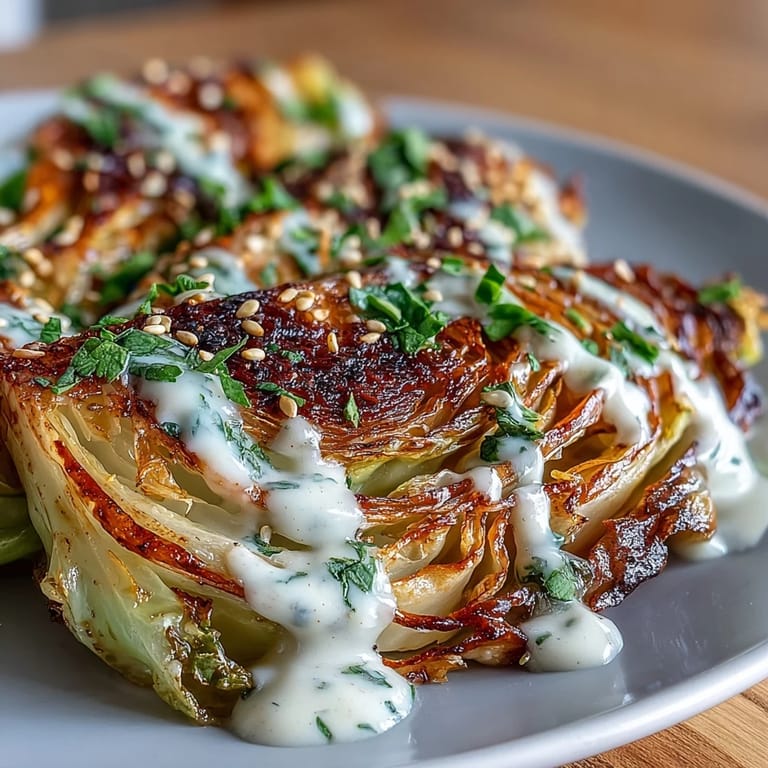
 My neighbor brought over a container of roasted cabbage wedges last fall, and I was skeptical until the first bite—the edges were caramelized and crispy, the centers tender, and underneath was this creamy tahini sauce that tasted like someone had bottled warmth and nuttiness. I asked for the recipe right there in the kitchen, and she laughed, saying it took her years to stop overcrowding the pan and underseasoning the sauce. Now it's become my go-to when I want something that feels fancy but requires almost no fuss.
I made this for a potluck last spring where everyone brought something elaborate, and watching people go back for thirds of roasted cabbage while their fancy dishes sat untouched gave me such quiet satisfaction. Someone asked if it was restaurant food, which felt like the highest compliment for something I'd thrown together in 40 minutes.
Ingredients
- 1 medium green cabbage (about 2 lbs), cut into 8 wedges, core intact: The core holds the wedges together as they roast, so don't be tempted to remove it—it's structural genius.
- 2 tbsp olive oil: Don't skimp here; the oil helps the edges crisp and brown beautifully.
- 1/2 tsp kosher salt and 1/4 tsp freshly ground black pepper: Season generously on both sides; the roasting intensifies flavors, so what seems like enough now will taste subtle after 30 minutes.
- 1/3 cup tahini: Look for raw or roasted depending on your mood—roasted tahini is nuttier and more forgiving.
- 1 small garlic clove, finely grated: Grating it instead of mincing distributes it evenly and prevents sharp garlic bites.
- 2 tbsp fresh lemon juice: This cuts through the tahini's richness and makes the sauce sing.
- 2–4 tbsp cold water: Start with 2 and add slowly; the sauce thickens as it sits, so err on the side of pourable.
- 1/4 tsp ground cumin and 1/4 tsp kosher salt: Cumin adds warmth without announcing itself, and the extra salt keeps the sauce from tasting flat.
- Toasted sesame seeds, fresh herbs, and smoked paprika (optional garnish): These finish the dish with color and texture, turning it from simple to intentional.
Tired of Takeout? 🥡
Get 10 meals you can make faster than delivery arrives. Seriously.
One email. No spam. Unsubscribe anytime.
Instructions
- Heat your oven and prep your stage:
- Get the oven to 425°F and line a baking sheet with parchment paper—this saves cleanup and prevents sticking. The parchment is worth it.
- Cut and season the cabbage:
- Slice your cabbage into 8 wedges, keeping the core attached to each piece. Lay them flat on the baking sheet, drizzle with olive oil, and season both sides generously with salt and pepper, letting the seasoning settle into the folds.
- Roast until the magic happens:
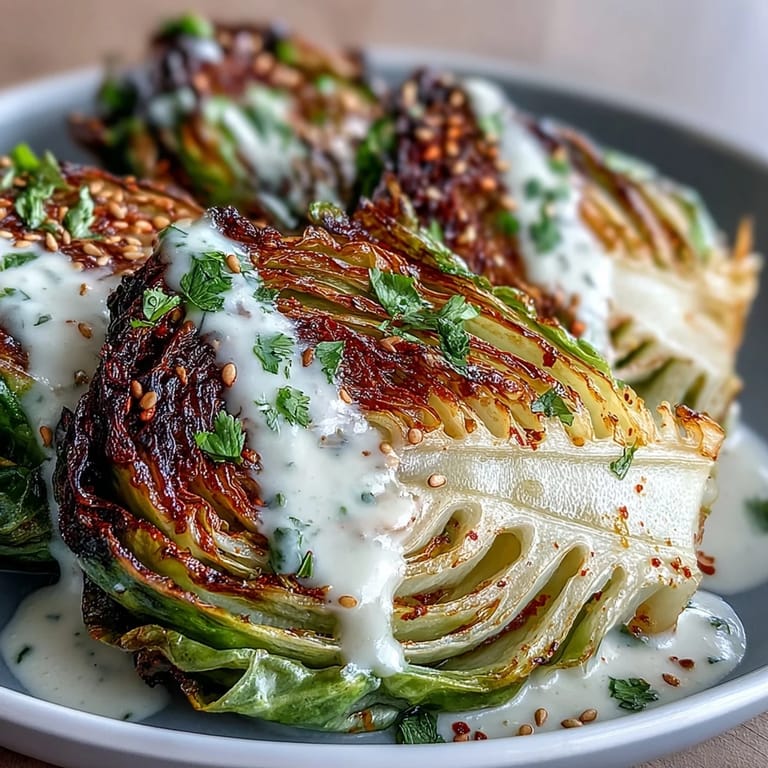
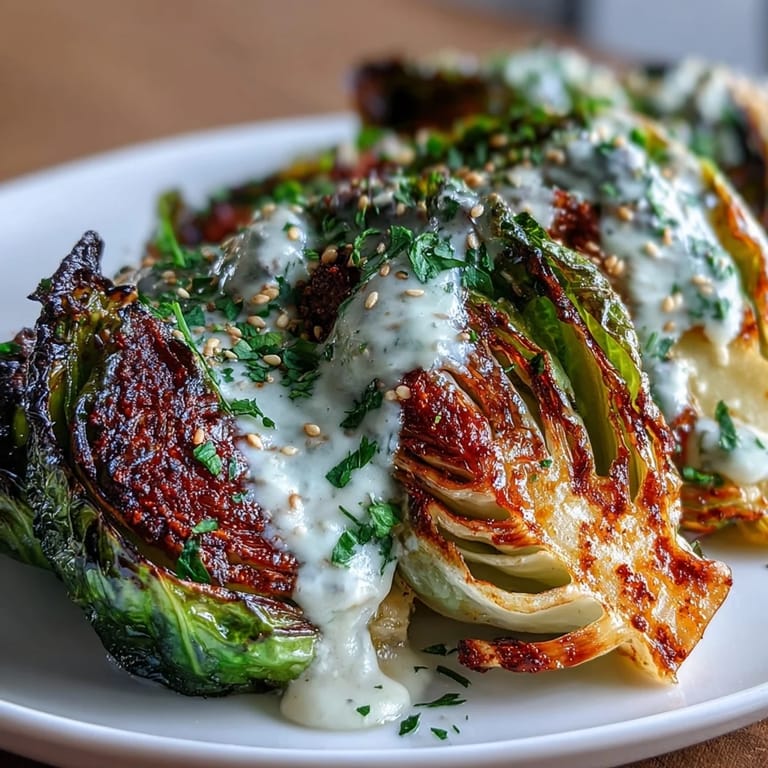
- Put the sheet in the oven and set a timer for 15 minutes. Flip each wedge halfway through, watching as the edges go golden and crispy while the interior becomes tender. You're looking for about 25 to 30 minutes total—the exact time depends on your cabbage and oven, but you'll know it's done when the cut sides are deeply browned.
- Build the tahini sauce:
- While the cabbage roasts, whisk together tahini, grated garlic, lemon juice, cumin, and salt in a bowl. The mixture will seize up—that's normal. Slowly whisk in cold water one tablespoon at a time until you have something that pours like warm honey, thick but flowing.
- Bring it all together:
- Transfer the hot roasted cabbage to a serving platter and drizzle generously with tahini sauce. Sprinkle with sesame seeds, fresh herbs, and a pinch of smoked paprika if you have it, then serve warm or at room temperature.
 Save Pin
 There was a dinner where I served this alongside roasted chicken and rice, and my grandmother—who ate meat and potatoes her whole life—asked for the recipe and actually made it the next week. That moment taught me that humble food made thoughtfully can surprise anyone.
The Alchemy of Roasting Cabbage
Roasting cabbage is one of those cooking tricks that feels like a secret once you understand it. The heat breaks down the sulfur compounds that make raw cabbage taste sharp, replacing them with natural sugars that caramelize on the edges. What emerges from the oven is something entirely different—sweet, nutty, almost tender—while those crispy browned edges add texture that makes your mouth happy.
Tahini as a Canvas
Tahini sauce intimidates people, but it's really just a blank slate waiting to take on whatever flavors you give it. The cumin grounds it in savory territory, the lemon keeps it bright, and the garlic adds backbone. Once you nail this ratio, you'll find yourself making it for roasted vegetables, grain bowls, and anything that needs richness without heaviness.
Making It Your Own
The beauty of this dish is how easily it bends to what's in your kitchen or what you're craving that day. I've added pomegranate seeds for tang and sweetness, scattered chili flakes when I wanted heat, and once even stirred pomegranate molasses into the tahini sauce for something deeper and more complex. The roasted cabbage is your foundation; everything else is decoration.
- Try a drizzle of pomegranate molasses mixed into the tahini sauce for an unexpected depth.
- Red cabbage works too, though it takes a few minutes longer to soften and develop those caramelized edges.
- Serve with warm pita, rice, or alongside grilled proteins—this dish plays well with almost everything.
 Save Pin
 This is the kind of dish that sneaks into your regular rotation without fanfare, becoming something you make when you want to feel like you've cooked something real but don't have the energy for complicated. Serve it warm or cold, alone or as part of a larger meal, and watch it disappear.
Recipe FAQs
- → How do I know when the cabbage is done roasting?
The cabbage wedges are ready when edges are deep golden brown and slightly crispy, while the inner layers feel tender when pierced with a fork. This typically takes 25–30 minutes at 425°F.
- → Can I make the tahini sauce ahead of time?
Absolutely. The tahini sauce keeps well in the refrigerator for up to a week. It may thicken when chilled—simply whisk in a little cold water to reach desired consistency before serving.
- → Why is my tahini sauce thick and clumpy?
Tahini naturally seizes when mixed with acidic ingredients like lemon juice. Keep whisking vigorously while gradually adding cold water. The sauce will suddenly transform into a smooth, creamy consistency.
- → Can I use red cabbage instead of green?
Yes, red cabbage works beautifully and adds vibrant color. Note that red cabbage may take a few extra minutes to become tender, and the final dish will have a slightly earthier flavor.
- → What should I serve with roasted cabbage wedges?
These wedges pair wonderfully with warm pita bread, rice pilaf, or quinoa for a complete meal. They also complement grilled meats, roasted chicken, or falafel for a larger spread.
- → How do I store leftovers?
Store roasted cabbage and tahini sauce separately in airtight containers. The cabbage keeps for 3–4 days. Reheat in the oven at 375°F for 10 minutes to restore crispness before drizzling with fresh sauce.