 Save Pin
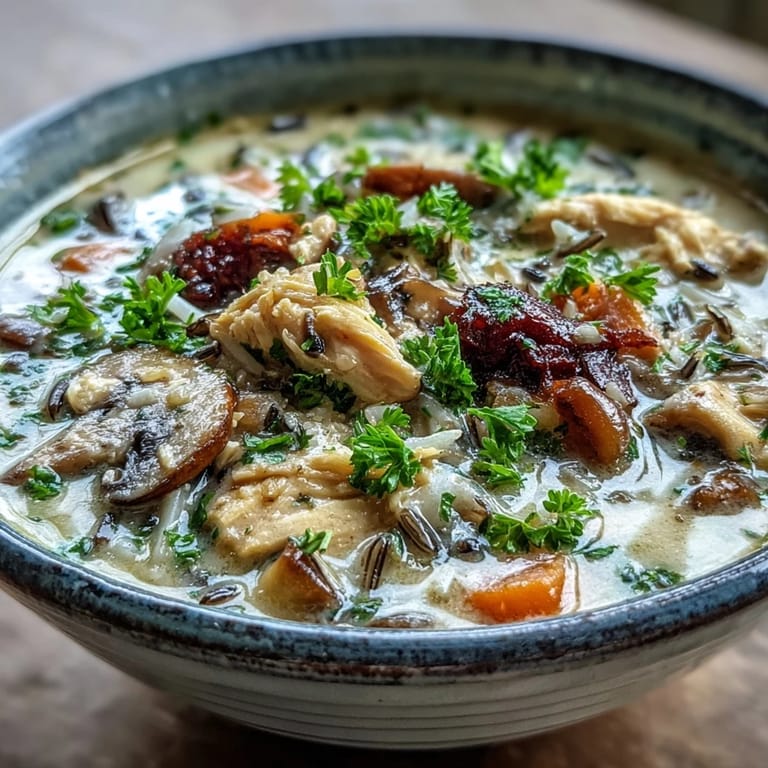
 There's something about a bowl of wild rice soup that stops time on a grey afternoon. I discovered this particular version while leafing through my grandmother's cooking notes, though I suspect she'd been improvising it for years without writing anything down. The first time I made it, the kitchen filled with such a rich, mushroom-forward smell that my partner came downstairs asking if we were celebrating something. That's when I knew I'd found something special.
I made this soup for my book club on a particularly quiet winter evening, and something shifted in the room once everyone tasted it. People stopped talking about their weeks and just sat with their bowls, appreciating. One friend asked if the mushrooms were wild foraged, and I had to laugh—they were just cremini from the grocery store, but the way they'd caramelized in the pot made them taste like something hunted from a forest floor.
Ingredients
- Boneless, skinless chicken breasts (2, about 400 g, diced): Dice them into bite-sized pieces so they cook evenly and don't dominate each spoonful.
- Wild rice (3/4 cup, 140 g, rinsed): Always rinse it first to remove any debris, and the nutty flavor becomes the backbone of this soup.
- Cremini or white mushrooms (300 g, sliced): Cremini have more flavor than button mushrooms, but white ones work fine if that's what you have.
- Olive oil (2 tablespoons): Don't skip this for the initial sauté; it builds flavor in a way butter alone cannot.
- Unsalted butter (1 tablespoon): Added to the oil, it creates a richer base for your vegetables.
- Yellow onion (1 large, diced): The sweetness balances the earthiness of the mushrooms and rice.
- Garlic cloves (3, minced): Mince them small so they distribute evenly and don't overpower any single bite.
- Carrots (3 medium, peeled and sliced): Cut them on a slight bias so they cook at the same rate as the celery.
- Celery stalks (3, sliced): This is the unsung hero that adds subtle mineral notes without announcing itself.
- Fresh thyme leaves (2 teaspoons or 1 teaspoon dried): Fresh thyme is worth seeking out here; it adds brightness that dried cannot quite achieve.
- Bay leaf (1): Remove it before serving, but don't skip it—it quietly anchors the entire flavor profile.
- Low-sodium chicken broth (1.5 liters, 6 cups): Low-sodium lets you control the salt and taste the actual soup.
- Freshly grated Parmesan cheese (1 cup, 100 g): Grate it yourself from a block; pre-grated versions have additives that prevent it from melting smoothly.
- Heavy cream (1/2 cup, 120 ml): This is what makes the final bowl feel luxurious without being heavy.
- Salt and freshly ground black pepper: Season gradually throughout cooking, tasting as you go.
- Fresh parsley (2 tablespoons chopped, for garnish): A sprinkle of fresh parsley at the end adds color and a fresh note.
Tired of Takeout? 🥡
Get 10 meals you can make faster than delivery arrives. Seriously.
One email. No spam. Unsubscribe anytime.
Instructions
- Build your flavor base:
- Heat the olive oil and butter in a large pot over medium heat until the butter foams slightly. Add the diced onion, carrots, and celery, then sauté for about 5 minutes, stirring occasionally, until the vegetables just begin to soften and the onion turns translucent.
- Let the mushrooms sing:
- Add the sliced mushrooms and minced garlic to the pot and cook for 6 to 8 minutes. You'll notice the mushrooms will release their liquid first, then it will evaporate, and they'll develop a golden edge—that's exactly when you know they're ready.
- Bring everything together:
- Stir in the diced chicken, wild rice, fresh thyme, bay leaf, salt, and pepper. Cook for 2 to 3 minutes while stirring occasionally, just until the chicken loses its raw look on the outside.
- Let it simmer:
- Pour in the chicken broth and bring the pot to a boil over medium-high heat. Once it reaches a full boil, reduce the heat to low, cover the pot partially, and let it simmer gently for 40 to 45 minutes until the wild rice is tender with just a slight chew and the chicken is cooked through.
- Finish with cream and cheese:
- Remove the bay leaf and stir in the heavy cream and freshly grated Parmesan. Let it simmer uncovered for about 5 minutes while the cheese melts completely and the soup becomes silky. Taste and adjust the salt and pepper as needed.
- Serve with intention:
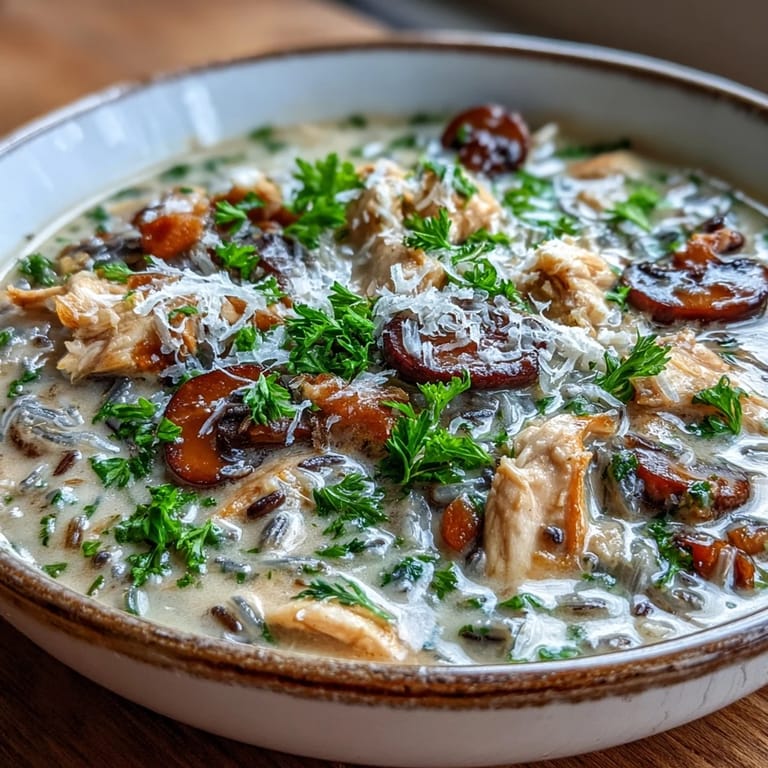
- Ladle the soup into bowls and finish each one with a sprinkle of fresh parsley and extra Parmesan if you like. Serve immediately while the soup is still steaming.
 Save Pin
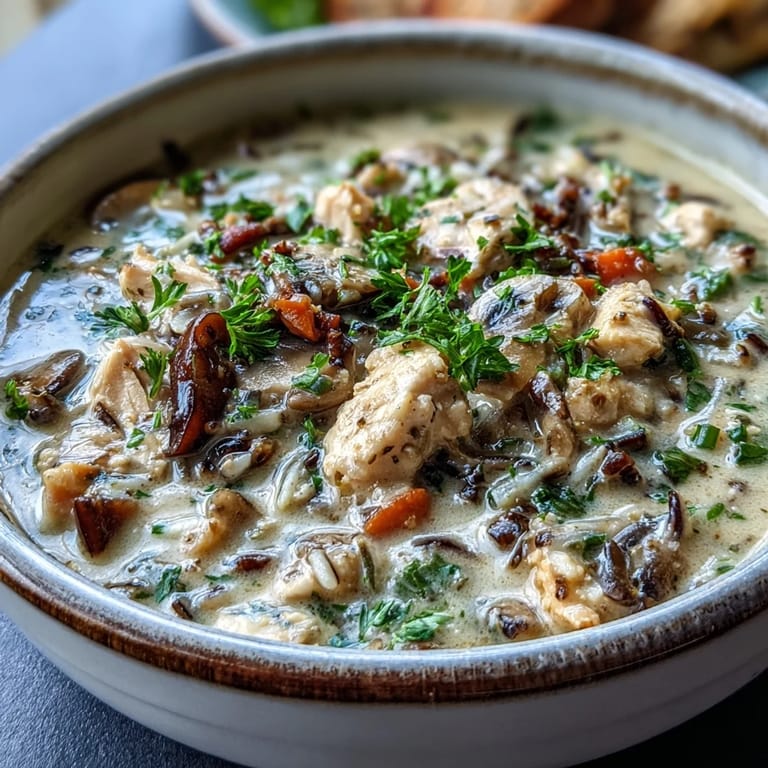
 I remember my sister tasting this soup and going silent for a moment in a way that made me nervous, then she said, 'This tastes like you understand something I don't.' It wasn't about technique or ingredients—it was about patience and attention, the kind that turns ordinary things into something that feels personal.
The Mushroom Moment
The mushroom step is where this soup gets its character. When you first add them to the pot, they seem to drink up all the heat and release their moisture, making the pan look almost soupy. But wait, and something magic happens—the liquid evaporates, the mushrooms shrink slightly, and their natural sugars caramelize against the hot pot. This is not a step to rush or skip, because mushrooms treated gently become umami bombs that define the entire bowl.
Wild Rice: The Anchor
Wild rice is not actually rice, and it needs time to become tender. It has a nutty flavor and a slight chew that ordinary rice cannot match, and it's what keeps this soup from feeling like a cream soup dressed up as something else. The 40-minute simmer is there for the wild rice, so if you're tempted to use white rice or barley to speed things up, you'll be making a different dish entirely. Once you taste wild rice cooked properly, you'll understand why this timeline matters.
The Cream and Cheese Finish
Adding the cream and Parmesan at the very end rather than earlier prevents the cream from breaking down during the long simmer and keeps the Parmesan from getting grainy or separated. This five-minute gentle simmer at the end is your chance to fully meld these rich elements into the broth, creating a silky, cohesive soup rather than a brothy one with cream floating in it. The soup will seem thinner than you expect until that moment when the Parmesan fully incorporates, and then it transforms.
- Taste the soup before adding cream and adjust salt and pepper—it's easier to balance seasoning before the dairy goes in.
- If the soup seems too thick after the wild rice is done, add a splash of warm broth rather than more cream.
- Leftover soup keeps beautifully for three days in the refrigerator, and reheating it gently on the stovetop never compromises the flavor.
 Save Pin
 This soup has become my answer to almost every question the season asks of me. When someone arrives cold and tired, when the week has been long, when we need something that feels both nourishing and celebratory—this is what I make.
Recipe FAQs
- → Can I make this soup ahead of time?
Absolutely. This soup actually tastes better the next day as flavors have time to meld. Store in the refrigerator for up to 3 days. The rice will absorb more liquid, so add extra broth when reheating.
- → Can I freeze this soup?
Yes, though the cream may separate slightly upon freezing. For best results, freeze without the cream and Parmesan, then add them when reheating. Freeze in portion-sized containers for up to 3 months.
- → What can I substitute for wild rice?
Brown rice or a wild rice blend works well. Adjust cooking time as brown rice may take longer. For quicker cooking, converted rice can be used but will have a different texture.
- → How do I make this vegetarian?
Replace the chicken with additional mushrooms or white beans like cannellini. Use vegetable broth instead of chicken broth. The Parmesan provides plenty of savory depth to compensate for the missing meat.
- → Why is my soup too thick?
Wild rice naturally absorbs liquid as it cooks. Simply add more broth or water, about 1/2 cup at a time, until you reach your desired consistency. The soup will continue to thicken as it sits.