 Save Pin
 I still remember the first time I gathered friends around a Mediterranean mezza platter at my tiny apartment overlooking the city. It wasn't fancy—just a large wooden board I'd borrowed from a neighbor—but the moment people saw that vibrant arrangement of hummus, olives, and fresh vegetables, something magical happened. Everyone slowed down, reached for something different, and suddenly we weren't just eating appetizers; we were sharing stories between bites. That platter taught me that the best meals aren't about perfection—they're about creating a moment where people feel welcomed and celebrated.
Last summer, I made this for my sister's birthday gathering, and what struck me most wasn't the compliments on the food—it was watching my nephew, who usually refuses vegetables, happily munching on cucumber slices and roasted peppers without even realizing it. He was too busy talking and laughing to notice he was eating something healthy. That's when I truly understood the power of presenting food beautifully and casually. A platter isn't just nourishment; it's an invitation to slow down together.
Ingredients
- Classic hummus: The creamy anchor of the platter—it brings people back again and again. If you're making your own, that tahini-to-lemon ratio is everything; start with less lemon than you think you need
- Baba ganoush: This smoky eggplant dip adds depth and richness. The secret is charring the eggplant until the skin blackens completely; it sounds intimidating but it's where the magic happens
- Tzatziki: Cool, herby, and refreshing—the perfect counterpoint to the earthier dips. Make sure your cucumber is truly drained or it'll water everything down
- Feta cheese, cut into rustic cubes: Don't aim for perfect uniformity; the uneven chunks actually look more inviting and taste better because you get different surface areas for that salty, creamy flavor to shine
- Cherry tomatoes, halved: These are your jewels—choose ones that are still slightly warm from the market if possible, as they'll taste infinitely better
- Cucumber, sliced into rounds: Keep the skin on for color and nutrition. A mandoline makes quick work of this, but a steady hand and sharp knife works just as well
- Assorted olives: The mix of Kalamata, green, and Castelvetrano gives you different flavor notes—briny, crisp, buttery. Get the ones with pits if you can; they somehow taste more authentic
- Roasted red bell pepper, sliced: If you roast your own, that charred sweetness is incomparable. Store-bought works fine too—no shame in shortcuts
- Red onion, thinly sliced: These add a sharp, fresh bite. I learned to slice them just before serving to keep them crisp and bright
- Pita bread, cut into triangles: Toast them lightly if you want them crispy, or leave them soft—both work beautifully. Gluten-free flatbread is a seamless substitute
- Fresh parsley, roughly chopped: Don't be precious about it; torn by hand looks more natural and tastes fresher than finely minced
- Fresh mint leaves, torn: This is the secret ingredient that elevates everything. The aroma alone tells your guests something special is happening
- Extra-virgin olive oil: This is not the time to skimp. A genuinely good olive oil makes the whole platter taste Mediterranean, not just look it
- Sumac or zaatar, optional: A pinch adds color and a subtle tang that makes people ask what that delicious flavor is
Tired of Takeout? 🥡
Get 10 meals you can make faster than delivery arrives. Seriously.
One email. No spam. Unsubscribe anytime.
Instructions
- Start with your canvas:
- Pull out your largest, most beautiful serving platter or board. This is your stage. If it's rustic or has character, even better—those little imperfections make the food look more intentional and less catering-like
- Create dip clusters:
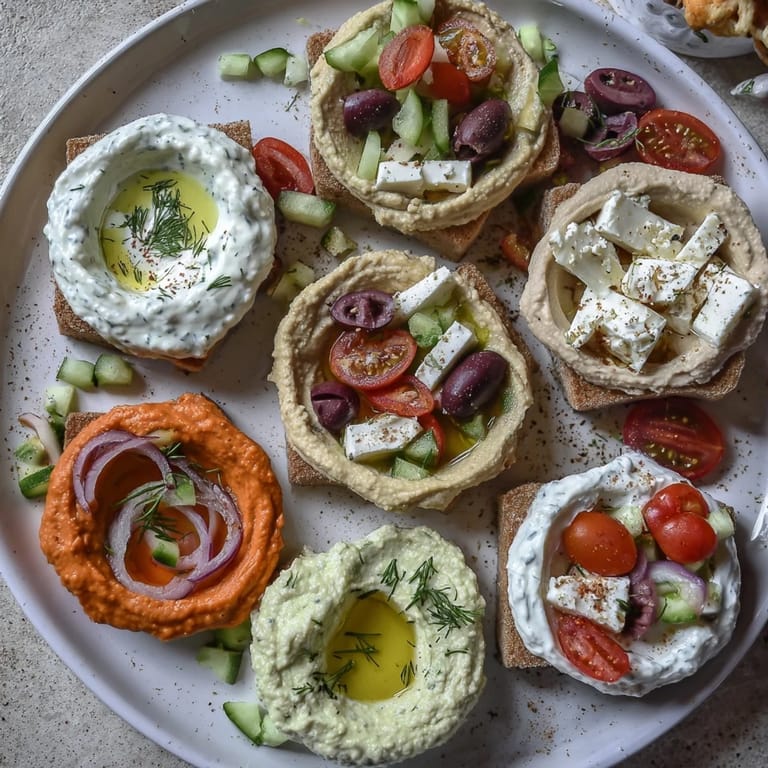
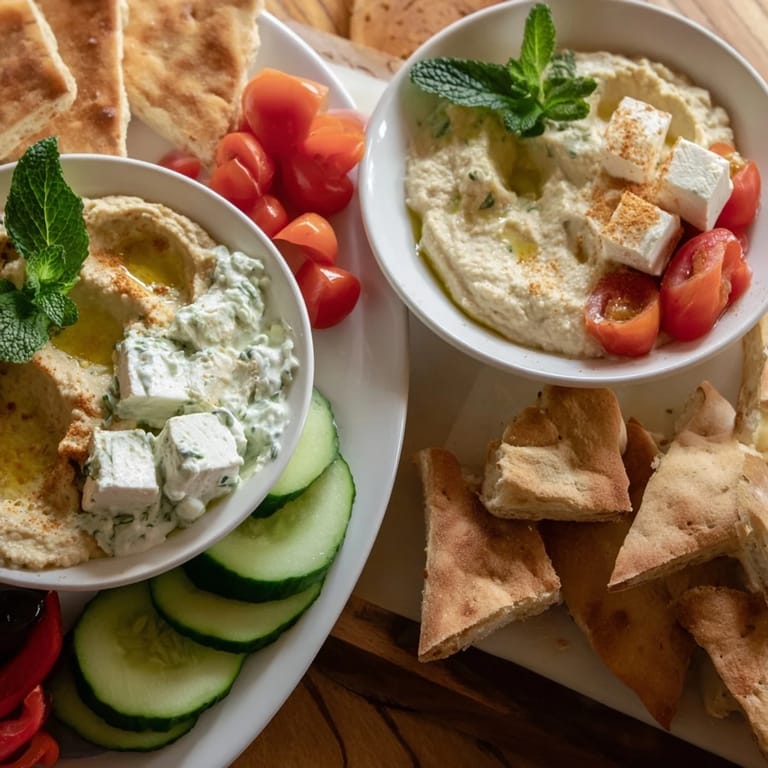
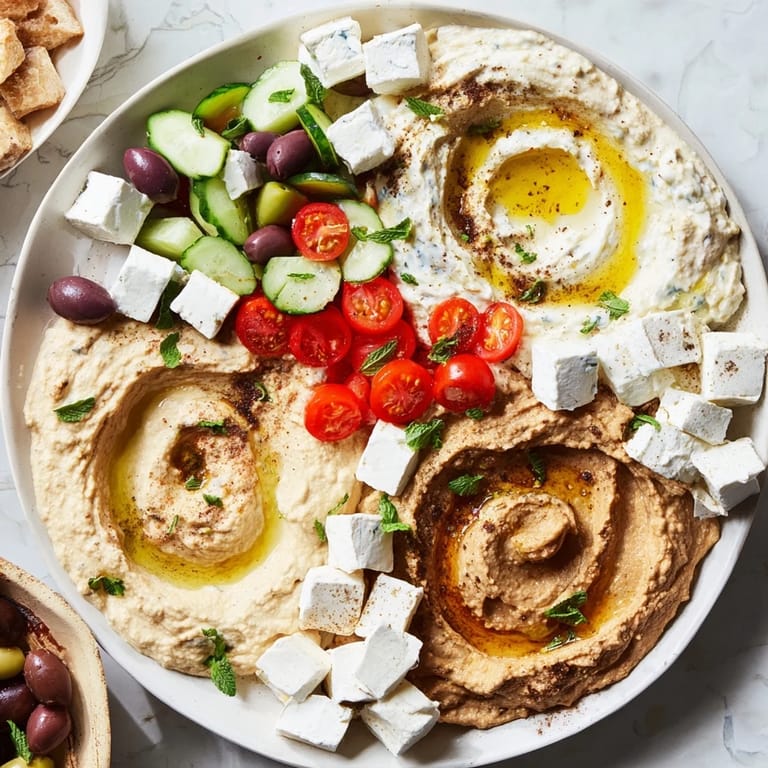
- Arrange your hummus, baba ganoush, and tzatziki in three separate little mounds, spacing them around the platter like you're creating small islands. Leave room to breathe between them—crowding diminishes the beauty
- Anchor with cheese:
- Find a spot and pile those feta cubes together. They should look casually generous, like you didn't count them
- Build in organic clusters:
- Now comes the fun part—scatter your vegetables in loose mounds. Cherry tomatoes here, cucumbers there, olives in another spot. Think about color contrast as you go; your eye should naturally flow around the platter
- Nestle the bread:
- Arrange pita triangles in a separate cluster or fan them around the edge like they're naturally part of the arrangement. They should look abundant but not overwhelming
- Add optional treasures:
- If you're using artichoke hearts, dolmas, or pine nuts, scatter them in small clusters between the other elements. These are the delightful surprises that make people linger longer
- Drizzle with intention:
- This is the moment everything comes together. Generously drizzle your olive oil over the dips, the cheese, even some of the vegetables. Don't be timid; the oil is part of the flavor and the visual
- Finish with flourish:
- Sprinkle your parsley and mint across the platter with abandon—it should look like a garden. Add a light dust of sumac or zaatar if you're using it. Season with sea salt and black pepper to taste, but remember people can adjust at the table
- Serve with grace:
- Bring it to the table immediately and let people dive in. There's no wrong way to eat a mezza platter; that's exactly why it works
 Save Pin
 I learned something unexpected when my grandmother visited from Greece and watched me assemble one of these platters. She didn't rearrange anything or criticize my presentation. Instead, she smiled and said, 'You understand now—this is how we eat. Not rushed. Not perfect. Just together.' That moment crystallized why I love making these so much. It's not about impressing anyone; it's about creating space for connection.
Timing and Prep Strategy
The beauty of this platter is that you can do almost everything ahead. Chop your vegetables and store them separately in the fridge up to four hours before. Make or buy your dips the day before. Toast your bread in the morning if you prefer it crispy. The actual assembly takes just ten minutes, which means you're present with your guests instead of frantically finishing in the kitchen. I usually assemble everything except the final herb garnish and olive oil drizzle, then do those last two steps right before people arrive. It keeps everything at its peak brightness and freshness.
Variations and Personal Touches
One of the joys of a mezza platter is how infinitely customizable it is. I've made versions for vegan friends by swapping the tzatziki and feta for cashew cream and crispy chickpeas. I've added grilled halloumi cheese when I wanted something more substantial. I've even roasted some chickpeas with spices and scattered them across for extra protein and crunch. The core structure stays the same—dips, cheese or protein, vegetables, bread—but the details reflect who you're feeding and what you have on hand. There's no wrong interpretation, only your interpretation.
Wine Pairing and Serving Notes
Pair this with a crisp white wine like a Sauvignon Blanc or Pinot Grigio, or go with a light rosé for something a bit more festive. The acidity in these wines cuts through the richness of the cheese and dips while complementing the fresh vegetables. If you're not serving alcohol, sparkling water with fresh lemon is genuinely lovely, or iced herbal tea like mint tea for something that feels authentically Mediterranean.
- Set out small plates and napkins so people can comfortably graze without awkwardness
- Have a small spoon or spreader in each dip so guests aren't using pita repeatedly in the same dip
- If serving this at a gathering that stretches beyond an hour, cover the platter loosely with plastic wrap during downtime to keep the vegetables from drying out
 Save Pin
 This platter has become my answer to almost every entertaining question—it's elegant enough for dinner parties, casual enough for a weeknight with friends, and impressive enough that people always leave thinking you're a better cook than you actually are. Make one today and watch what happens when you give people permission to slow down and connect.
Recipe FAQs
- → What dips are featured in the mezza?
It includes classic hummus, baba ganoush, and tzatziki, providing creamy, smoky, and tangy flavors.
- → Can this platter accommodate gluten-free diets?
Yes, swapping pita for gluten-free flatbread makes it suitable for gluten-free guests.
- → What cheeses are included?
Rustic cubes of feta cheese add a salty, creamy contrast to the vegetables and dips.
- → How should the platter be arranged?
Place dips in small mounds, cluster the feta separately, and arrange vegetables and breads around them for a colorful, inviting display.
- → Are there any optional garnishes?
Fresh parsley, torn mint, sumac or zaatar, and a generous drizzle of extra-virgin olive oil enhance flavor and presentation.
- → Can additional items be added for variety?
Yes, marinated artichokes, dolmas, pine nuts, grilled halloumi, falafel, or spiced lamb can enrich the platter.