 Save Pin
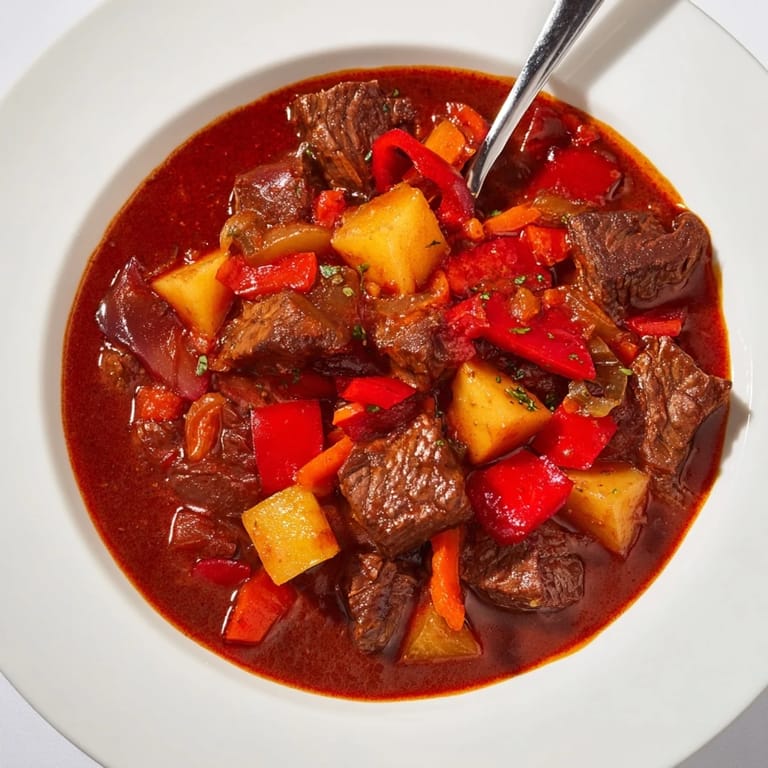
 My first real goulash came from a Hungarian woman named Erzsébet who lived two doors down. She'd invite me over on cold Sundays, and the moment I'd walk in, that unmistakable paprika smell would wrap around me like a blanket. I watched her work that heavy pot with absolute confidence, never measuring, just knowing. Years later, I finally understood what she was doing—building layers of flavor with patience and the right spice.
I made this for my sister's dinner party when she was going through a rough patch, and I remember watching her take that first spoonful—her whole face just softened. Comfort food isn't really about the ingredients; it's about what the dish does to you when you need it most. She asked for seconds, then thirds, and I knew the recipe had worked exactly as it should.
Ingredients
- Beef chuck, 2 lbs cubed: Chuck has enough marbling to become silky instead of tough after two hours of simmering—resist the urge to use lean cuts.
- Large onions, 2 finely chopped: These break down completely and create the stew's natural sweetness, so don't skip them or rush the sautéing step.
- Medium carrots, 2 sliced: They add earthiness and a subtle sweetness that balances the paprika's intensity.
- Large red bell pepper, 1 diced: Red peppers are sweeter than green ones and complement the paprika without competing.
- Garlic, 2 cloves minced: Just enough to add depth without overpowering the paprika, which is the star here.
- Medium potatoes, 2 optional cubed: These soak up the sauce and make the stew more filling—I always include them because they become creamy and delicious.
- Hungarian sweet paprika, 3 tbsp: This is non-negotiable; use genuine Hungarian paprika if possible, as it has a complexity that standard paprika simply cannot match.
- Caraway seeds, 1 tsp: Tiny but mighty, these add a subtle earthiness that somehow makes everything taste more like authentic goulash.
- Dried marjoram, 1 tsp: Don't confuse this with oregano—marjoram is gentler and more floral, which is exactly what this dish needs.
- Freshly ground black pepper, 1/2 tsp: Grind it fresh; the difference is immediately noticeable compared to pre-ground.
- Salt, 1 tsp plus more: Start with one teaspoon but taste as you go, especially after the long simmer when flavors concentrate.
- Bay leaf, 1: Remove it before serving unless you want someone to bite into it and give you that look.
- Beef broth, 4 cups: Use good quality broth—homemade is ideal, but look for one with minimal additives if using store-bought.
- Tomato paste, 2 tbsp: This adds umami depth and helps the stew develop a richer body as it simmers.
- Vegetable oil or lard, 2 tbsp: Lard gives a more authentic flavor, but quality vegetable oil works perfectly fine in a pinch.
Tired of Takeout? 🥡
Get 10 meals you can make faster than delivery arrives. Seriously.
One email. No spam. Unsubscribe anytime.
Instructions
- Start your foundation:
- Heat the oil or lard in your heavy-bottomed pot over medium heat, then add the onions. Let them soften and turn golden, about 8 minutes—this is where the sweetness begins, so take your time and don't rush past the browning.
- Build the aromatics:
- Stir in the minced garlic and let it become fragrant after just one minute, filling your kitchen with that unmistakable smell that says something good is happening.
- Brown the beef:
- Add your beef cubes and let them sit undisturbed for a few minutes before stirring, allowing them to develop a golden crust on all sides—this takes about 5 minutes total and creates flavor that a quick toss would never achieve.
- Toast the paprika:
- Sprinkle the paprika over the meat and onions, then stir quickly and constantly for just a minute to let it bloom without burning, which would turn it bitter and ruin everything you've built so far.
- Layer in the seasonings:
- Stir in the tomato paste, caraway seeds, marjoram, black pepper, and salt, making sure everything combines into a fragrant paste that coats the meat.
- Add the vegetables:
- Mix in the carrots, bell pepper, and bay leaf, distributing them evenly throughout the pot so they'll cook at the same rate.
- Deglaze and simmer:
- Pour in the beef broth while scraping the bottom of the pot with a wooden spoon to lift all those browned, flavorful bits—these are liquid gold. Bring everything to a gentle simmer.
- First long simmer:
- Cover the pot and lower the heat to maintain a gentle simmer, not a rolling boil. Let it cook undisturbed for one hour, stirring occasionally so nothing sticks to the bottom.
- Final cook with potatoes:
- Add the potatoes now if using them, then continue simmering uncovered for another 45 to 60 minutes until the beef is so tender it falls apart easily and the stew has thickened slightly—the uncovered cooking lets excess liquid evaporate and concentrates the flavors.
- Taste and adjust:
- Remove from heat and taste carefully, adjusting salt and pepper as needed. Fish out the bay leaf and serve while everything is still steaming.
 Save Pin
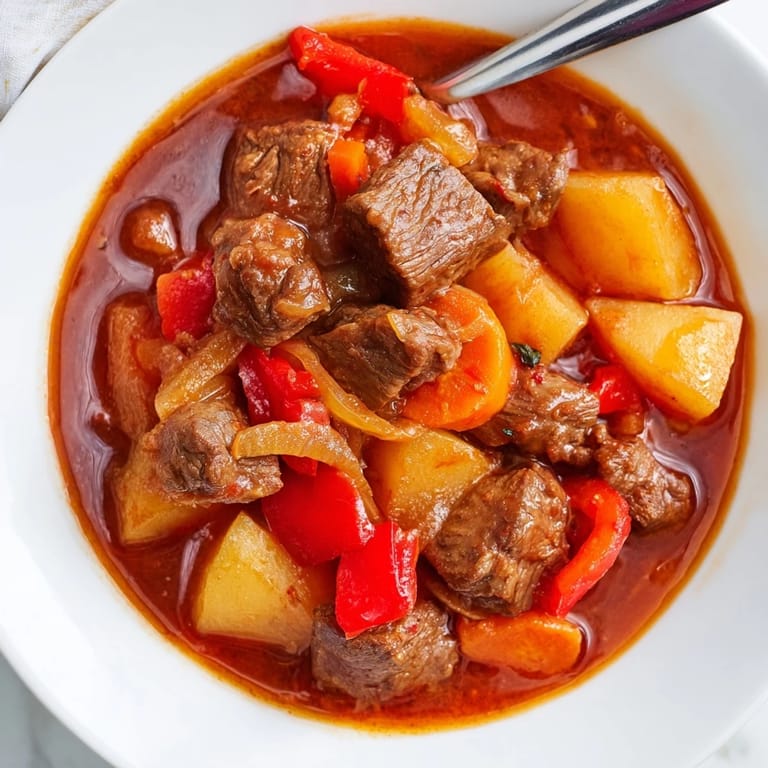
 I learned something watching Erzsébet that Sunday—she never rushed anything, and she seemed to understand that some foods demand respect in the form of time. This goulash is like that. It's not complicated, but it rewards patience with flavors that taste like they've been building for years.
Why Goulash Changed My Weeknight Cooking
Before I mastered this recipe, I thought 'comfort food' meant something you picked up from a restaurant. But goulash taught me that a two-hour investment in your kitchen could produce something infinitely better—and cheaper—than takeout. The slow simmering isn't a burden; it's built-in time to do other things, check on family, pour a glass of wine. By the time dinner rolls around, you've made something that tastes like it took all day, even though your active work was maybe 20 minutes.
The Paprika Question
I used to buy whatever paprika was on sale, and my goulash was decent but forgettable. Then a friend brought me a tin of real Hungarian paprika from her family's supplier, and I understood the difference immediately—it had depth and a subtle sweetness that regular paprika couldn't touch. If you're making goulash, the paprika is non-negotiable; this is the one ingredient where spending a little extra actually matters.
Serving and Storage Wisdom
Serve this with good bread, egg noodles, or if you're feeling ambitious, csipetke dumplings—the stew's richness needs something to soak it up. Leftovers keep beautifully in the fridge for three or four days, and freezing works well if you leave out the potatoes and add them fresh when you reheat. This is the kind of dish that makes meal prep feel less like a chore and more like giving yourself a gift tomorrow.
- A dollop of sour cream on top brightens the richness and adds tang, even though it's not traditional.
- If you want heat, stir in a pinch of hot paprika or a finely chopped chili pepper during the paprika-blooming step.
- Make a double batch and freeze half—this stew actually tastes better after a night in the freezer and thaw.
 Save Pin
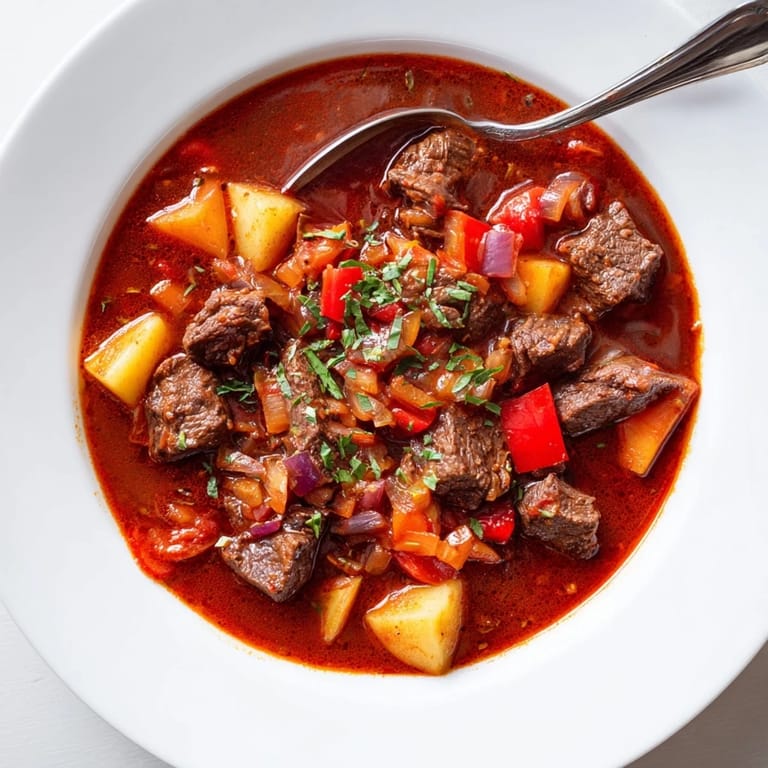
 Goulash is one of those recipes that reminds me cooking doesn't have to be complicated to be deeply satisfying. Make this when you need something warm, when you want to feed people you care about, or when you just need the kitchen to smell like comfort.
Recipe FAQs
- → What cut of beef works best for this dish?
Beef chuck cut into 1-inch cubes is ideal, offering tenderness and rich flavor after slow simmering.
- → Can I adjust the spiciness of this stew?
Yes, adding a pinch of hot paprika or chopped chili will add heat while maintaining the dish's signature taste.
- → Is it necessary to use sweet Hungarian paprika?
Sweet Hungarian paprika provides authentic flavor and color; alternatives may alter the classic profile.
- → What sides pair well with this hearty stew?
Rustic bread, egg noodles, or traditional Hungarian dumplings (csipetke) complement the stew beautifully.
- → Can I make this dish in advance?
This dish tastes even better the next day as flavors deepen; store covered in the refrigerator.