 Save Pin
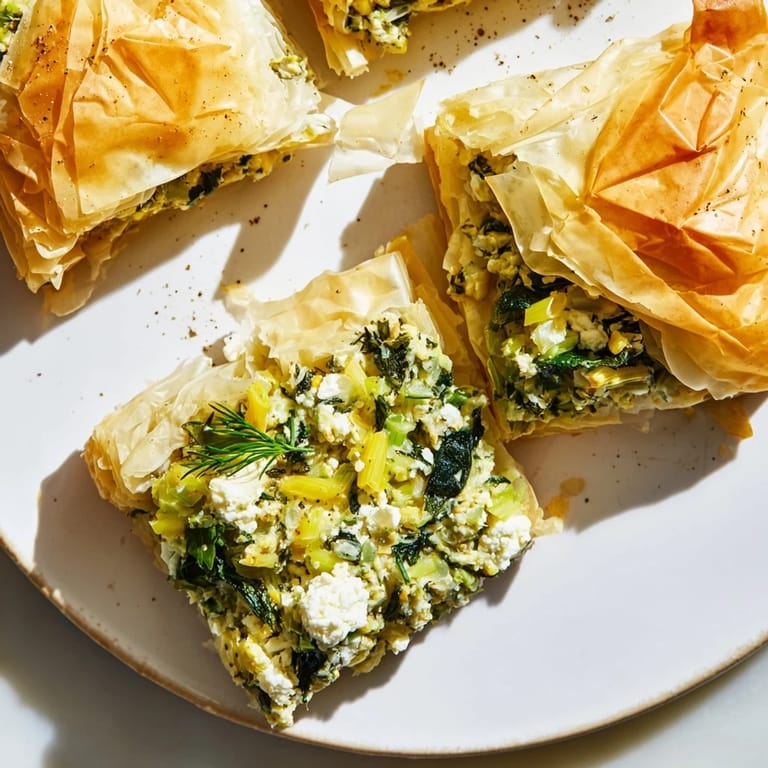
 The first time I made spanakopita, I wasn't thinking about authenticity or technique—I was thinking about my neighbor Maria, who'd casually mentioned hers at the fence one afternoon. She made it sound so simple that I convinced myself I could replicate it, armed with a borrowed phyllo dough and whatever spinach I could find at the market. What I discovered in that baking dish was something far more than a savory pie: it was the sound of phyllo crackling in the oven, the smell of salty feta mingling with dill, and the quiet satisfaction of something genuinely delicious that I'd made with my own hands.
I made this for a potluck once and watched it disappear before anything else on the table, which told me everything I needed to know. My colleague who grew up in Athens came back for a second slice and didn't say much—just nodded with a slight smile—and that meant more to me than any compliment.
Ingredients
- Fresh spinach (2 lbs, washed and chopped) or frozen spinach (1 lb, thawed and well-drained): Fresh spinach will give you a brighter, cleaner flavor, but frozen works beautifully too—just squeeze it hard to remove excess water, which is the difference between a crispy filling and a soggy one.
- Yellow onion and scallions (1 medium onion, finely chopped, plus 2 scallions, thinly sliced): The onion softens and sweetens as it cooks, while scallions add a fresh bite at the end; don't skip either.
- Fresh dill and parsley (3 tbsp fresh dill or 1 tbsp dried, plus 1/4 cup fresh parsley): These herbs are where the soul of spanakopita lives—fresh dill especially makes a noticeable difference in flavor.
- Feta cheese (8 oz, crumbled): The salty, tangy anchor; don't buy pre-crumbled if you can help it, as it holds its shape and flavor better when you crumble it yourself.
- Ricotta or cottage cheese (1/2 cup, optional): Adds richness and creaminess to the filling, balancing the sharp feta.
- Eggs (2 large, lightly beaten): They bind the filling together and help it hold its structure as it bakes.
- Olive oil or butter (1/2 cup for brushing): This is what creates the legendary crispness; don't be shy with it between the phyllo layers.
- Black pepper, nutmeg, and salt: Nutmeg is the secret whisper that makes people ask what that warm spice is; use it sparingly but don't leave it out.
- Phyllo dough (1 lb, thawed): Let it come to room temperature before you start working with it, or it'll crack and tear on you.
Tired of Takeout? 🥡
Get 10 meals you can make faster than delivery arrives. Seriously.
One email. No spam. Unsubscribe anytime.
Instructions
- Set the stage and sauté your aromatics:
- Preheat your oven to 350°F (175°C) and lightly grease a 9x13-inch baking dish. Heat 2 tablespoons of olive oil in a large skillet over medium heat, then add your chopped onion and scallions, letting them soften and turn golden for about 5 minutes—you'll know they're ready when the kitchen starts smelling sweet and savory at the same time.
- Wilt the spinach and let it breathe:
- Add your chopped spinach (in batches if it's fresh; it shrinks dramatically) and cook until it's completely wilted and any liquid has mostly evaporated—this takes patience but is worth it because wet spinach will make your pie soggy. Pour it into a colander and let it cool slightly.
 Save Pin
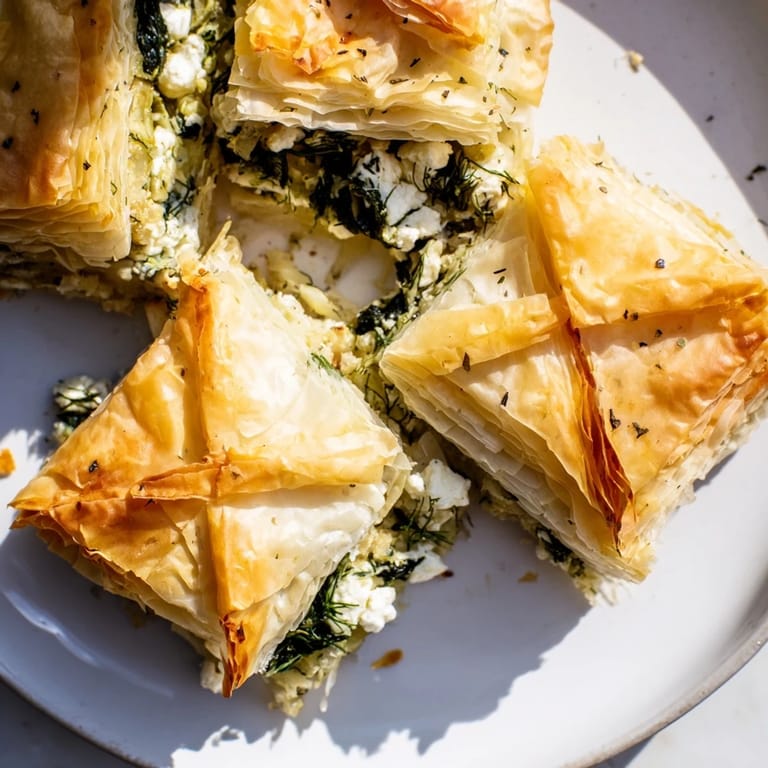
 I learned something unexpected while making this: food doesn't have to be complicated to feel special. Spanakopita is straightforward, honest cooking—spinach, cheese, herbs, phyllo—yet somehow it transforms into something that feels like a gift when you set it on the table.
The Magic of Phyllo
Phyllo is thin, delicate, and slightly intimidating at first, but once you understand that a little oil and patience are all you need, it becomes your friend. Each brushed layer creates those shattered, crispy bits that make spanakopita so crave-worthy. The oil doesn't just add flavor—it's what transforms dough into something that shatters rather than cheats when you bite into it.
Customizing Your Spanakopita
The beauty of this dish is that it's forgiving if you want to play around. Some cooks add a handful of pine nuts for crunch, or a splash of lemon juice for brightness, or swap the spinach for chard or a mix of spring greens. One evening I added some finely minced garlic to the filling, and it took it in a slightly different but equally delicious direction. Trust your instincts and taste as you layer in flavors.
Pairing and Serving
Spanakopita works as an appetizer, a side dish, or even a light main course if you're pairing it with a simple salad and some crusty bread. A crisp white wine like Assyrtiko or Sauvignon Blanc cuts through the richness beautifully, and a squeeze of fresh lemon juice over the warm pie just before serving brightens everything up.
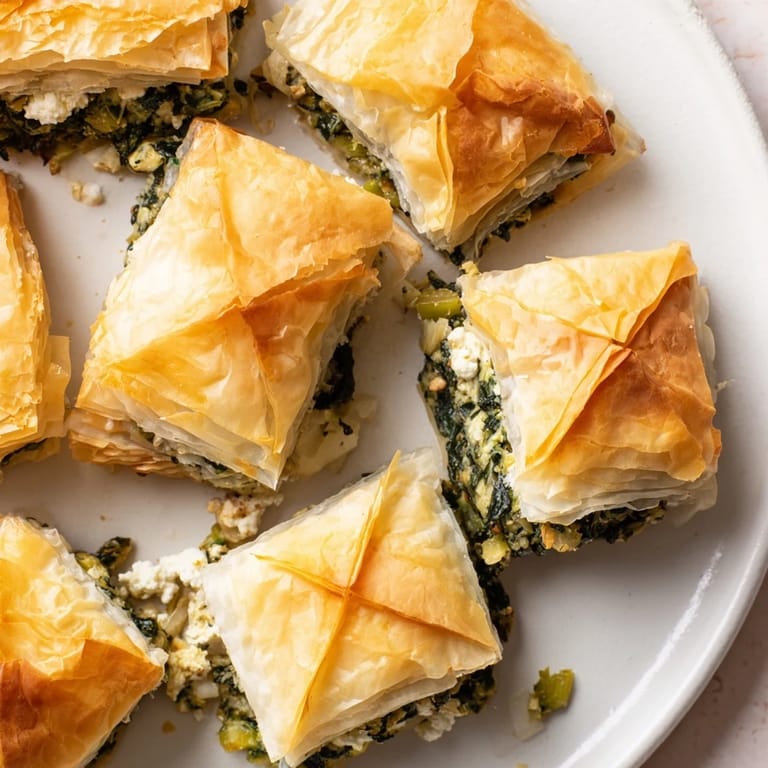
- Cut it while still warm for the cleanest, most dramatic squares.
- Leftovers reheat beautifully in a 300°F oven for 10 minutes if you want to restore some crispness.
- Make it the day before and bake it fresh the day you're serving—the filling only gets better as it sits overnight.
 Save Pin
 This recipe has become one of those dishes I reach for when I want to feel like I've done something meaningful in the kitchen without stress. Make it, and you'll understand why it's been part of Greek tables for generations.