 Save Pin
 I stumbled upon the idea for this board at a farmer's market in late summer, watching a vendor arrange honeycomb with the same care a jeweler might display gems. The hexagon shapes stuck with me—there's something about their geometry that feels both playful and refined, like you're building architecture out of food. That afternoon, I went home and started experimenting with a cookie cutter, and what emerged was less about perfection and more about the quiet satisfaction of creating something that makes people pause before they eat.
I made this for the first time for my neighbor's birthday potluck, and I remember standing in her kitchen, nervously rearranging almonds while she brewed coffee nearby. When she saw it, she actually gasped—not because it was fancy, but because something about that honeycomb center with all the golden hexagons made her smile in a way that felt real. That's when I knew the hexagon idea had legs.
Ingredients
- Manchego cheese: This Spanish cheese brings a slightly salty, nutty backbone that grounds the whole board and cuts through the sweetness of honey.
- Aged cheddar: Sharp and assertive, it's your flavor anchor and looks beautiful golden-orange in hexagon form.
- Gruyère: Adds a sophisticated, creamy depth that makes the board feel less casual and more considered.
- Brie: The soft indulgence that makes people reach twice; its creamy texture contrasts perfectly with crisp crackers.
- Blue cheese: A small amount brings serious flavor drama—trust me, this cheese does the heavy lifting in taste.
- Goat cheese log: Mild and spreadable, it softens the palate between stronger cheeses and looks almost snowy white against darker varieties.
- Whole wheat crackers: Choose large, sturdy squares that hold up to cutting and won't crumble when supporting soft cheese.
- Seeded crackers: These add visual texture and a toasty flavor that plays well with the honey and almonds.
- Edible honeycomb: The star—source it from specialty food shops or online; it's real honeycomb with honey still inside, and nothing substitutes for its delicate crunch.
- Runny honey: Select something you'd actually eat by the spoonful; it should drizzle smoothly and taste bright, not burnt.
- Marcona almonds: Spanish almonds are buttery and less aggressive than regular varieties, which matters when everything else is already rich.
- Dried apricots: These add chewy sweetness and a pop of orange that catches the eye between cheese hexagons.
- Fresh grapes: They provide juicy contrast and help fill visual gaps without overwhelming the other flavors.
- Fresh edible flowers or microgreens: Optional, but if you use them, choose something delicate like pansies or pea shoots that won't overpower.
Tired of Takeout? 🥡
Get 10 meals you can make faster than delivery arrives. Seriously.
One email. No spam. Unsubscribe anytime.
Instructions
- Chill your soft cheeses first:
- About 20 minutes before you start cutting, place your Brie and goat cheese in the coldest part of your fridge. Cold cheese holds its shape and gives you clean edges instead of a smeared mess.
- Cut cheeses into hexagons:
- Using your hexagon cutter (2 to 3 inches wide), press straight down with a slight wiggle motion to release each shape cleanly. Work methodically, and don't rush—the cutter should do the work, not force.
- Trim crackers to match:
- Using the same cutter, trim each cracker into a hexagon, keeping a pile of your best-looking cuts for display. Some will shatter; that's normal and fine.
- Place honeycomb at the center:
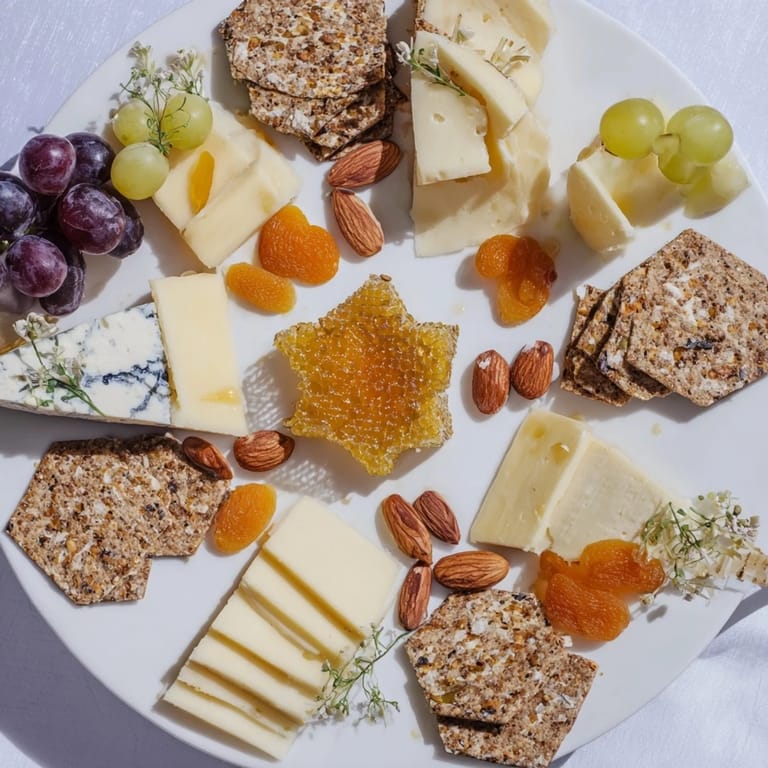
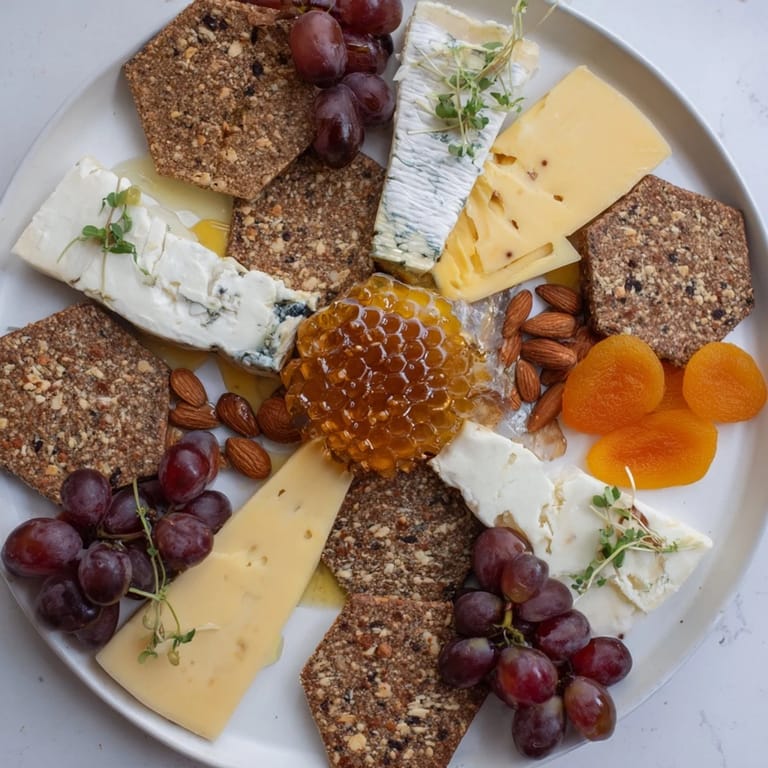
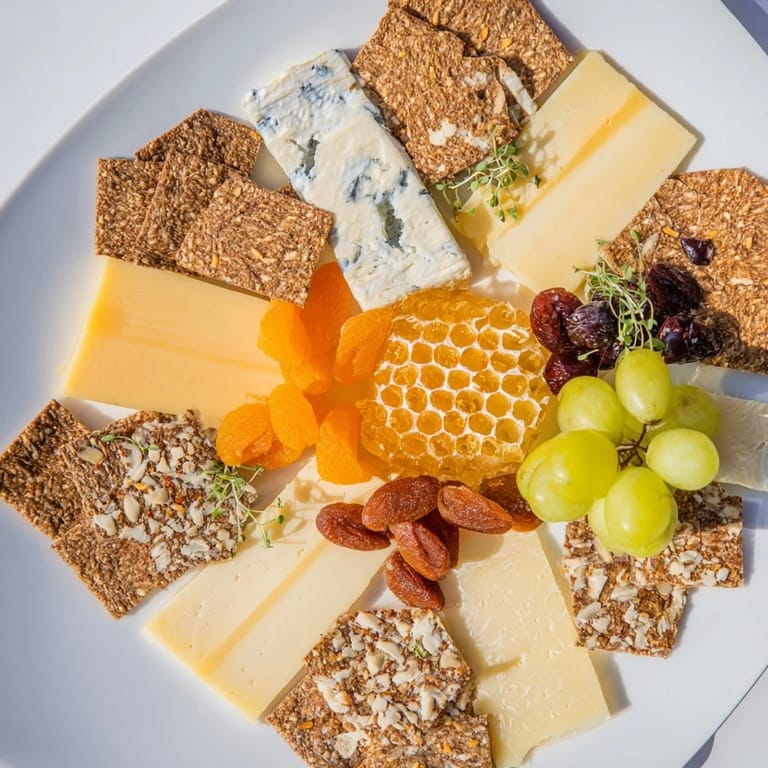
- Set your piece of honeycomb in the very middle of your board, where it becomes the focal point everything else orbits around.
- Build concentric rings of cheese:
- Starting just outside the honeycomb, arrange your cheese hexagons in a circular pattern, alternating types and colors as you go. This is where the visual magic happens—vary your cheeses so no two adjacent pieces are the same type.
- Create cracker rays:
- Arrange your hexagon-cut crackers in the next ring outward, creating lines that seem to radiate from the honeycomb like rays of light. This gives the board its sense of movement and intentionality.
- Fill gaps with color:
- Scatter Marcona almonds, dried apricots, and fresh grapes into any spaces between cheese and crackers, thinking about balance and distribution rather than perfection.
- Drizzle honey sparingly:
- Using a small spoon or squeeze bottle, let a few thin lines of honey flow across the honeycomb and nearby cheeses for a glossy, appetizing shine.
- Garnish and serve immediately:
- If using edible flowers or microgreens, add them just before serving so they stay fresh and perky. Serve with cheese knives or small spreaders nearby.
 Save Pin
 What moved me most wasn't the compliments, though there were plenty—it was watching people slow down, actually looking at what they were about to eat before grabbing a piece. A cheese board can feel like background food at a party, but this one demanded a moment of attention. That shift, from mindless snacking to deliberate enjoyment, felt like something worth creating.
The Hexagon Hack
After my first attempt, I realized the hexagon cutter is your secret weapon for making this look intentional and elevated. The geometric pattern creates an almost mathematical beauty that feels less like a casual snack board and more like edible art. Once you start thinking in hexagons, you'll see opportunities everywhere—they make crackers and cheese feel like they belong to a larger design rather than just random pieces scattered on wood.
Cheese Combinations That Actually Work
The real skill in this board isn't the cutting—it's understanding how different cheeses balance each other. I've learned that pairing a sharp cheese next to a creamy one, and both of those beside something pungent like blue cheese, creates a flavor journey as you eat. The crackers act as palate cleansers between cheeses, and the honey and almonds round out any rough edges. Think of it as a conversation between flavors rather than just a pile of ingredients.
Making It Your Own
Once you understand the framework, you can adapt this board seasonally and to your taste without losing the visual impact. In autumn, I swap dried apricots for dried figs; in spring, I use fresh strawberries instead of grapes. The structure—honeycomb center, radiating rings, filled gaps—stays the same, but the flavors shift with what looks good at your market. Your board will tell the story of the season you're in.
- If you can't find real honeycomb, a square of honey-soaked toast at the center can approximate the idea, though it won't have quite the same delicate crunch.
- Always taste your cheeses before you cut them; you might discover that one variety overpowers the others and adjust quantities accordingly.
- Keep your board simple in color palette first, then add visual interest through texture—smooth Brie next to nutty almonds, for example.
 Save Pin
 This board has become my favorite way to show up for people—not with fuss, but with thoughtfulness and a little bit of careful beauty. That matters.
Recipe FAQs
- → What is the best way to cut cheeses and crackers into hexagons?
Use a metal hexagon-shaped cookie cutter around 2-3 inches wide. Chill softer cheeses for cleaner edges and select unbroken crackers for the best shapes.
- → How should the honeycomb be placed on the board?
Place the small piece of edible honeycomb at the center to serve as the focal point, arranging cheeses and crackers radiating outward.
- → Can I substitute different cheeses?
Yes, you can choose cheeses based on seasonality or preference. Aim for a mix of textures and flavors to enhance the board’s appeal.
- → Are there any recommendations for accompaniments?
Include Marcona almonds, dried apricots, and fresh grapes for added sweetness, texture, and color balance around the cheeses and crackers.
- → What drink pairs well with this cheese board?
A crisp white wine like Sauvignon Blanc or a light sparkling wine complements the assortment and honey notes beautifully.