 Save Pin
 The first time I made Czech goulash, I was trying to impress someone who'd just returned from Prague. I had no idea what I was doing, just a vague memory of a friend describing it years ago and this recipe scrawled on a coffee-stained card. Two hours later, when the kitchen smelled like paprika and caramelized onions, and I fried those potato strips until they shattered like spun glass, I understood why that dish had stuck with them. It wasn't fancy, but it tasted like someone had poured hours of care into a single bowl.
I made this for my neighbors during a particularly cold November, and they showed up with wine and stayed for hours talking. The goulash was still simmering, the kind of smell that pulls people into the kitchen without invitation. By the end of the night, someone asked for the recipe, and I realized the potato strips were already gone. That's when you know you've nailed something.
Ingredients
- Beef chuck, 2.5 cm cubes: Don't use lean cuts; this needs fat and connective tissue to become that fall-apart tender. Chuck develops body and flavor as it braises, transforming into something silky.
- Sweet Hungarian paprika: This is non-negotiable and the soul of the dish. Buy it fresh if you can; old paprika tastes dusty and flat, and you need that genuine warm pepper flavor.
- Caraway seeds: A whisper, not a shout. They add an earthy spice that makes people ask what that flavor is without being able to name it.
- Onions, finely chopped: Cook them longer than you think you should. The deeper they brown, the more sweetness they contribute to the sauce.
- Beef broth: Use proper broth, not bouillon. This is where the foundation of flavor lives for two hours.
- Potatoes for frying: Starchy varieties like russets work best. Waxy potatoes won't crisp properly no matter how hot your oil is.
Tired of Takeout? 🥡
Get 10 meals you can make faster than delivery arrives. Seriously.
One email. No spam. Unsubscribe anytime.
Instructions
- Caramelize your base:
- Heat oil in your heaviest pot and let the onions go golden and sticky, not rushed. This takes about eight minutes, and you'll know it's right when they smell sweet and have started to stick to the bottom of the pot.
- Wake up the spices:
- Add garlic, caraway, and paprika, stirring constantly for just a minute. You're looking for that moment when the paprika smells toasted and fragrant, not burnt and bitter. Stop before it gets dark.
- Brown the meat:
- Add beef in batches if your pot is crowded. Let each batch sit undisturbed for a minute or two to develop that crust, then turn and brown the other sides. This takes about five minutes and builds flavor through the Maillard reaction.
- Build the sauce:
- Stir in tomato paste, marjoram, salt, pepper, and the bay leaf. The tomato paste should cook into the meat and fat for a minute, then dust everything with flour and stir well so no lumps remain.
- Simmer low and slow:
- Pour in broth, add the bell pepper, and bring to a boil. Once it bubbles, drop the heat to low, cover, and let it go for ninety minutes to two hours, stirring occasionally. The meat is ready when a fork cuts through it like butter.
- Prepare the potatoes:
- While goulash simmers, cut potatoes into thin matchsticks using a mandoline if you have one. Soak them in cold water to remove starch, then dry them completely with a clean towel before frying.
- Fry to crispy perfection:
- Heat oil to 180°C and fry potato batches for three to four minutes until golden and shattered. The oil should sizzle immediately when you add potatoes, and they should be pale golden, not dark brown.
- Finish and serve:
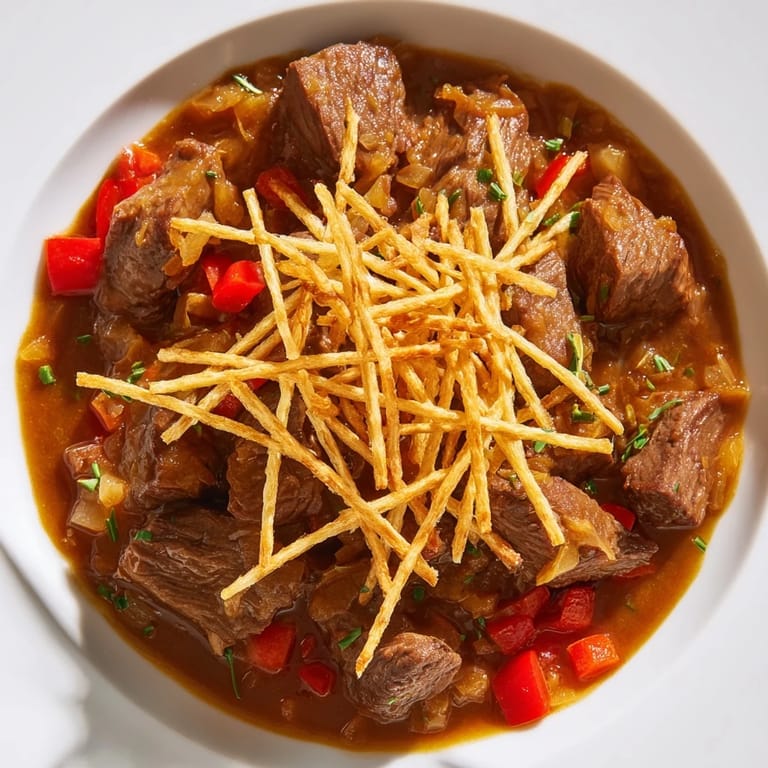
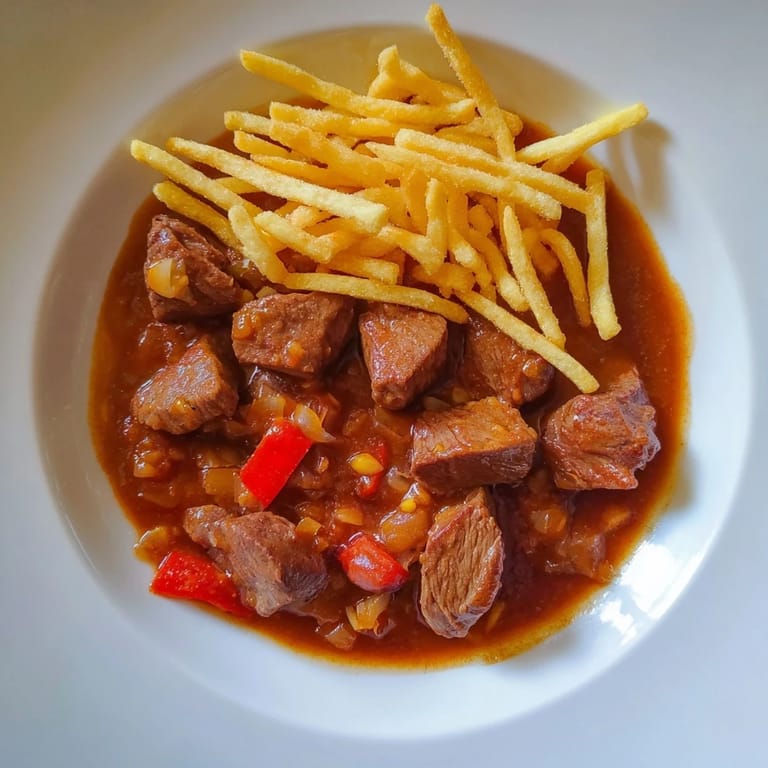
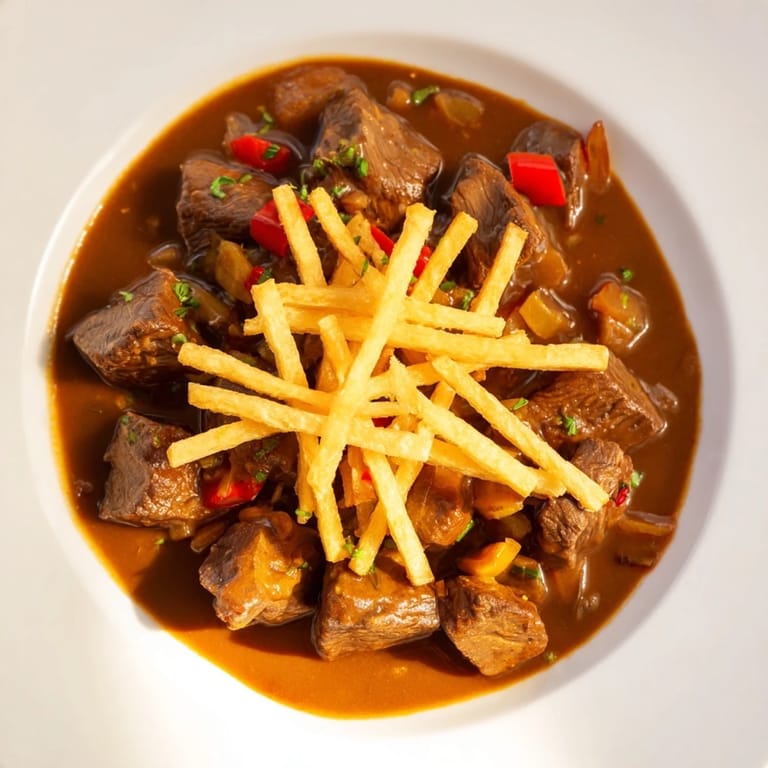
- Remove the bay leaf, taste the sauce, and adjust seasoning. Serve hot goulash in bowls topped with a pile of crispy potato strips.
 Save Pin
 There's something about standing at the stove, watching that beef soften over hours, knowing exactly when it's ready by how easily your spoon slides through it. That's the moment cooking becomes meditation rather than labor, and you remember why this dish has survived for generations.
The Art of the Sauce
The sauce is where all the magic happens. It's not trying to be light or delicate; it's trying to be rich, savory, and deeply flavored. The flour creates a slight thickening, but it's mostly the braising liquid reducing and the beef's own gelatin making things glossy and cling-able. Stir it occasionally but not constantly, letting the bottom build up a little fond that you scrape and incorporate back in. That brown stuff stuck to the pot is flavor gold, and it's keeping your sauce from being one-dimensional.
Customization Without Apology
This is the kind of dish that's sturdy enough to handle your adjustments. Some people add a pinch of hot paprika for heat, others swear by a splash of red wine or a spoonful of tomato paste for deeper color. If you like things spicier, caraway can be boosted slightly, and marjoram can be swapped for thyme if that's what you have on hand. The bell pepper is almost decorative, so feel free to add mushrooms, diced potatoes, or carrots if that speaks to you. The foundation is so solid that variations only make it yours.
When Potato Strips Are Everything
The potato strips are not a side dish; they're the textural anchor that keeps this from feeling heavy or one-note. Hot, crispy, and salty, they sit on top of the goulash like a crown, shattering between your teeth while the warm sauce softens them slightly. Frying in batches is not laziness; it's respect for the oil temperature, which stays steady and produces better results. Crowd the pan and the oil temperature drops, steaming potatoes instead of frying them. Respect the process, and the process respects you back.
- If your oil smokes before reaching 180°C, let it cool slightly and check your thermometer; overheated oil burns food and tastes terrible.
- Drain fried potatoes immediately on paper towels and salt them while still warm so the salt sticks.
- These are best eaten the moment they cool enough to handle, but leftovers reheat beautifully in a hot oven for five minutes.
 Save Pin
 This dish has been feeding people for centuries because it's honest food that rewards slow cooking and simple technique. Make it, serve it hot, and watch people's faces change as they take that first bite.
Recipe FAQs
- → What cut of beef works best for this dish?
Beef chuck cut into cubes is ideal for its marbling and tenderness after slow cooking.
- → How can I achieve crispy potato strips?
Cut potatoes into thin matchsticks, rinse and dry them well, then fry in hot oil until golden and crunchy.
- → Can I adjust the spice levels?
Yes, add extra paprika or chili flakes for a spicier sauce according to your taste.
- → Is there a gluten-free option?
Use gluten-free flour when thickening the sauce to keep the dish gluten-free.
- → What sides pair well with this dish?
Light red wines or Czech Pilsners complement the rich flavors, and a dollop of sour cream adds creaminess.