 Save Pin
 The first time I made crispy rice salmon stacks, I was trying to impress someone who said they didn't eat sushi because they found it too delicate. So I thought, what if I made it crunchy? What if I gave it texture and warmth? I spent that afternoon frying rice squares until they turned golden, layering them with buttery avocado and silky salmon, and watching someone's face light up as they bit through that satisfying crunch. That moment taught me that the best dishes aren't about following rules—they're about solving problems with joy.
I remember making these for a dinner party on a rainy evening, and someone asked if I could make them vegetarian. I swapped the salmon for crispy tofu and everything still worked beautifully—that's when I realized this recipe isn't rigid, it's a foundation that welcomes improvisation. The table got quieter as everyone ate, which is always the highest compliment a cook can receive.
Ingredients
- Sushi rice: The foundation of your crunch; rinsing it thoroughly removes excess starch so it crisps properly instead of turning mushy when fried.
- Rice vinegar, sugar, and salt: These season the rice with that subtle sweet-tangy flavor that makes it taste like real sushi.
- Sushi-grade salmon: Diced finely so each bite has that buttery richness without overwhelming the other flavors; if you can't find sushi-grade, high-quality cooked or canned salmon works beautifully.
- Sesame oil and sriracha: A tiny amount goes a long way; these add depth and a gentle heat that plays well against the cool avocado.
- Avocado: Pick one that yields slightly to pressure but isn't mushy; slice it just before assembly to keep it from browning.
- Spicy mayo: This creamy contrast is what ties everything together, so don't skip the sriracha even if you prefer milder food.
- Sesame seeds and nori: These finish the stack with visual interest and that toasted, oceanic flavor that reminds you why you love sushi in the first place.
Tired of Takeout? 🥡
Get 10 meals you can make faster than delivery arrives. Seriously.
One email. No spam. Unsubscribe anytime.
Instructions
- Rinse and cook your rice:
- Rinse the sushi rice under cold running water, stirring gently with your fingers until the water runs clear—this takes patience but it's what makes your rice grains separate instead of clump. Combine with water, bring to a boil, cover, and simmer on low for exactly 15 minutes, then let it sit covered for 10 more; resist peeking because steam is doing important work.
- Season while warm:
- Mix the rice vinegar, sugar, and salt in a small bowl, then fold gently into the warm rice with a wooden spoon, turning the rice over itself rather than stirring aggressively. The warmth helps the vinegar flavor distribute evenly throughout each grain.
- Press and chill:
- Press the cooled rice into an 8-inch parchment-lined pan to about half an inch thick, using your hands or the bottom of a measuring cup to create an even layer. Refrigerate for 20 minutes; this firms it up so it holds together when you cut and fry it.
- Prepare your salmon mixture:
- Combine your diced salmon with soy sauce, sesame oil, sriracha, lime juice, and green onion in a bowl, stirring gently so the salmon doesn't break apart into tiny shreds. Chill this until you're ready to assemble so the flavors meld together.
- Make your sauce:
- Whisk mayonnaise and sriracha together until smooth and evenly speckled; this spicy mayo is your secret weapon for tying everything together.
- Cut and fry:
- Remove the pressed rice from the pan, cut it into 2-inch squares, and heat oil in a nonstick skillet over medium-high heat until it shimmers. Fry each square for 2 to 3 minutes per side until they turn golden brown and crispy, then transfer to paper towels to drain.
- Assemble and serve:
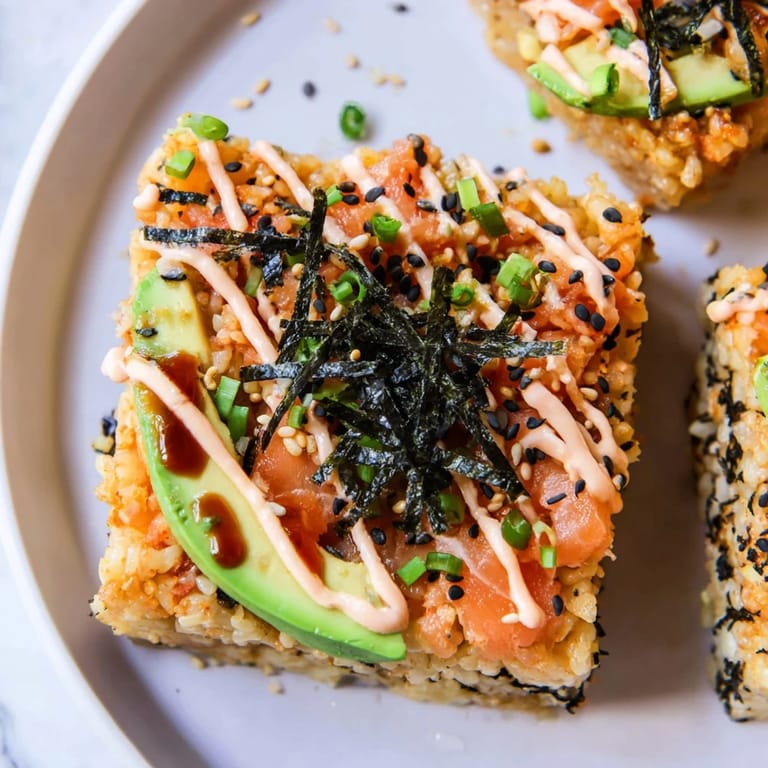
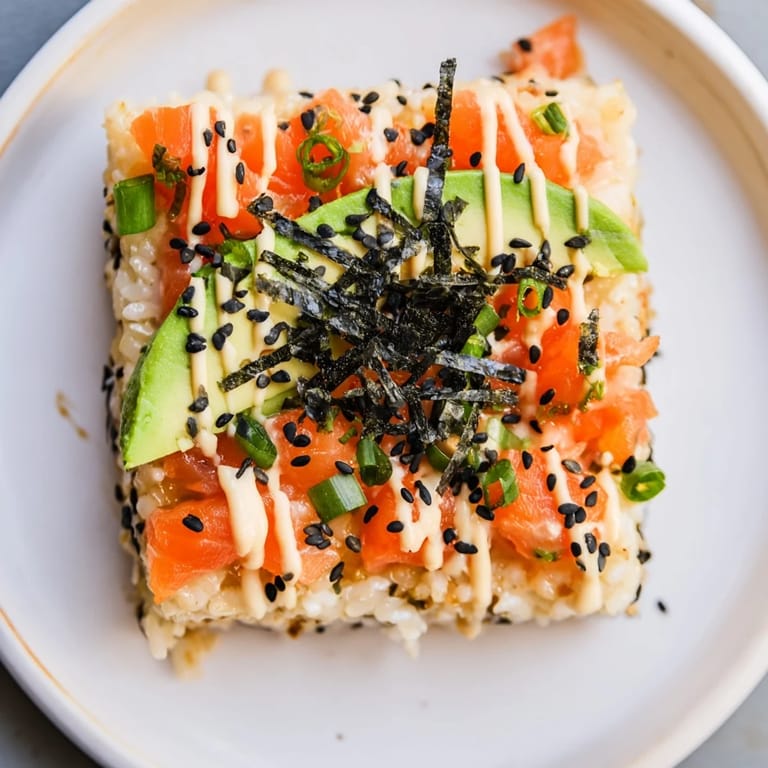
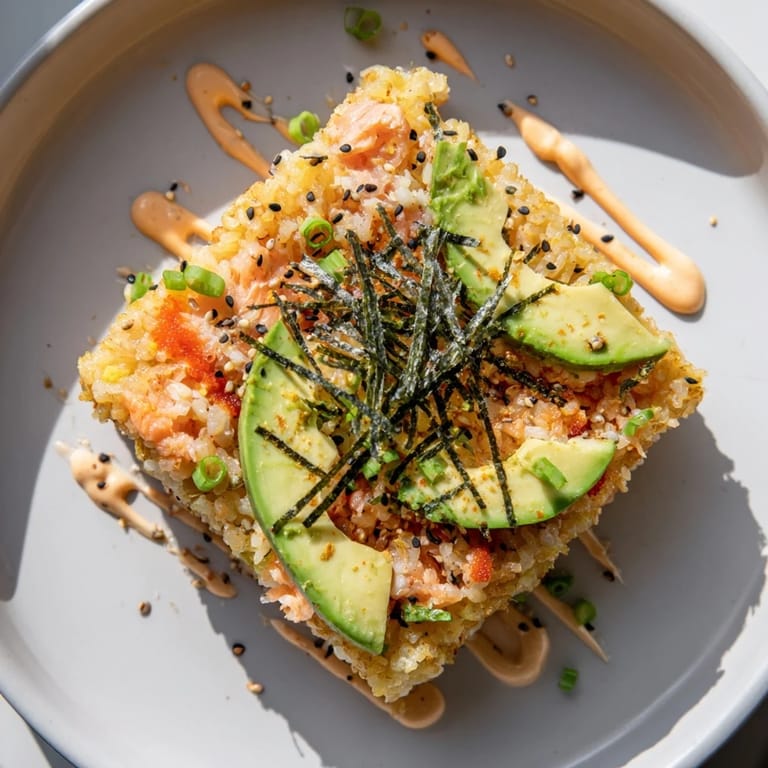
- Top each warm crispy rice square with a slice of avocado, a spoonful of the salmon mixture, a drizzle of spicy mayo, and a generous sprinkle of sesame seeds, chives, and nori strips. Serve immediately while the rice is still warm and the contrast between crispy and creamy is at its peak.
 Save Pin
 One evening, a friend who'd been nervous about cooking took one bite and asked for the recipe, and then asked if she could make it with us next time. That's when I understood that recipes aren't just instructions—they're invitations to feel capable and creative in the kitchen. This dish became her gateway into cooking more adventurously.
Why This Dish Works
The magic is in the contrast: crispy meets creamy, warm meets cool, savory meets bright. Every element plays a role, and when you bite through that crunchy rice into the silky salmon and buttery avocado, your palate experiences a conversation rather than a single note. This is why people remember it long after they've finished eating.
Swaps and Substitutions
While the recipe shines with sushi-grade salmon, cooked or canned salmon works beautifully if that's what you have on hand. For a vegetarian version, crispy tofu or roasted vegetables create the same satisfying texture. You can also layer in pickled ginger, thinly shaved cucumber, or even thin slices of mango for brightness—the framework is sturdy enough to welcome your own ideas.
Serving and Pairing
Serve these stacks on a simple white plate so the colors pop, and have them at the table within minutes of assembly so your guests experience that textural contrast in full glory. These pair beautifully with crisp white wines, chilled sake, or even a light beer that won't overpower the delicate salmon. A small side salad with a citrusy dressing feels like the perfect companion, or serve them as part of a larger spread where they're one star among many.
- Plate each stack as a single tower for a modern presentation that looks more elegant than it is to execute.
- Have all your components prepped and ready before you start frying the rice, so assembly becomes a quick, confident dance.
- Leftovers are best eaten within a few hours, though you can store the components separately and reassemble later if needed.
 Save Pin
 This dish has become my answer to the question 'what should we cook?' because it feels special without demanding hours of your time or difficult ingredients. It's proof that sometimes the best meals come from asking a simple question and then cooking the answer with curiosity and care.