 Save Pin
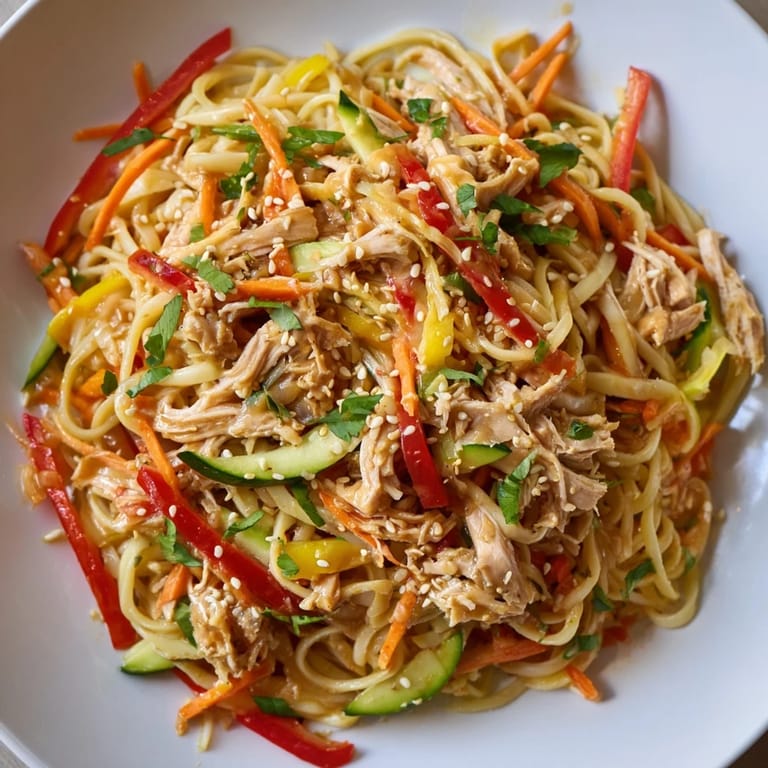
 There's something almost magical about discovering a dish that comes together in your kitchen on a lazy afternoon. I'd been searching for something light but satisfying, something I could make ahead and grab from the fridge without guilt, when I stumbled onto this chilled chicken noodle salad. The first time I made it, my roommate wandered in midway through, caught a whiff of the toasted sesame oil, and just sat at the counter watching. By the time I tossed it all together, she'd already claimed half the batch for her lunch the next day.
I made this for a backyard dinner party on the first hot day of summer, and it became the dish everyone asked for the recipe to. People who usually passed on salads came back for seconds, and I watched friends who claimed not to like sesame realize they'd simply never had it done right before. That's when I knew this wasn't just a weeknight dinner solution—it was something special.
Ingredients
- Thin egg noodles or rice noodles (250 g / 9 oz): Thin noodles absorb the dressing better than thick ones, and rinsing them under cold water stops the cooking process so they stay tender, not mushy.
- Cooked shredded chicken (about 300 g / 10 oz): Rotisserie chicken saves time and often tastes better than homemade because it's been slowly roasted; shred it while warm for easier texture.
- Carrot, julienned (1 medium): Raw carrots add a natural sweetness and crunch that softens slightly as the salad sits, creating a better textured bite than you'd expect.
- Red bell pepper, thinly sliced (1): The sweetness of red peppers complements the savory dressing in a way green peppers can't quite manage.
- Cucumber, deseeded and julienned (1): Deseeding prevents the salad from becoming watery and soggy by the next day—this small step makes a real difference in texture.
- Spring onions, sliced (2): They add a sharp bite that keeps the dish from feeling heavy, especially important when everything else is creamy from the dressing.
- Fresh cilantro, chopped (2 tbsp): Don't skip this; cilantro ties everything together with a fresh, herbal note that makes people wonder what you did to make it taste so clean.
- Toasted sesame oil (3 tbsp): Use the real thing—that dark, fragrant kind from an Asian market—because the difference between toasted and regular sesame oil is the difference between magic and bland.
- Soy sauce (2 tbsp): Soy carries the umami that makes you want another bite; tamari works if you're avoiding gluten.
- Rice vinegar (2 tbsp): The mild acidity balances the richness without overwhelming the other flavors the way regular vinegar would.
- Honey or maple syrup (1 tbsp): Just enough sweetness to round out the dressing and keep it from tasting too one-note.
- Smooth peanut butter or tahini (1 tbsp): This is what makes the dressing coat everything; tahini is the move if you're serving someone with a peanut allergy.
- Fresh ginger, grated (1 tsp): Ginger adds a subtle warmth that lifts the whole dish; fresh is essential because ground ginger tastes flat by comparison.
- Garlic clove, minced (1): One clove is enough—you want to taste it without it taking over like you made garlic salad.
- Chili flakes, optional (1 tsp): A small amount gives the dressing a gentle heat that builds with each bite; start with half and adjust to your taste.
- Toasted sesame seeds (2 tbsp): Toast them yourself if you can; the aroma alone will make your kitchen smell incredible, and the flavor is incomparably better than pre-toasted.
- Lime wedges for serving: A squeeze of lime just before eating brightens everything and adds a pop of acidity that wakes up your palate.
Tired of Takeout? 🥡
Get 10 meals you can make faster than delivery arrives. Seriously.
One email. No spam. Unsubscribe anytime.
Instructions
- Bring the noodles to a boil and cool them fast:
- Cook the noodles according to package instructions in salted water until just tender, then drain and rinse them under cold running water for a full minute—this stops them from cooking further and washes away excess starch so they don't clump together. Spread them out on a plate to cool completely while you prep everything else.
- Gather all your vegetables in one bowl:
- Combine the shredded chicken, cooked noodles, julienned carrot, sliced bell pepper, julienned cucumber, spring onions, and cilantro in a large mixing bowl—seeing everything together in one place makes the final toss feel less chaotic.
- Build the dressing with intention:
- In a small bowl, whisk the sesame oil, soy sauce, rice vinegar, honey, peanut butter, ginger, and garlic together until the mixture is completely smooth and the peanut butter has fully dissolved; this takes about a minute of steady whisking. Taste it before adding chili flakes, then stir those in so you control the heat level.
- Unite everything with a generous toss:
- Pour the dressing over the noodle mixture and toss everything together using two spoons or your hands (clean hands are honestly best) until every strand of noodle and every vegetable piece is coated—you'll know it's done when nothing sits dry at the bottom of the bowl. If it feels too dry, you can add another half tablespoon of sesame oil to help the dressing distribute.
- Finish with color and serve:
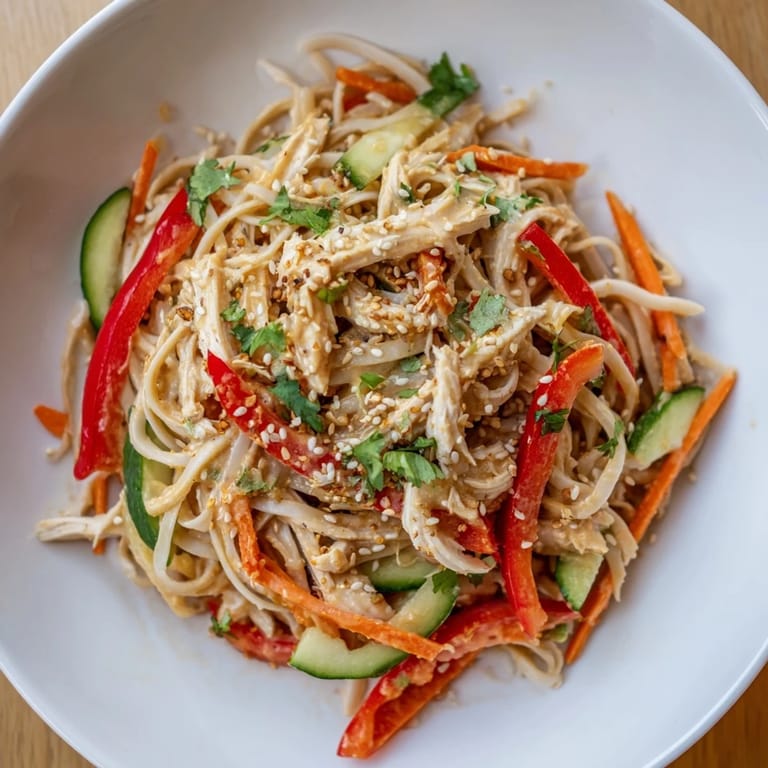
- Transfer the salad to a serving platter or into individual bowls, scatter the toasted sesame seeds across the top, and set lime wedges beside each portion. Serve it right away while the noodles still have some firmness, or chill it for up to two hours if you prefer it colder.
 Save Pin
 The night I served this at a dinner party for a friend who'd just moved back to the neighborhood, I watched her take the first bite and immediately smile. She told me later that meal helped her feel like she was home again, and now whenever she texts asking if I'm cooking, she's usually hoping for this salad. Food like this reminds you that feeding people is really about creating small moments of comfort and connection.
The Magic of Sesame Dressing
What makes this dressing work is the interplay of sweet, salty, nutty, and tangy notes that seem simple on paper but taste unexpectedly complex when they come together. The toasted sesame oil is the star—it brings an aroma and depth that regular oil could never match, and it clings to the noodles in a way that keeps the salad tasting good even as it sits in the fridge. The peanut butter might seem like an odd choice, but it acts as an emulsifier that makes the whole dressing silky and ensures every noodle and vegetable gets properly coated rather than sliding around in a puddle of oil.
Make It Your Own
This salad is forgiving enough to adapt to what's in your kitchen, which is part of why it's become such a regular in my rotation. I've made it with rice noodles when I didn't have egg noodles on hand, with shredded tofu instead of chicken for vegetarian friends, and with whatever vegetables looked fresh at the market that week. The structure of the dressing and the noodles stays the same, so your variations always taste intentional rather than thrown together.
Storage and Serving Suggestions
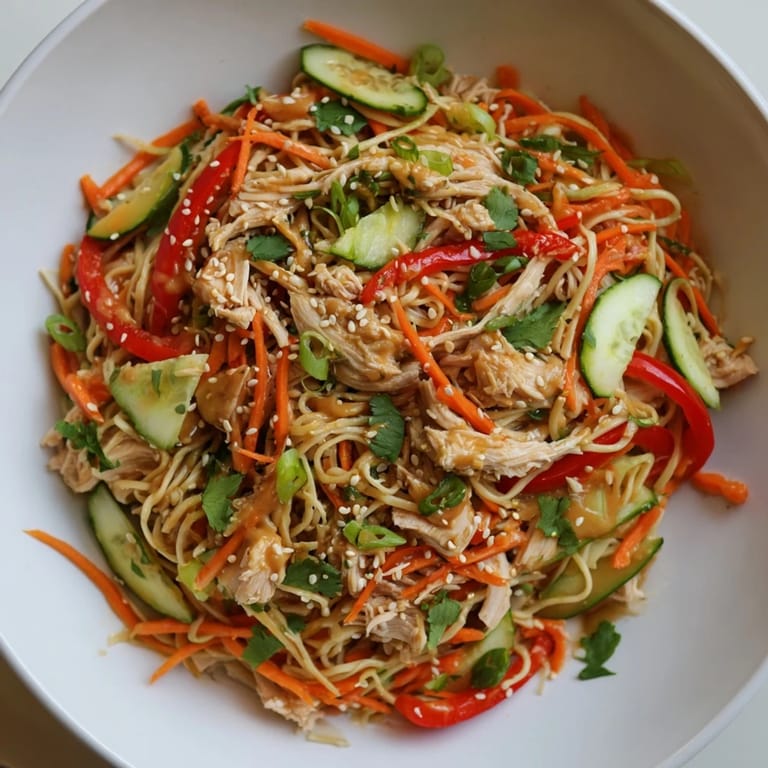
This salad lives in the fridge peacefully for up to two days, and honestly it gets better as it sits because the flavors meld together and the vegetables soften slightly, absorbing more of the dressing. The sesame seeds go on just before serving so they stay crisp; if you add them too early, they soften and lose their texture. I serve it chilled on hot days, but I've also eaten it at room temperature straight from the fridge on days when I needed something quick, and it's equally satisfying.
- If you make it ahead, store it in a covered container and give it a quick toss right before serving to redistribute any dressing that's settled to the bottom.
- Add a squeeze of fresh lime juice just before eating to brighten the flavors and cut through the richness of the sesame oil.
- Pair it with a cold drink—iced tea, a crisp white wine, or even cold green tea all complement the savory-nutty profile.
 Save Pin
 This is the kind of dish that reminds you why cooking at home matters—it's fresher, cheaper, and infinitely more satisfying than anything you'd order out. Every time I make it, I understand a little better why people want to gather around food.