 Save Pin
 There's something about the sound of a wooden spoon scraping the bottom of a pot that signals comfort is on the way. My neighbor once told me she makes this soup whenever someone in her life needs tending to, and I understood immediately—the way the kitchen fills with steam, how the broth deepens from golden to amber as it simmers, the quiet satisfaction of shredding chicken with two forks. It's the kind of dish that asks nothing fancy of you but gives back warmth in every spoonful.
I learned to make this properly when my daughter came home from college looking thin and tired. She sat at the kitchen counter while I cooked, and by the time the noodles went in, she was already breathing easier just from the smell. That's when it clicked—this soup isn't just food, it's a small gesture that says I see you and I'm taking care of this part.
Ingredients
- Bone-in, skinless chicken thighs or breasts (1½ lbs): Thighs give you more forgiving, flavorful meat that doesn't dry out, though breasts work fine if that's what you have—just watch them carefully so they don't overcook.
- Low-sodium chicken broth (8 cups): This is your foundation, so taste it before you start; quality broth makes the difference between good soup and one you'll crave.
- Yellow onion, carrots, celery (1 large onion, 3 medium carrots, 2 stalks): This trio builds flavor at the base—dice the onion a bit smaller than the carrots so everything finishes at the same time.
- Garlic cloves, minced (3): Add this after the initial boil to keep its flavor bright and forward rather than muted and sweet.
- Bay leaves, dried thyme, dried rosemary (2 bay leaves, ½ tsp thyme, ¼ tsp rosemary): These dried herbs are your secret; they're old-fashioned but they work because the long simmer time draws out their essence without overpowering anything.
- Salt and freshly ground black pepper: Taste as you go and adjust at the very end when everything comes together—you'll need more than you think.
- Wide egg noodles (6 oz): Wide noodles hold broth better than thin ones, and they soften to just the right tender without falling apart.
- Fresh parsley, chopped (2 tbsp): This goes in at the very end for brightness and a small visual lift that makes the bowl look finished.
- Fresh lemon juice, optional (1 tbsp): A squeeze at the end wakes up all the flavors and cuts through the richness in a way that feels almost magical.
Tired of Takeout? 🥡
Get 10 meals you can make faster than delivery arrives. Seriously.
One email. No spam. Unsubscribe anytime.
Instructions
- Start with calm water:
- Place the chicken and broth in a large pot and bring to a gentle boil, skimming off the grayish foam that rises—this takes just a minute or two and makes your finished broth clearer and cleaner tasting. Don't skip this step, even though it feels small.
- Build the flavor base:
- Add the onion, carrots, celery, garlic, bay leaves, thyme, rosemary, salt, and pepper, then lower the heat to a simmer, cover, and let it bubble quietly for 25 to 30 minutes until the chicken is cooked through and the vegetables are fork-tender. You'll know it's right when you can easily pull the meat apart with a wooden spoon.
- Shred and return:
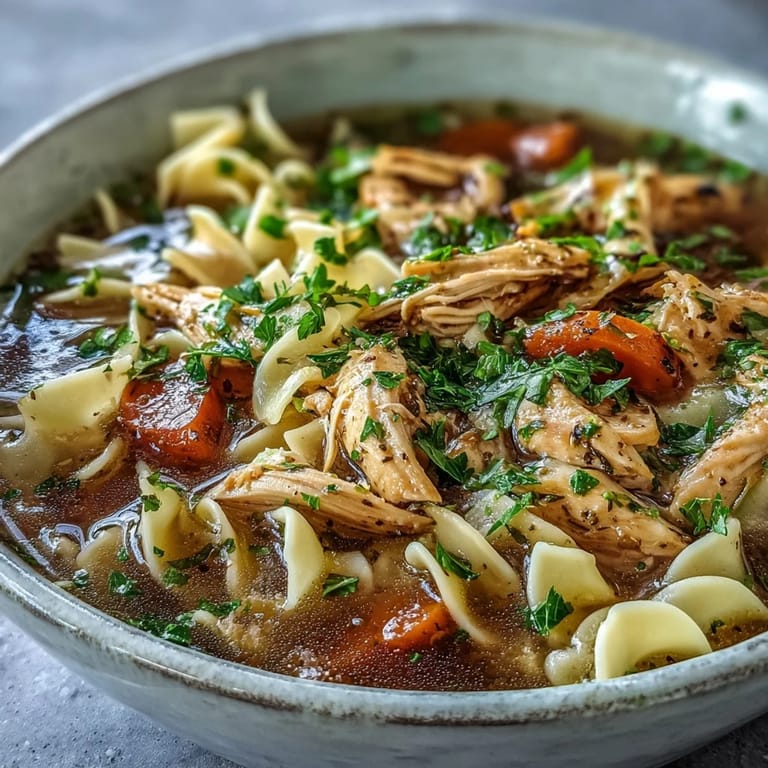
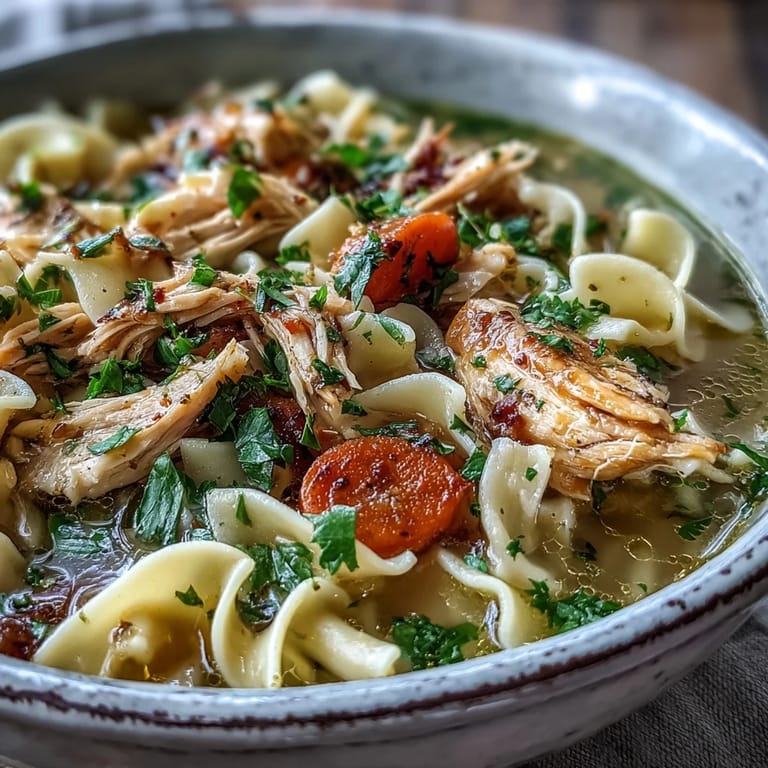
- Carefully remove the chicken to a cutting board and use two forks to shred it apart, discarding any bones and skin. Once it's shredded, return it to the pot right away so it stays warm and absorbs the flavor of the broth.
- Bring it back to a boil:
- Increase the heat to medium-high and bring the soup back to a gentle rolling boil, which is when you'll add the noodles. This matters because it helps the noodles cook evenly.
- Cook the noodles:
- Stir in the egg noodles and cook for 8 to 10 minutes, stirring occasionally so they don't stick together—taste one after 8 minutes to see if it's tender the way you like it. The noodles will continue to soften slightly even after you turn off the heat.
- Finish and serve:
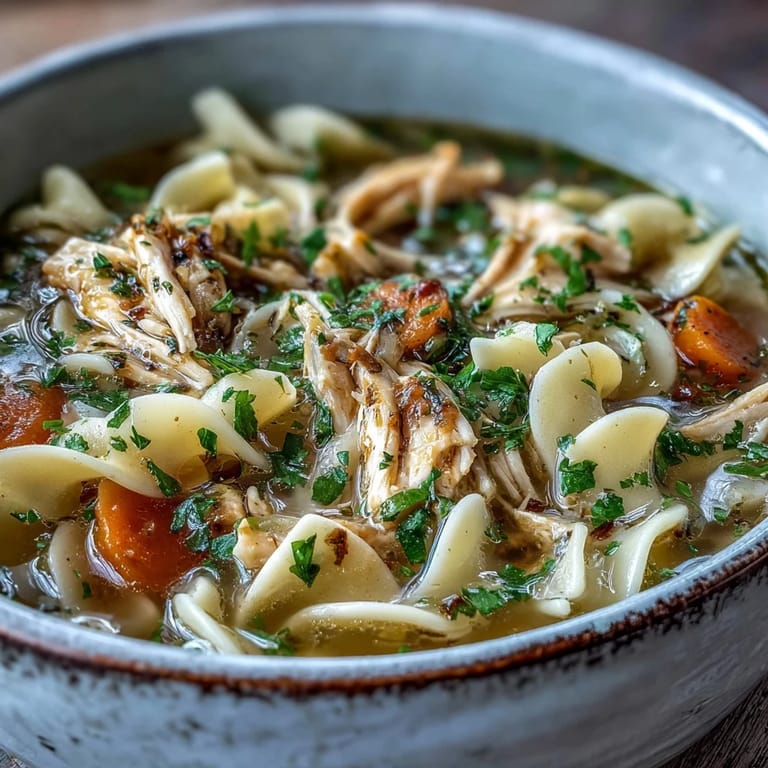
- Stir in the fresh parsley and lemon juice, if you're using it, then remove and discard the bay leaves. Taste everything one more time and adjust salt and pepper until it feels right to you, then ladle it into bowls while it's steaming.
 Save Pin
 The first time I served this to someone who was actually sick, they told me later that they slept better that night than they had in weeks. I don't think it was the soup itself doing the healing work, but rather that someone had taken time to make something warm, and they could taste the care in every spoonful.
The Art of the Perfect Simmer
A simmer is not a boil—it's the gentle, quiet bubbling that happens when you've turned the heat down so there are just a few lazy bubbles breaking the surface every couple of seconds. Watch your pot for the first few minutes after you add the vegetables; if it's rolling and aggressive, it'll break the chicken into stringy pieces instead of keeping it tender and intact. Once you find that sweet spot, you can mostly leave it alone, which is honestly the best part of making soup.
Why Bone-In Chicken Matters Here
Bones add depth and body to broth in ways that boneless chicken never can—the gelatin from the bones creates a richer mouthfeel and more developed flavor. If you only have boneless chicken on hand, add an extra ½ cup of broth to compensate, but if you have a choice, the bone-in varieties will give you noticeably better results with almost no extra work on your end.
Variations and Gentle Swaps
This recipe is forgiving, and you can shift it based on what's in your kitchen or what mood you're in that day. A handful of fresh spinach stirred in at the very end adds color and nutrition without changing the character of the soup, or you can add a pinch of red chili flakes if you want warmth in the spicy sense instead of just the comforting kind.
- Use a mix of thighs and breasts if you want maximum flavor and the most forgiving texture possible.
- Substitute gluten-free or rice noodles if needed, though wide egg noodles are the classic choice.
- Serve with crusty bread for dipping, and let people add their own cracked pepper and lemon at the table.
 Save Pin
 This is the kind of soup that reminds you why people have been making it the same way for generations. It asks only that you show up, pay attention for an hour, and let the ingredients do what they do best.
Recipe FAQs
- → Can I make this ahead of time?
Yes, you can prepare it up to 3 days ahead. Store the noodles separately to prevent them from absorbing too much broth.
- → Can I freeze the soup?
Freeze without the noodles for up to 3 months. Add fresh noodles when reheating for the best texture.
- → What can I substitute for egg noodles?
Try rice, rotini pasta, or gluten-free noodles based on your dietary needs.
- → How do I store leftovers?
Refrigerate in an airtight container for up to 4 days. The flavors often develop even better after sitting.
- → Can I use rotisserie chicken?
Absolutely. Skip the initial chicken cooking step and add shredded rotisserie chicken when you add the noodles.