 Save Pin
 I discovered this dish on a particularly ordinary Tuesday afternoon when I was standing in my garden watching the asparagus finally emerge from the spring soil. My neighbor mentioned she'd seen something similar at a wedding, a strange and beautiful vegetable sculpture, and the image wouldn't leave my head. That evening, I sat at my kitchen table sketching out a lattice with pencils, imagining how delicate greens could somehow create edible architecture. What started as a doodle became an obsession, and within days, I was testing the first version with berries scattered across the weave like edible jewels.
The first time I made this for a dinner party, I was convinced something would go wrong at the last moment—it always does, right? But as I wove the final asparagus stalk through the grid and tied the chive knots, my hands moved with an unexpected confidence. When my friend Sarah walked in and stopped dead in her tracks, staring at the platter, I realized this wasn't just about technique or aesthetics. It was about creating something that made people feel like they were being offered something rare.
Ingredients
- Asparagus stalks: Choose medium thickness so they're flexible enough to weave but sturdy enough to hold their shape; thinner stalks are more delicate but break easily.
- Fresh chives: The longer stems are essential for tying, so trim conservatively from the base and save those beautiful green ribbons.
- Mixed berries: A combination of textures and colors matters here—blueberries stay firm, raspberries add delicate flavor, and strawberries provide that satisfying sweetness.
- Extra virgin olive oil: This is tasted raw, so quality truly makes a difference in the final flavor.
- Flaky sea salt: The larger crystals catch light and won't dissolve immediately, giving little bursts of salt against the vegetables.
Tired of Takeout? 🥡
Get 10 meals you can make faster than delivery arrives. Seriously.
One email. No spam. Unsubscribe anytime.
Instructions
- Blanch the asparagus:
- Bring a large pot of salted water to a boil and add your asparagus for just 1-2 minutes—you want them bright green and barely tender, never soft. Plunge them immediately into ice water to stop the cooking, then pat dry so they're ready to work with.
- Soften the chives:
- A quick 5-second dip in hot water makes those stems pliable without cooking them into submission. Cool them in ice water and pat thoroughly dry so they maintain their color and don't become slimy.
- Create the lattice base:
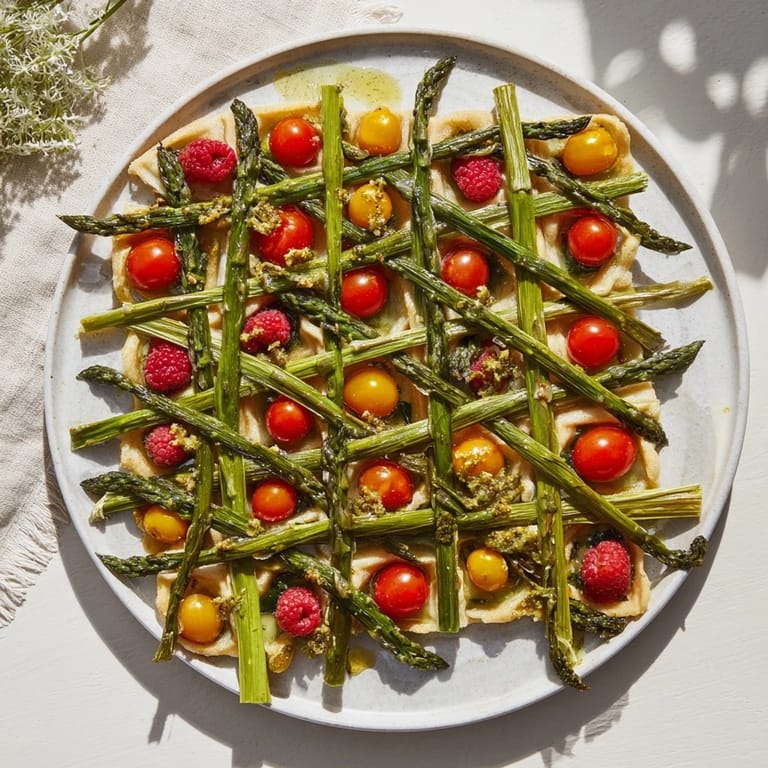
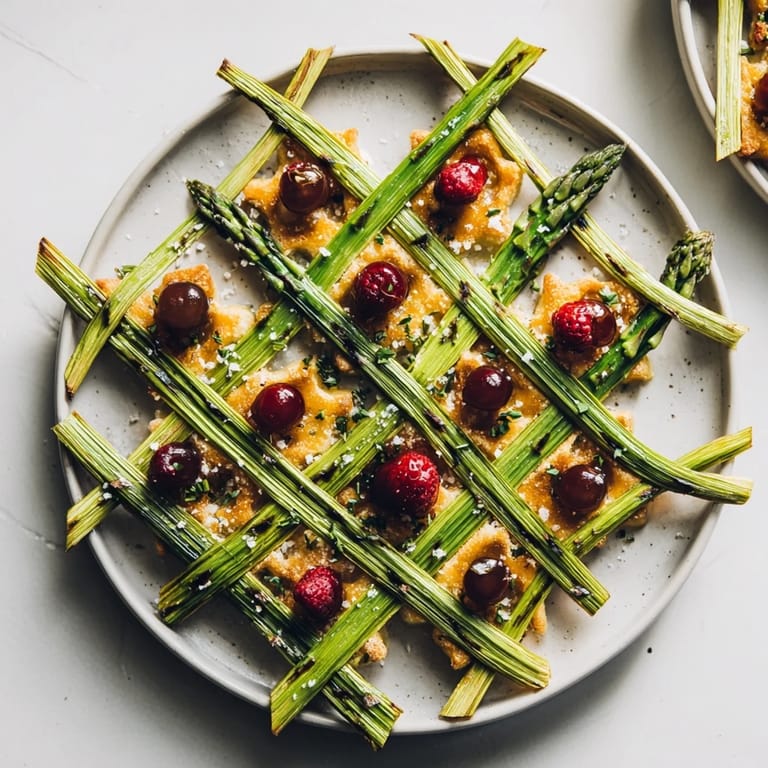
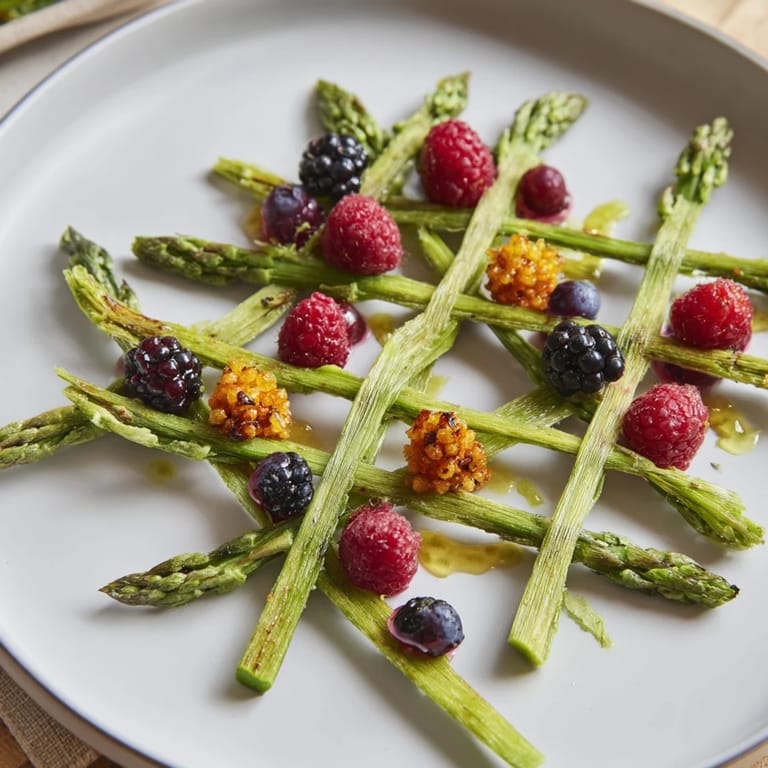
- Lay 8 asparagus stalks parallel on your platter, spacing them about an inch apart with your finger as a guide. Weave the second set of 8 stalks perpendicular, going over and under in an alternating pattern—it's like threading, really, and oddly meditative once you find the rhythm.
- Bind the grid:
- Gently wrap a softened chive stem around each intersection point where the asparagus crosses, tying it snugly but not so tight that you break the vegetables. Think of it like carefully securing a gift with a ribbon.
- Fill with berries:
- Nestle your berry mixture into the open squares of the lattice, distributing colors evenly so every square has a little burst of each fruit. The berries should sit naturally in the spaces, not forced.
- Finish and serve:
- Just before serving, drizzle with olive oil and sprinkle with flaky sea salt and a small grinding of pepper. The timing matters—you don't want the berries to release their juices too early.
 Save Pin
 There's something quietly magical about watching a simple grid of vegetables transform into something that makes people rethink what vegetables can be. When I served this at a spring luncheon, a friend who claims to hate vegetables asked for the recipe, and I knew I'd discovered something special.
Why Spring Matters for This Dish
This recipe is fundamentally a celebration of spring's brief window when asparagus is at its peak and berries are finally fresh again. I've tried making it in other seasons and it never quite has the same lightness, the same feeling of freshness and renewal. There's something about eating vegetables that were literally in the ground just days before that changes everything.
Variations Worth Exploring
Once you understand the structure, the lattice becomes a canvas for whatever you have on hand. I've used fresh peas, thinly sliced radishes, and even tender young green beans instead of asparagus. The key is choosing vegetables that are either flexible enough to weave or sturdy enough to hold their shape. For berries, anything small and firm works—blackberries, red currants, pomegranate seeds, or even halved cherries.
Serving Suggestions and Accompaniments
This dish shines on its own, but I've discovered that a drizzle of aged balsamic glaze adds sophistication without overwhelming the delicate flavors. Fresh mint leaves scattered across the top bring an unexpected herbal note that plays beautifully with the berries. Serve it chilled, let it sit out for 15 minutes before your guests arrive so the vegetables reach a perfect cool temperature, and prepare yourself for compliments.
- A light lemon vinaigrette can replace the olive oil if you want something brighter and more acidic.
- Edible flowers like pansies or nasturtiums add drama if you grow them or have access to them.
- Serve with chilled white wine or sparkling water to keep the meal feeling light and refreshing.
 Save Pin
 This dish reminds me that the most beautiful things to serve aren't always the most complicated—sometimes they're just vegetables woven with intention and topped with jewel-bright fruit. Every time I make it, someone asks how it's possible that something so impressive takes just 30 minutes.