 Save Pin
 My neighbor Amela taught me to make burek on a Saturday morning when the apartment building smelled like a thousand breakfasts at once. She moved the phyllo sheets with the confidence of someone whose grandmother had made this dish a thousand times, and she let me watch the transformation from a stack of impossibly thin pastry into something that looked like it belonged in a bakery window. That first bite, still warm from the oven with the butter crackling between my teeth and the beef and spinach singing together inside, made me understand why this dish has survived centuries of history and displacement.
I made this for my friend's dinner party last winter, and I remember the moment she bit into it—her eyes closed like she was tasting something from her own childhood. Turns out her family is also Balkan, and she hadn't had homemade burek in years. We ended up sitting in my kitchen after everyone left, eating the last piece cold straight from the tray and talking about food as memory. That's when I realized burek isn't just pastry and filling; it's a conversation between generations.
Ingredients
- Ground beef (400 g, 80/20 ratio): The fat content keeps the filling from drying out during baking, and that lean-to-fat balance means you get flavor without greasiness soaking through the pastry.
- Fresh spinach (200 g, washed and chopped): Don't use frozen—the water content will make your filling soggy and turn the pastry limp, which I learned the hard way the first time.
- Medium onion (1, finely chopped): Finely is the key word here; larger pieces will release their moisture and create steam pockets that tear your phyllo.
- Garlic (2 cloves, minced): Fresh garlic becomes almost sweet and mellow as the burek bakes, adding depth without any sharp bite.
- Salt and black pepper: Taste your filling before rolling; seasoning seems light at room temperature but intensifies as it bakes.
- Paprika (½ tsp, optional): If you use it, choose smoked paprika for a subtle warmth that hints at Balkan tradition without overwhelming the dish.
- Phyllo pastry sheets (500 g, about 12–14 sheets): Buy it fresh if you can, and keep it sealed until the moment you need it—phyllo dries faster than you'd think.
- Unsalted butter (120 g, melted): Unsalted because you control the salt in the filling and don't want it competing for space on your tongue.
- Vegetable oil (3 tbsp): Mixing oil with butter gives you layers that separate cleanly as they bake instead of clumping together.
- Plain yogurt (3 tbsp, optional): Mixed with water, it creates a wash that helps the phyllo brown faster and more evenly, plus adds a subtle tang.
Tired of Takeout? 🥡
Get 10 meals you can make faster than delivery arrives. Seriously.
One email. No spam. Unsubscribe anytime.
Instructions
- Ready your mise en place and preheat:
- Start with your oven at 190°C and your baking tray lined with parchment paper—this is not the moment to scramble for supplies. Chop your vegetables and mince your garlic while the oven warms; you want to move quickly once you start layering the phyllo.
- Mix the filling:
- Combine beef, spinach, onion, garlic, salt, pepper, and paprika in a bowl and stir until everything is evenly distributed, breaking up any clumps of meat with the back of your spoon. The filling should look uniform and smell like it knows exactly what it's doing.
- Make your butter wash:
- In a small bowl, stir melted butter and vegetable oil together until they're completely combined. This mixture is your magic—it's what makes the layers separate and crisp.
- Layer the phyllo:
- Lay one sheet of phyllo on your work surface and brush it with the butter-oil mixture using quick, light strokes—don't saturate it or it'll tear. Add another sheet on top, brush again, and repeat until you have a stack of 2–3 sheets total, each one just barely glistening with butter.
- Fill and roll:
- Spread your meat-spinach filling in a thin, even line along one long edge of the phyllo stack, leaving about an inch of border so the phyllo can seal itself. Now roll it up like you're making a log, tucking the sides in as you go to keep everything compact and enclosed.
- Form the spiral:
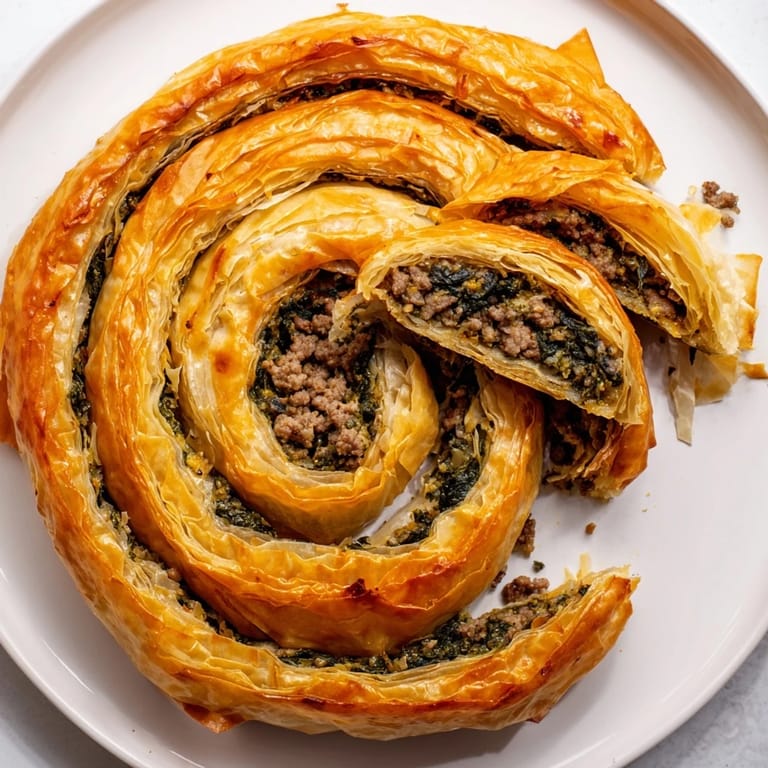
- Take that log and coil it into itself like a snail shell, starting from one end and curling it around until it forms a disk. This shape distributes the filling evenly and looks beautiful when you slice it.
- Build your burek:
- Place your first spiral on the prepared baking tray and repeat the entire layering-filling-rolling process until you've used all your phyllo and filling—you might end up with one large spiral or a few smaller ones, either way works.
- Brush and finish:
- Generously brush the tops of your spirals with the remaining butter-oil mixture, getting into all the crevices and folds. If you're using the yogurt wash, mix it with water and brush that on now for extra browning and crispness.
- Bake until golden:
- Slide the tray into the oven for 35–40 minutes, until the pastry is deep golden brown and you can hear it crackle slightly when you move the tray. Your kitchen will smell like toasted butter and savory meat, which is how you know you're not far from done.
- Rest and serve:
- Let the burek cool for 10 minutes before slicing—this rest time lets the layers set up so they don't fall apart on the plate. Slice with a sharp knife using a gentle sawing motion, and serve warm with yogurt on the side.
 Save Pin
 There's a moment during the bake when the kitchen fills with that particular smell—butter and onion and meat and the nutty warmth of phyllo browning—and I always pause what I'm doing just to stand there and breathe it in. It's the smell that tells you something good is about to happen, something that people will remember and ask you to make again.
Why This Spiral Shape Matters
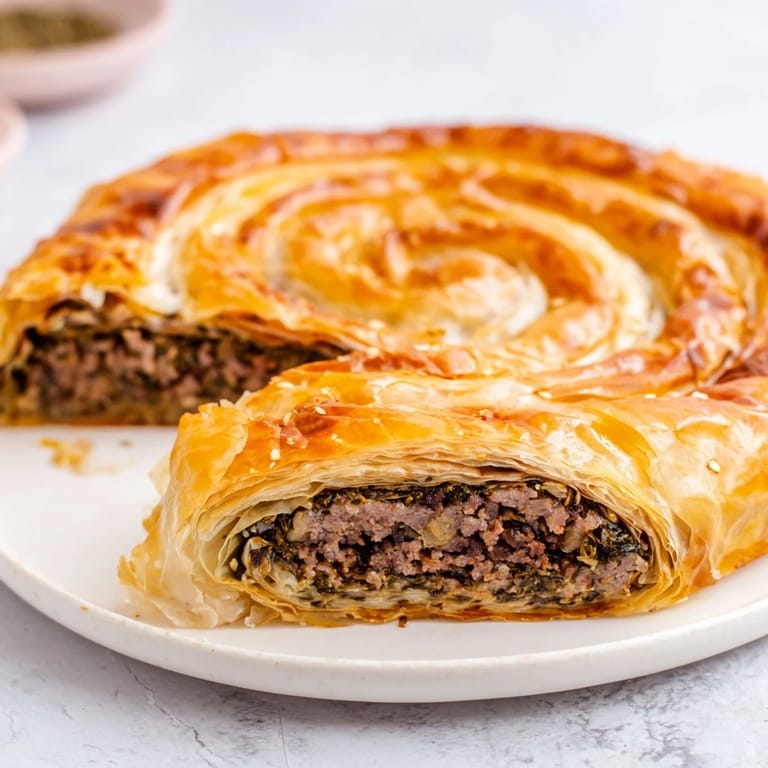
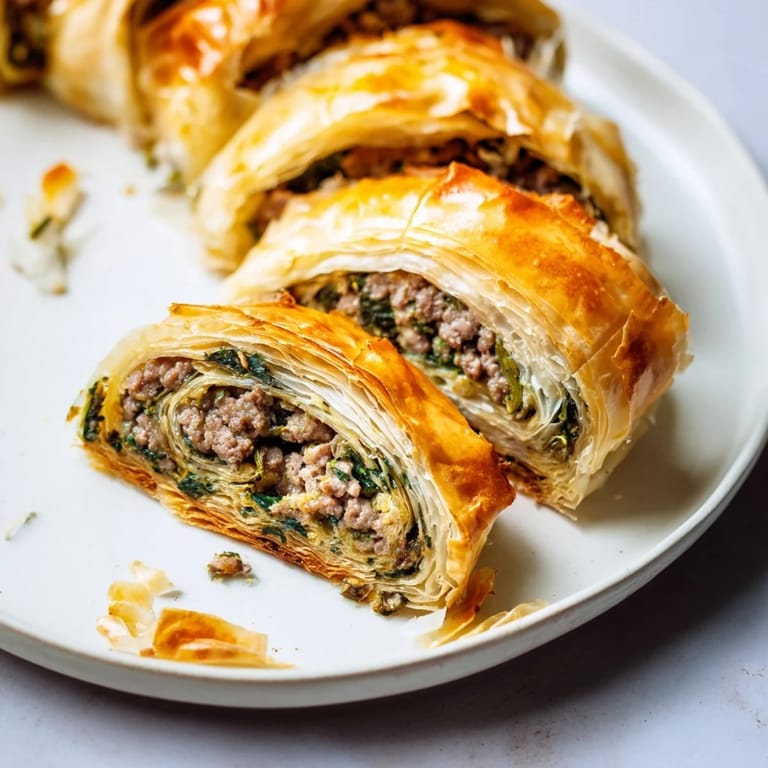
The spiral isn't just pretty; it's practical. When you coil the phyllo, you create natural pockets where the butter pools between layers, crisping them up evenly as they bake. If you rolled it straight and laid it flat, you'd get dense, heavy pastry on the bottom and dry layers on top. The spiral gives every bite the same chance to develop that satisfying crackle, and when you slice it, each piece shows off the beautiful layers like a tree ring of golden, flaky pastry.
The Filling Variations That Work
Amela told me that some families use lamb instead of beef, and some use a mix of both for something richer and more complex on the palate. If you're vegetarian, skip the meat entirely and crumble good feta cheese into the spinach instead—the salt in the cheese seasons everything and the tanginess balances the richness of the butter perfectly. A few people I know add a small handful of minced fresh dill or parsley to the filling, which adds a brightness that cuts through the heaviness. The beauty of burek is that it's forgiving enough to adapt to what's in your kitchen or what your family tradition demands.
Serving and Storage Secrets
Serve burek warm with a dollop of plain yogurt or alongside a simple cucumber salad—the cool, fresh vegetables are the perfect foil to all that buttery richness. Burek stays edible for days, and I've found it's actually better the next day when you can taste all the flavors that were hiding in the steam, now that everything has settled. You can reheat it gently in a low oven without destroying the pastry, and it's honestly just as good cold straight from the fridge if you're eating it quietly at your kitchen counter at midnight.
- Store in an airtight container and eat within three days for best results.
- Freeze unbaked burek on a tray, then transfer to a freezer bag and bake directly from frozen—just add 10 extra minutes to the baking time.
- If the edges start to brown too quickly during baking, loosely tent them with foil so the center can catch up.
 Save Pin
 This burek is the kind of dish that makes people feel at home, whether they grew up eating it or are discovering it for the first time. Every time someone asks for the recipe, I know I've made something worth remembering.
Recipe FAQs
- → What type of meat is best for this dish?
Ground beef with an 80/20 lean-to-fat ratio is recommended for moistness and flavor, but a beef-lamb mix can add richness.
- → Can spinach be substituted or omitted?
Spinach adds freshness and texture, but for a vegetarian twist, omit the meat and incorporate crumbled feta instead.
- → How do I keep phyllo pastry from drying out during assembly?
Cover phyllo sheets with a damp towel while working to maintain pliability and prevent cracking.
- → Is the yogurt glaze necessary?
The yogurt and water brush adds extra crispness and a subtle tang, but it can be skipped if preferred.
- → What side dishes complement this pastry?
Serve warm alongside plain yogurt or a simple cucumber salad to balance the richness.